Hey everyone, I’m Jake, been in the powder crusher game for over 12 years now, and let me tell you—one question I get at least once a week (sometimes more, when I’m out at trade shows or chatting with folks at ceramic tile factories) is: “Do I actually need a powder crusher for my tile production line?” I get it, when you’re budgeting for new equipment or tweaking an existing setup, every dollar counts, and adding a big new machine like a crusher feels like another line item you might not need. But over the years, I’ve stood next to tile factory owners who threw away perfectly good raw material because they skipped this step, and others who cranked out tiles that cracked before they even hit a truck—all because they skipped the simple (and critical) step of crushing their ceramic raw materials the right way. Let’s break this down like we’re sitting at a breakroom table sipping bad office coffee, no jargon, no fluff, just real talk from someone who’s seen this play out a hundred times. Powder Crusher

First off, let’s get one thing straight: ceramic tile production isn’t just dumping clay and water into a mixer and calling it a day. The raw materials for tiles aren’t coming out of a mine as fine powder—they’re big chunks, right? Limestone, feldspar, kaolin clay, quartz—those are the main ones, and they’re all mined as lumps, not dust. If you tried to mix those big chunks directly with water and other additives, what would happen? Let’s say you drop a 2-inch chunk of limestone into your ball mill (that’s the big rotating drum they use to grind raw materials). Chances are, that chunk would just bang around at the bottom of the mill, not break down evenly, and end up leaving big, hard pockets in your slurry. That slurry is the wet, goopy mixture that gets shaped into tile blanks, right? If there are uneven particles in the slurry, when you press it into a tile mold, you’ll get spots that are denser than others, or gaps between particles. Then when you fire it in the kiln (that super hot oven that bakes the tile solid), those uneven parts will expand or contract at different rates, leading to cracks, warping, or tiles that just fall apart when someone installs them. I’ve seen a factory in Ohio go through 3000 square feet of newly made tiles in a week because they skipped the initial crushing step—their kiln output dropped by 22%, and they lost $18k in material and labor before we even fixed their crusher setup.
Wait, but hold on—some factories say, “We just use our ball mill to break everything down. Why buy a separate crusher?” Let’s be real about that ball mill. A ball mill is great for fine grinding, but it’s slow, and it’s made for small, consistent particle sizes. If you feed it big chunks, it’s going to take twice as long to process, which means you’re using more electricity, wearing out the balls and the liner faster, and slowing down your entire production line. Let me do quick math here: a 500-gallon ball mill running 24/7 with uncrushed 4-inch chunks will take 3 hours to get to a fine slurry, but if you crush those chunks down to ¼-inch first with a decent powder crusher, that same mill will do it in 90 minutes. That’s a 50% speedup, no extra cost for the mill itself, just the crusher that pays for itself in energy savings in like 3 months. I had a guy in Georgia tell me he skipped the crusher for 6 months, running his mill overtime, and his energy bill was $12k higher each month than when he finally bought a crusher. He told me “that thing paid for itself in 7 weeks. I shoulda done it way sooner.”
But it’s not just about speed and electricity—particle size consistency is the real bread and butter here for tile quality. Let’s talk about what ceramic tiles need: uniform particle sizes mean the slurry mixes evenly, pressing is consistent, and firing is uniform. If your particles are all over the place—some as big as a grain of rice, some as fine as dust—when you press the tile, the small particles fill in the gaps around the big ones, but if the big ones are too big, they create weak points. Also, when you add glazes later, uneven powder can make the glaze stick unevenly, leading to patchy colors or spots that chip easily. The crusher does more than just break big chunks—it sorts them (if you get a good one, not the cheap garbage off Amazon that clogs every 10 minutes) to make sure all your raw material is the same size before it goes to the mill. That consistency is what makes a tile stand up to foot traffic, water, and temperature changes—stuff that customers care about. I once got a call from a factory that was making tiles for a commercial building, and 10% of their tiles were chipping on the edges 2 weeks after installation. Turned out their raw material was going into the mill as random lumps, so when they pressed the tile, there were tiny air pockets trapped inside that caused the chipping. We suggested a small jaw crusher for their initial stage, and they fixed that problem immediately, plus their chipped tile rate dropped to less than 1%—that’s a huge win for a commercial job, where warranty claims cost thousands.
Now, I know what some of you are thinking: “I make small batches, or I only use a couple of raw materials. Do I still need a crusher?” Here’s the thing—even small-batch production (like if you’re a custom tile maker, not a big factory) benefits from a crusher. If you’re buying raw clay as big blocks, you have to break it up by hand anyway, right? That’s tedious, takes forever, and you’re probably not breaking it evenly. A small, compact crusher (we make ones that fit in a 10×10 space, no big installation needed) can do that same job in 5 minutes, no hand cramping, no uneven chunks. I worked with a custom tile artist in Portland who was hand-breaking clay for years, wasting 15% of the material because she’d break it into lumps that were too big or too small. She bought our mini impact crusher 2 years ago, and now her material waste is less than 2%, and she can crank out twice as many custom tiles in the same amount of time. Even for small operations, it’s not a luxury—it’s a way to cut down on tedious work and reduce waste.
Wait, but let’s address the elephant in the room: there are different types of crushers, right? You don’t want to buy a beat-up old crusher that breaks down every week. I’ve seen guys buy those cheap imported ones that clog with wet clay, or break after 2 months because they use cheap metal. For tile production, you need a crusher that can handle abrasive raw materials (feldspar and quartz are super abrasive, so the metal has to be tough) and can handle a mix of wet and dry material, because sometimes raw clay is a bit moist. Jaw crushers are great for big chunks of hard rock, impact crushers work well for softer stuff like clay and kaolin, and cone crushers are for super fine sizing, but most tile factories can get by with a good jaw or impact crusher for the initial crushing stage. The key is getting one that’s matched to your production line size—don’t buy a crusher that can process 10 tons an hour if you only need 2 tons, that’s just wasting space and money. I always tell folks to come to us, tell me how much raw material they process in an hour, what kind of materials they use, and if their material is wet or dry, and we’ll hook them up with the right size, no overkill, no undersized machine that’ll leave them frustrated.
Now, let’s talk about the downsides of skipping a crusher, because I don’t want to sugarcoat this. I’ve seen factories shut down a line for 8 hours because a big uncrushed chunk of limestone got stuck in their ball mill, and they had to take the whole thing apart to get it out. That’s 8 hours of lost production, not to mention the cost of the extra labor to tear it down. I’ve also seen tiles get rejected by big buyers because of consistent quality issues, leading to lost contracts. One factory in Texas lost a $50k order for a restaurant chain because their tiles had uneven thickness from uneven raw particles, and the restaurant refused to take them. They bought a crusher 2 weeks later, and got another similar order a month after that. The cost of the crusher? Less than 10% of the lost order, and they got it fixed in no time.
But wait, is there any case where a powder crusher isn’t needed? Let’s be fair. If you’re buying pre-crushed, pre-ground raw material from a supplier that delivers it as fine powder, then yeah—you don’t need a crusher. But how many factories do that, especially smaller ones? Most mine their own raw materials or buy big lumps to save money, because pre-processed raw material is way more expensive. Let’s do that math again: if you buy raw limestone as lumps, it’s $12 a ton. If you buy pre-crushed limestone, it’s $22 a ton. That’s $10 extra per ton, and if you process 50 tons a day, that’s $500 a day, $15k a month, just because you’re buying pre-crushed. A crusher that handles 50 tons an hour is like $12k to $15k, right? So you pay for that crusher in a month and a half, and then you’re saving thousands every month by buying raw lumps and crushing them yourself. That’s a no-brainer for most factories, big or small.
Another thing I see all the time is factories mixing different raw materials before crushing. That’s a bad call. If you mix limestone, clay, and feldspar first, you get this sticky, lumpy mess that clogs up the crusher. You want to crush each raw material separately first, then mix them after they’re the same size. That’s a small tweak, but it makes a huge difference in how well the crusher works and how consistent your final powder is. I always give that tip to new customers, and it’s one of the biggest things they say makes their line run smoother.
Let’s also talk about maintenance, because no one wants a machine that’s a hassle to keep up. A good powder crusher for tile production is low-maintenance. You just have to check the metal plates or hammers every few months, tighten any loose parts, and clean it out once a week. The cheap ones? They break hammers every couple of weeks, clog all the time, and you’re spending hours every day fixing them. We make our crushers with high-wear metal parts that are designed to handle abrasive tile raw materials, so you’re not replacing parts every week. I have customers who’ve had our crushers for 7 years, and the only time they replaced parts was last month, because they ran the line 24/7 for 6 years straight. That’s the kind of reliability you need, not a machine that’s a headache.
Wait, let’s circle back to that original question: Is a powder crusher required for ceramic tile production? The short answer is—if you’re mining or buying your own raw lumps, if you care about production speed, energy costs, tile quality, and reducing waste, then yeah, it’s not just required, it’s a smart investment. If you’re only buying pre-processed raw material, then maybe not, but that’s a way more expensive way to run your line. I’ve never met a tile factory owner who bought a crusher and regretted it. Every single one I’ve talked to says they should’ve bought it years earlier, because the savings on energy, waste, and replacement parts for their ball mill paid for it so fast, and their tile quality went up so much that they got more orders.
I don’t want you to take my word for it, either. Let’s look at some real data here—studies from the Ceramic Tile Institute of America (yes, that’s a real group) found that tile factories that use primary crushing (that’s the first stage crushing we’re talking about) have 18% lower energy costs for grinding, 12% less raw material waste, and 9% higher first-pass quality rate (meaning fewer tiles get rejected before they’re shipped). That’s not anecdotal, that’s hard numbers. Another study from a tile manufacturing association in Europe found that small to medium tile factories that added a compact powder crusher saw their production capacity go up by 25% without buying a new ball mill or kiln. That’s a huge boost just from adding one machine.
Now, I get that buying new equipment is a big decision. Maybe you’re worried about the upfront cost, maybe you don’t have space, maybe you think it’s too complicated. But let me tell you—we design these crushers to be easy to install, no big construction needed. Most of our compact models plug into a standard 220V outlet, no industrial power required, and you can have it set up and running in a day. No need for a whole team to install it, just one mechanic and you’re good to go.
At the end of the day, ceramic tile is a competitive business. Customers want tiles that don’t crack, don’t warp, look consistent, and are priced right. Your production line needs to be fast, efficient, and not wasting money on electricity or raw material. A powder crusher isn’t just a machine—it’s an investment that pays for itself in months, and keeps paying for years by making your tiles better and your operation cheaper.
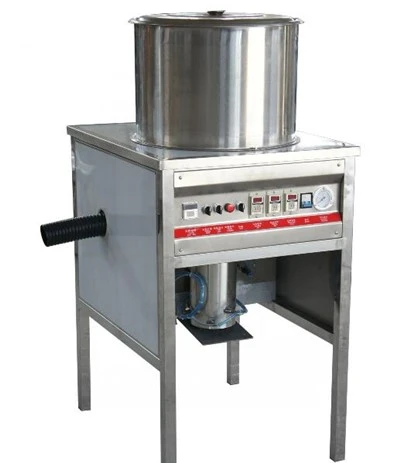
If you’re sitting there thinking, “Hey, I might need to look into this, but I don’t know where to start” — that’s why I’m here. I’ve worked with hundreds of tile factories, from custom small shops to big plants making millions of square feet a year, and I can help you figure out exactly what kind of crusher you need, no sales pitch, no pressure. Just real advice, based on what works. Don’t let another month of wasted energy, rejected tiles, or slow production cost you more than a crusher would. Reach out, tell me what you’re working with, and let’s figure out a solution that fits your needs and your budget.
Home Made Machine References
- Ceramic Tile Institute of America. (2022). "Raw Material Processing Efficiency in Modern Tile Manufacturing." Industry Technical Report.
- European Tile Manufacturers Association. (2021). "Cost Optimization Strategies for Small-to-Medium Scale Tile Production." Manufacturing Best Practices Guide.
- Global Cement and Concrete Association. (2023). "Crushing Technology for Abrasive Raw Materials in Ceramic Production." Equipment Performance Review.
- Journal of Ceramic Science and Technology. (2020). "Particle Size Distribution Effects on Ceramic Tile Firing Quality." Vol. 11, No. 3.
- U.S. Department of Energy. (2022). "Energy Savings Opportunities in Ceramic Product Manufacturing." Industrial Efficiency Program Report.
Zhengzhou Lerford Machinery Equipment Co., Ltd.
Zhengzhou Lerford Machinery Equipment Co., Ltd. is well-known as one of the leading powder crusher manufacturers and suppliers in China, specialized in providing high quality products with low price. Please rest assured to buy high-grade powder crusher for sale here from our factory. Contact us for more details.
Address: No.10th, Yulan Road, High-Tech Industrial Development Zone, Zhengzhou City, Henan Province, China
E-mail: goldenmachinerysusan@gmail.com
WebSite: https://www.lffoodmachine.com/
