As a supplier of rotary barrel machines, I hear this question all the time from workshop managers, production supervisors, and operators on the floor: “How do we cut down waste in our rotary barrel processing?” Every shift, I visit shops that run our machines to see first-hand where extra material, time, and money slip through the cracks. Waste isn’t just scrap on the floor—it’s raw material that costs you, energy that drives up utility bills, and labor that could be used for more productive work. Over the years, I’ve watched teams turn consistent waste into near-zero losses, and I want to share what works, grounded in how rotary barrel machines actually operate. Rotary Barrel Machine

First, let’s start with one of the most overlooked areas of waste: incorrect setup before a run. Too many operators grab barrels, adjust tension halfway through a cycle, or skip a test run for the first 10 pieces. I once worked with a metal stamping shop that was wasting 12% of their steel blanks every week because their barrel’s internal baffle configuration didn’t match the part shape. Round parts needed shorter, evenly spaced baffles to prevent them from catching and denting, while flat, thin parts required rounded baffles to avoid warping. They were using a one-size-fits-all setup, so parts either got stuck, deformed, or weren’t finishing evenly—meaning they had to be scrapped.
The fix here is simple, but it takes consistency: pre-run verification tailored to each part type. Our team trains customers to create a quick “setup checklist” for every new production batch. Before you hit the start button, measure the gap between the barrel’s wall and the part bed—for delicate components, that gap should never exceed twice the part’s thickness. Test run 5–10 pieces at 50% of your normal speed to check for jams, scratches, or uneven finish. If even one part doesn’t look right, stop and adjust. I’ve seen shops cut setup-related waste by 80% just by sticking to this step. Another tip: calibrate your barrel’s rotation speed to the material. For softer plastics, a slower rotation prevents parts from rubbing too hard against each other and the barrel walls, which cuts down on friction-related scrap. For heavier metal parts, a slightly faster speed ensures even tumbling so no part sits in one spot too long and develops surface damage.
Next, material loading is another major source of waste, especially when operators overfill or underfill the barrels. I’ve seen a shop load their rotary barrels to 85% of capacity because they thought more parts meant more output. What they didn’t realize was that overloading restricts the tumbling action—parts can’t move freely, so they grind against each other, creating micro-scratches that make parts unfit for their intended use. That shop was wasting 9% of their monthly aluminum castings because of this. The sweet spot, according to our engineering team, is 60–70% of the barrel’s maximum volume. This leaves enough space for parts to roll, lift, and tumble without crowding. If you have a batch of unevenly sized parts, sort them by size first before loading—mixing large and small parts leads to small parts getting trapped between large ones, causing damage.
Underfilling is a problem too, though it’s less common. If you load less than 50% of capacity, parts will hit the barrel’s lid and floor repeatedly, leading to impact damage. They also won’t polish or deburr evenly, so you end up reprocessing parts or scrapping them anyway. A small, easy tool we provide for customers is a marked loading stick—just dip it into the barrel before starting a run to confirm you’re in the optimal range. This simple tool eliminates guesswork, and several of our repeat customers have reported cutting loading-related waste to less than 1% of their total output.
Then there’s media selection and management, which is a huge, often misunderstood part of rotary barrel processing. Media is the abrasive or filler material you add to the barrel alongside your parts to deburr, polish, or clean them. Using the wrong media for your application leads to excessive wear, part damage, and wasted media itself. For example, using a coarse ceramic media on a delicate electronic component will leave deep scratches, while a fine plastic media won’t remove heavy burrs from a metal part. I once met a precision machining shop that was using the same media for aluminum, steel, and brass parts—they were replacing their media every two weeks, not because it was worn out, but because it was the wrong type for half their batches. They ended up wasting thousands of dollars a year on unnecessary media purchases and scrapped parts.
The solution here is to match media to both part material and desired outcome. For deburring steel parts, silicon carbide media works well. For polishing aluminum, porcelain media is gentler and gives a brighter finish. For plastic parts, corn cob media (with a mild soap compound) removes surface burrs without scratching. Also, regular media sorting is critical. As media wears down, small bits of broken media can mix with good media, or worn media won’t perform as intended. Installing a simple screen (we sell compatible ones for our machines) that separates good media from worn or broken pieces every two runs can extend media life by 30–40%, cutting waste both from media and bad parts. One shop I work with sorts media on their lunch break, and they now only buy media once every three months instead of once a month.
Maintenance of your rotary barrel machine itself is a direct link to waste reduction, and it’s something many businesses put on the back burner until something breaks. A misaligned barrel shaft, for example, can cause parts to drag against the wall unevenly, leading to scratches. A worn drive belt can make rotation speed inconsistent, leading to uneven processing. I once responded to a service call at a automotive parts shop where their barrel’s bearings were so worn that the barrel was wobbling ¼ inch with every rotation. That wobble caused 15% of their stainless steel valve bodies to have uneven finishes, so they had to send them to a secondary polishing process—wasting time, labor, and energy.
Preventive maintenance doesn’t have to be complicated. We provide every customer with a simple monthly maintenance checklist: check the barrel’s alignment using a level, inspect drive belts for cracks, lubricate bearings every 50 hours of operation, and replace worn baffles before they break. Shops that stick to this schedule report a 20% drop in machine-related waste. Another tip: keep the machine’s interior clean between runs. Dust, leftover media, and small part debris can build up and scratch new parts when you start a new batch. A quick wipe-down with a soft cloth after each run takes 2 minutes, but it prevents dozens of scrap parts a month.
Water and energy waste are often tied to rotary barrel machines too, especially if you use wet tumbling for processing (common in metal finishing). Many shops run their water at full flow 24/7, even when the machine isn’t running. That’s a huge waste— I’ve seen a shop with a 500-gallon water tank that was flushing 100 gallons a day unnecessarily, driving up their water and sewer bills by $800 a month. The fix here is to install a timer that cuts water flow when the machine is idle, and to recycle your water with a filtration system. Our team recommends simple, low-cost filtration units that separate fine debris from the water, so you can reuse it instead of draining it after every run. One shop switched to recycling, and they cut their water use by 75% and reduced wastewater disposal costs by 60%. They also noticed their parts finished better because the filtered water didn’t have sediment that could scratch parts.
Another energy saver: run your barrel machines at optimal load. Overloading a machine means it uses more energy to rotate, even if you’re not getting more usable parts. Underloading is also inefficient, as the motor runs at less than its peak efficiency. Using the loading stick I mentioned earlier helps here too—running at 60–70% capacity puts the motor at its sweet spot, cutting energy use by up to 15% per run. For shops that run multiple shifts, staggering machine starts so they don’t all draw peak power at the same time also reduces demand charges from utility companies, which adds up to big savings over a year.
Finally, worker training is the foundation of any waste reduction effort. I’ve seen machines that are identical, side by side in two different shops, with one producing half the waste of the other. The difference? The team in the low-waste shop knows how to adjust setup, load correctly, and spot small issues before they become problems. Too many operators get used to the same routine every day, so they don’t notice when a baffle is loose, or when the speed is off by 5 RPM. We offer on-site training for all our customers, but even if you don’t work with us, schedule 15-minute huddles at the start of each shift to go over the day’s batches, review setup requirements, and share tips from the previous shift. One shop I work with has a “waste log” where operators note any scrap parts and what caused them—every month, they review the log and adjust their processes, leading to continuous small improvements that add up to 10% less waste each year.
Let me be clear: reducing waste in rotary barrel processing isn’t about making big, expensive changes overnight. It’s about small, consistent adjustments to setup, loading, media management, maintenance, and how your team works. Every scrap part you avoid, every gallon of water you save, every kilowatt of energy you cut adds up to higher profits and less strain on your operations. I’ve helped dozens of shops go from 10–15% waste down to 2% or less just by focusing on these areas.
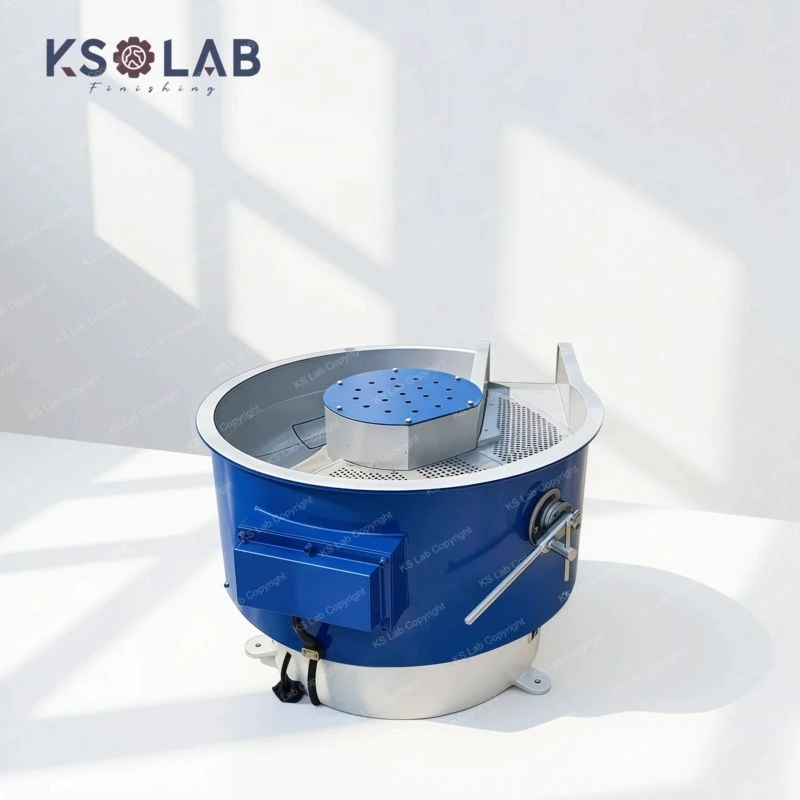
If you’re ready to cut waste from your rotary barrel machine processing, I’d be happy to walk you through your specific setup, share tailored tips, or answer any questions about your current equipment or potential upgrades. A small conversation can make a big difference for your bottom line.
Centrifugal Barrel Finishing Machine References
- American Foundry Society. (2021). Waste Reduction in Barrel Finishing Operations. Casting Management Magazine.
- Industrial Parts Finishing Association. (2022). Optimizing Media and Loading for Rotary Tumbling Machines.
- Occupational Safety and Health Administration (OSHA). (2020). Preventive Maintenance Guidelines for Industrial Processing Equipment.
- U.S. Department of Energy. (2021). Energy Efficiency Tips for Material Processing Machinery.
KS Lab Finishing Co., Ltd.
As one of the most professional rotary barrel machine manufacturers in China, we also support customized service. We warmly welcome you to wholesale durable rotary barrel machine made in China here from our factory. If you have any enquiry about pricelist, please feel free to email us.
Address: No.11-14, Yantian Shuibei Commercial Street, Fenggang Town,Dongguan,China
E-mail: sales@kslabfinishing.com
WebSite: https://www.kslabfinishing.net/
