If you’ve ever stood in front of a half-empty liquid oxygen tank at a semiconductor fabrication plant, or watched a technician in a steel mill calibrate a nitrogen purge line, you know industrial gas equipment doesn’t just “work” because it’s turned on. As someone who’s spent 12 years as an industrial gases supplier—from field calls at remote processing plants to walking new clients through quarterly maintenance checklists—I’ve seen too many avoidable breakdowns cost businesses tens of thousands of dollars in downtime, wasted product, and rework. A client in the Midwest lost $180,000 in 2022 when a neglected oxygen compressor seal failed mid-production; a semiconductor fab in Arizona shut down 12 production lines for 14 hours in 2023 because a fouled nitrogen dryer couldn’t maintain required purity levels. These aren’t rare disasters—they’re the result of skipping consistent, purpose-built maintenance for the gear that keeps industrial operations running. Let’s break down exactly what the maintenance requirements for industrial gas equipment actually are, why each step matters, and how even small, consistent checks prevent costly headaches. Industrial Gases
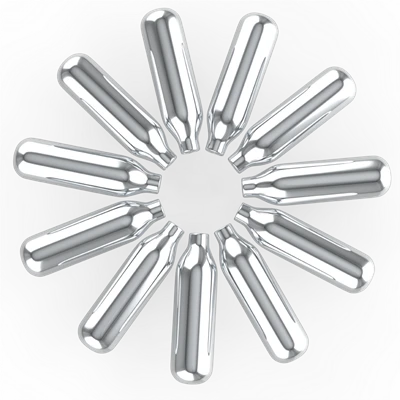
First, it’s important to note that industrial gas equipment breaks down into three core categories: storage and containment vessels (tanks, cylinders, cryogenic dewars), processing and conditioning gear (compressors, dryers, purifiers, generators), and distribution infrastructure (pipelines, manifolds, control valves). Each has unique maintenance needs, but they all share a core rule: maintenance can’t be a one-time, end-of-year chore—it’s iterative, task-specific, and aligned with gas type and application. Let’s start with storage and containment vessels, because these are the most visible and often the most overlooked.
Cryogenic tanks, which store liquefied gases like liquid nitrogen, oxygen, argon, or liquid carbon dioxide, rely on a multi-layer vacuum insulation between their inner and outer shells. Over months and years, that vacuum can degrade—small air leaks seep into the gap, creating thermal conductance that causes excess boil-off, and eventually leads to tank failure. Here’s what that maintenance actually looks like: a monthly visual check of the outer shell for frost (if frost is present, especially in temperatures above freezing, that’s a clear sign of vacuum loss), a quarterly check of pressure relief valves (PRVs) to ensure they’re not clogged or stuck open—PRVs are safety-critical; we once had a client’s PRV seize closed, causing a pressure spike that dented the outer tank shell, costing $7,000 in repairs and a two-week rental of a temporary storage tank. Annual vacuum testing by a certified technician is non-negotiable, too: this uses specialized equipment to measure thermal conductance across the insulation gap, catching vacuum loss before boil-off rates spike beyond 10% of the tank’s capacity per day (a red flag we flag in all client service reports). For high-pressure gas cylinders (like those used for small-scale welding or lab applications), the rules are stricter: most countries require hydrostatic testing every 5 to 10 years, depending on the gas type, and visual inspections before every fill to check for dents, corrosion, or damaged valve threads. We refuse to refill a cylinder that’s failed a visual check, because cutting that corner risks a catastrophic leak or rupture.
Next, processing and conditioning equipment—this is the heart of the industrial gas supply chain, turning raw feedstock (air, natural gas) into high-purity gas for medical, semiconductor, or food and beverage use. Let’s start with compressors, which are used to pressurize gases for storage or distribution. Compressors have moving parts: pistons, seals, bearings, and valves that wear out over time, especially in continuous operation. The maintenance here is time- and condition-based: daily checks of oil levels and oil quality (contaminated oil causes 60% of compressor failures, per data from the Compressed Gas Association, or CGA), weekly checks of air intake filters—clogged filters raise energy use by 15% and can damage compressor blades, and annual lubricant analysis to catch metal wear or water contamination before it causes a seal failure. For screw compressors, common in large-scale air separation plants, we recommend a bearing inspection every 18 months: we once worked with a plant in Texas that skipped this, and a seized bearing caused $120,000 in damage, plus a full shutdown of their oxygen supply for 3 days—their medical gas clients faced temporary supply rationing, which almost led to a breach of their regulatory requirements.
Dryers and purifiers, which remove moisture, carbon dioxide, and other impurities to get to the 99.99%+ purity levels needed for semiconductors or medical oxygen, have their own set of requirements. Desiccant dryers, the most common type for industrial use, use a material like molecular sieve to adsorb moisture. Over time, the desiccant becomes fouled with oil, dust, or gas contaminants, losing its ability to dry air properly. Maintenance here: weekly dew point testing (the measure of how much moisture is in the gas; for many semiconductor applications, dew point must be -40°F or lower), monthly check of purge gas flow rates (the gas used to regenerate the desiccant—insufficient purge means incomplete drying, excess wastes gas and raises operating costs), and full desiccant replacement every 3 to 5 years, depending on gas volume and feedstock quality. For membrane dryers, used for smaller-scale applications, the membrane itself has a lifespan of 5 to 7 years, with annual leak testing to ensure no gas is bypassing the drying element. Purifiers, used for high-purity specialty gases, need quarterly analysis of inlet and outlet gas purity; any drop in purity of more than 0.1 parts per million (ppm) means it’s time to replace the purifier bed, which typically lasts 7 to 10 years with proper maintenance.
Distribution infrastructure—pipelines, manifolds, control valves, and pressure regulators—are often the most neglected part of the system, because they’re hidden underground or tucked away in plant piping. Leaks in distribution lines don’t just waste product; they create safety hazards (flammable gas leaks, oxygen enrichment) and can lower gas purity levels as ambient air seeps into lines. Maintenance here starts with routine leak detection: monthly ultrasonic testing for pressurized lines, and visual checks for signs of corrosion (rust, discoloration) on above-ground pipes, especially in corrosive environments like paper mills or chemical plants. Control valves and regulators, which adjust gas pressure to match a facility’s needs, need bi-annual calibration: a valve that’s out of calibration by even 5 psi can cause excess energy use, or for critical applications like medical gas delivery, create a safety hazard where patients receive oxygen at too low a pressure. Manifolds, which connect multiple gas cylinders or bulk tanks to deliver continuous gas supply, need monthly checks of cylinder connection integrity, and annual testing of backflow preventers to ensure no gas flows backward into the wrong line—this is a key safety step, especially for mixed gas applications where cross-contamination could cause a reaction.
Now, it’s not just about checking boxes—there are a few cross-cutting maintenance principles that apply to every piece of industrial gas equipment, no matter the type. First, documentation is non-negotiable. Every maintenance check, test, and repair needs to be logged: date, technician name, findings, parts replaced, and next scheduled service. This isn’t just for compliance (many industries, like medical or food and beverage, require this for regulatory audits) but for predictive maintenance: when you track dew point levels over time, you’ll notice a gradual drop before a dryer fails, letting you plan a repair during a scheduled shutdown instead of an emergency. Second, use certified parts and trained technicians. Industrial gas equipment is precision-engineered for specific pressure and purity requirements—using a generic seal on a liquid oxygen compressor, for example, can increase the risk of static buildup and a fire hazard. That’s why our company trains all our field technicians to CGA standards, and we only use OEM or CGA-approved parts for every repair. Third, align maintenance with operational schedules. For a plant that runs 24/7, scheduled shutdowns for maintenance can be a logistical challenge, but we help our clients shift maintenance to low-production windows, or use predictive analytics to time repairs when downtime has the least impact.
I’ll be the first to admit, maintenance can feel like an extra expense when you’re focused on keeping production running. But our data shows that clients who stick to a consistent maintenance schedule see a 30% reduction in emergency breakdowns, 15% lower energy costs, and a 20% longer overall lifespan for their industrial gas equipment. A food and beverage client in the Pacific Northwest we’ve worked with for 8 years recently told us that after implementing our quarterly maintenance plan, they went 5 years without a unplanned gas supply shutdown, saving them over $250,000 in lost production in that time.
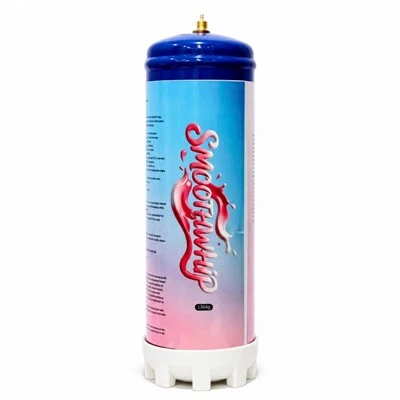
If you’re tired of unexpected gas equipment failures derailing your operations, or you’re updating your facility’s gas system and want to build a maintenance plan that works for your specific needs, we’re here to help. Our team of industrial gas specialists can walk you through a custom maintenance schedule tailored to your equipment, gas type, and operational requirements, with 24/7 field support for emergency calls. We work with facilities of all sizes—from small manufacturing plants to large semiconductor fabs, medical centers, and food processing operations. Don’t wait for a costly breakdown to address your equipment’s needs; reach out to our team to start planning a maintenance strategy that keeps your gas supply reliable, safe, and efficient.
Cream Charger Accessories References
Compressed Gas Association. (2021). Maintenance Guidelines for Industrial Gas Storage, Processing, and Distribution Equipment. Arlington, VA: Compressed Gas Association.
National Fire Protection Association. (2022). NFPA 55: Standard for Compressed Gases, Cryogenic Fluids, and Gaseous Systems. Quincy, MA: National Fire Protection Association.
International Organization for Standardization. (2020). ISO 14878: Gas Supply Systems for Industrial Applications – Maintenance and Operation. Geneva, Switzerland: International Organization for Standardization.
Smoothwhip Industrial Co., Ltd.
Address: Room 1306, Building 4, U-Tiandi, No. 178 Puhui Road, Jiuting Town, Songjiang District, Shanghai
E-mail: info@safety-plus.cn
WebSite: https://www.smwhip.com/
