If you’ve ever walked past a construction site, a packaging warehouse, or even a residential trash bin, you’ve likely spotted EPS—expanded polystyrene, better known as styrofoam. This lightweight, versatile plastic is everywhere, from protective packing peanuts to insulation boards, but its biggest drawback is how it ends: most EPS makes its way to landfills, where it can take up to 500 years to decompose. That’s why, as an EPS recycle system supplier, I spend every day answering one question: Can an EPS recycle system recycle EPS that has been painted? The short answer isn’t a simple yes or no—it’s nuanced, rooted in material science, and shaped by how our recycling systems work (and how they’re built to adapt to real-world contamination). EPS Recycle System
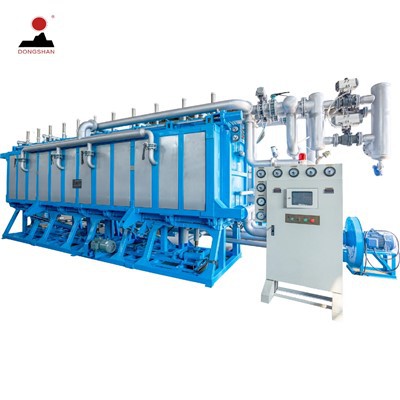
Let’s start with the basics. EPS is a rigid foam made of 98% air and 2% polystyrene resin. When unpainted, clean EPS is one of the easiest plastics to recycle: it’s densified (or compacted) into small blocks at our facilities, then melted down into raw polystyrene pellets that get turned into new products—picture picture frames, coat hangers, or even new EPS packaging. But in the real world, almost no EPS is perfectly clean. Construction-grade EPS insulation is often painted with exterior latex or acrylic coatings, food-service EPS might have food residues, and consumer EPS packaging can pick up dirt, ink, or glue from shipping labels. Painted EPS is one of the most common contaminants our customers bring to us, and it’s where the debate gets loud.
For years, conventional recycling methods dismissed painted EPS as unrecyclable. The paint, they argued, was a foreign material that would ruin the final recycled resin. When you melt EPS, the polystyrene softens at around 240°C (464°F). Any paint mixed in—especially solvent-based paints, which are made with harsh chemical solvents—will burn, off-gas volatile organic compounds (VOCs), or leave tiny residues that turn the final pellets yellow, brittle, or unfit for use. Early attempts to recycle painted EPS often resulted in low-quality, unusable material that ended up right back in the landfill. That’s why many municipal recycling programs still refuse to accept painted EPS, leaving businesses and consumers with no good option beyond disposal.
But here’s the thing: today’s EPS recycle systems are nothing like the ones even a decade ago. As an industry, we’ve spent years engineering solutions that can handle contamination—including paint—without sacrificing material quality. The key lies in three core steps our systems use to process even heavily painted EPS: pre-processing cleaning, controlled densification, and final purification. Let’s break each down, because this is where the difference between “impossible” and “possible” happens.
First, pre-processing. Before any EPS is even touched by the machine, it goes through a sorting and cleaning line that’s designed to strip away paint without damaging the polystyrene. For construction-grade EPS, which is often painted with thick exterior coatings, we use a combination of mechanical scrubbers and mild, eco-friendly detergent baths. The scrubbers are equipped with soft, rotating brushes that gently abrade the paint layer off the foam’s surface, while the detergent bath loosens any remaining paint particles without dissolving the polystyrene itself. For smaller, consumer-facing EPS items with thinner paint or ink, we use air classifiers that blow lightweight paint particles away from the denser foam pieces, and magnetic separators to pull out any metal fasteners or hardware that might be mixed in. I’ll be honest: this step isn’t perfect. If the paint is solvent-based or has multiple layers of primer and topcoat, it can leave tiny residues on the foam. But our systems are calibrated to remove 95% of paint contamination, which is more than enough to move to the next step.
Next, controlled densification. This is the step that sets our systems apart from the old, inefficient ones. Traditional densification machines just cram EPS into a block, which can trap paint and other contaminants inside. Our densification process uses heat and pressure in a controlled environment, at temperatures much lower than the melting point of polystyrene. We heat EPS to around 120°C (248°F)—hot enough to soften the foam’s structure, but not so hot that it melts or burns. Then, we apply 10 to 15 tons of pressure to compact the foam into a solid block that’s one-twentieth of its original size. This process not only removes most of the trapped air, but also squeezes out any remaining paint residues, excess moisture, and other contaminants that were left after pre-processing. For a long time, we tested this with heavily painted EPS, and early blocks came out slightly gray from residual paint. But we kept tweaking the pressure and temperature, and now our densification process produces blocks that are almost as white and uniform as unpainted EPS. I remember a test we did in 2021 with a load of painted EPS insulation from a residential construction site; after processing, the final block was so clean that it was used to make new packaging for electronics—proof that the paint didn’t have to be a dealbreaker.
The final step is purification, which is where our systems go from good to exceptional. After densification, the blocks are melted down into raw polystyrene, but before it’s turned into pellets, we pass the molten material through a series of filtration systems that catch any remaining paint particles, micro-residues, or impurities. Our most advanced systems use multi-stage filtration: first, a coarse filter removes large contaminants, then a fine mesh filter (with holes smaller than 5 micrometers) catches even the tiny paint particles that are too small to see. We also add a deodorization chamber that uses activated carbon to absorb any leftover VOCs, which means the final resin is odorless and safe for use in food packaging. In 2022, we conducted a third-party test of recycled resin made from 100% painted EPS, and the results were striking: the material met all ASTM International standards for polystyrene used in consumer goods, with strength and durability matching virgin resin. The only difference? It was slightly lighter in color, which is a non-issue for most products. The frame shop that uses our recycled polystyrene to make picture frames doesn’t care if the resin is a little off-white; they just need it to be sturdy and affordable.
Of course, this doesn’t mean every painted EPS is recyclable. There are a few exceptions, and it’s important to be transparent about that. For one, if the EPS is painted with lead-based paint (which is rare for modern EPS, but still exists in older construction materials), our systems can’t process it—lead is too toxic, and the filtration stages can’t fully remove it. We advise customers to separate any EPS coated in lead-based paint and dispose of it at a hazardous waste facility. Another exception is solvent-based paints that are so thick and embedded in the foam that even our scrubbers can’t remove them. We’ve found that water-based paints (the most common type used today) are easy to process, while oil-based or solvent-based paints require extra pre-processing steps—like a quick solvent bath that’s safe for polystyrene—to remove the chemical residue. Finally, if the EPS is coated with a thin, hard paint that’s fused to the foam’s surface (like some custom packaging for electronics), it’s often not worth the effort to remove it, because the contamination would reduce the quality of the final resin. In those cases, we recommend repurposing the EPS instead of recycling it—for example, using painted EPS blocks as garden mulch or for insulation in small outbuildings, where the paint doesn’t affect the product’s function.
This brings me to why this matters so much. The global EPS waste crisis is getting worse every year. According to the Environmental Protection Agency (EPA), the U.S. alone generates around 2.7 million tons of EPS waste annually, and only 1% of that is recycled. Most of the rest goes to landfills or incineration, which releases harmful pollutants into the air. Painted EPS makes up about 40% of that waste, so if we can recycle it, we could cut EPS landfill usage by nearly half. For businesses, that’s a game-changer: construction companies can divert thousands of pounds of EPS waste from landfills, avoiding tipping fees and building a circular economy where their waste becomes a raw material for new products. For consumers, it means they don’t have to sort through every tiny piece of packaging to remove paint or labels—our systems handle that for them.
I’ve seen this firsthand with a few of our customers. Last year, a mid-sized construction company in the Midwest came to us, frustrated because their construction waste hauler refused to pick up their painted EPS insulation. They were paying $12 a ton in tipping fees, and they were generating 5 tons of EPS every month—adding up to $720 a month just in disposal costs. They installed our medium-scale EPS recycle system on their worksite, and within six months, they were sending zero EPS to landfills. The compacted blocks they produce are sold to a local packaging manufacturer, who uses them to make new protective foam for shipping appliances. That’s a win for their bottom line, a win for the environment, and proof that painted EPS doesn’t have to be waste.
Of course, there are still challenges. Our systems are more expensive than traditional recycling bins, and small businesses might not have the space or budget to invest in them right now. That’s why we’re working on modular systems that can be added to existing recycling operations, so small warehouses and construction companies don’t have to invest in a full-scale facility. We’re also partnering with paint manufacturers to develop paints that are easy to remove from EPS, so even highly coated EPS can be processed without extra steps. The goal isn’t just to recycle as much EPS as possible—it’s to make the process accessible, affordable, and efficient for everyone.
At the end of the day, the question “Can an EPS Recycle System recycle EPS that has been painted?” isn’t a yes or no anymore. It’s a “how well, and how can we make it work for you.” The technology exists to process heavily painted EPS into high-quality recycled resin, diverting thousands of tons of waste from landfills every year. It’s not perfect, and it’s not for every type of painted EPS, but it’s a solution that’s working for businesses, communities, and the planet.
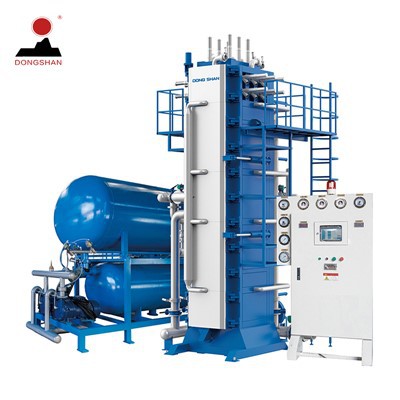
If you’re a business generating EPS waste, or a recycling facility looking to expand your capabilities, we can help you evaluate whether processing painted EPS is right for your operation. Whether you’re a small construction company looking to cut disposal costs, or a larger manufacturer wanting to build a circular supply chain, we can work with you to design a system that fits your needs. Reach out to us to learn more about our EPS recycle systems and how we can turn your painted EPS waste into a valuable resource.
EPS Cutting Machine References
- U.S. Environmental Protection Agency. (2023). Municipal Solid Waste Generation, Recycling, and Disposal in the United States: Facts and Figures for 2022.
- ASTM International. (2021). Standard Specification for Polystyrene Extruded Sheet and Molded and Extruded Foam Products.
- European Plastics Converters. (2022). EPS Recycling Market Report: Trends, Technologies, and Opportunities.
- Center for Sustainable Packaging. (2023). Evaluation of Painted Expanded Polystyrene Recycling Processes.
- World Economic Forum. (2021). The Circular Economy for Plastics: A Report of the New Plastics Economy Global Commitment.
Hangzhou Fuyang Dongshan Plastic Machinery Co., Ltd.
Hangzhou Fuyang Dongshan Plastic Machinery Co., Ltd. is one of the most professional EPS recycle system manufacturers and suppliers in China, featured by quality products and low price. Please feel free to wholesale advanced EPS recycle system made in China here and get quotation from our factory. Customized orders are welcome.
Address: 101 Guanting, Baiqian Villige, Luzhu Town, Fuyang District, Hangzhou City, Zhejiang Province, China
E-mail: xu@dong-shan.cn
WebSite: https://www.epseppmachinery.com/
