If you’ve ever stood in a warehouse loading dock, juggling a roll of hand stretch film while trying to secure a pallet of goods, you’ve probably wondered the same thing I get asked every day: how much does a roll of hand stretch film weigh? As a supplier who’s been working with this material for over a decade, I can tell you it’s not a one-size-fits-all number. It’s tied to a handful of practical, industry-specific factors that matter just as much to you—whether you’re a warehouse manager, a small business owner wrapping weekly shipments, or a logistics coordinator looking to cut unnecessary costs— as they do to me when I’m designing rolls that work for your use case. Hand Stretch Film
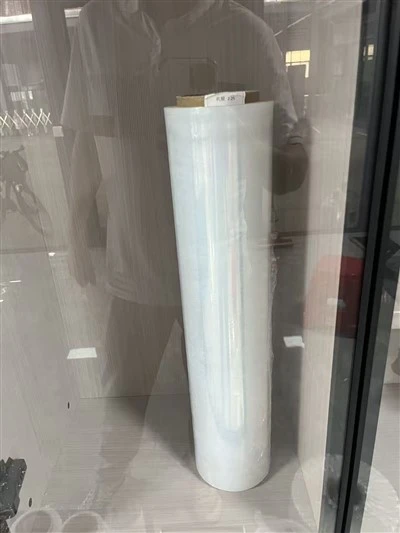
Let’s start with the basics to break this down without the confusing jargon that plagues so much of industrial packaging talk. At its core, hand stretch film is a thin, flexible plastic film (almost always linear low-density polyethylene, or LLDPE, for the best balance of stretch and durability) designed to be pulled by hand and wrapped around pallets, boxes, or other items to keep them stable during transport. Unlike machine stretch film, which is heavy-duty and meant to run on automated equipment, hand stretch film is lighter, more maneuverable, and sold on smaller cores for handheld use. That core and the film wrapped around it are the two parts that add up to the total weight of a roll, and each part has its own impact.
First, the film itself. The thickness of the film is the single biggest driver of a roll’s weight, and it’s measured in gauge—standard gauges for hand stretch film range from 50 gauge to 100 gauge. A gauge is one-thousandth of an inch, so 50 gauge is 0.002 inches thick, 70 gauge is 0.0028 inches, and so on. The thicker the film, the more material is on the roll, and the heavier the roll is. But thickness isn’t just about strength—thicker film is less likely to tear when pulled by hand, especially when wrapping rough, irregular loads, while thinner film is more flexible, uses less material, and is lighter, which makes it ideal for smaller, lighter loads that don’t need heavy holding power.
Next is the length of the film on the roll, which is usually measured in feet (sometimes meters for international buyers). The longer the film, the heavier the roll, all else being equal. A common short roll for light wrapping might be 500 feet long, while a longer roll for high-volume warehouses could be 1,500 feet or even 2,000 feet. But here’s a key point: don’t assume a longer roll is always better. A 2,000-foot roll of 50 gauge film will be heavier than a 500-foot roll of the same gauge, which might sound like a downside until you realize fewer roll changes mean less downtime during a busy shift. That balance of length and weight is what I spend a lot of time helping customers figure out, because a roll that’s too heavy to hold for an hour of wrapping is useless, even if it lasts twice as long.
Then there’s the core. The plastic or cardboard tube that the film is wrapped around adds a small but noticeable amount to the total weight of the roll, usually between 0.2 ounces and 0.5 ounces, depending on the material and core size. Cardboard cores are the most common, as they’re cheap and lightweight, while plastic cores are slightly heavier and more durable for repeated use (though most hand stretch film rolls use disposable cardboard cores). When I quote weights for customers, I always include the core weight, because that extra 0.3 ounces can add up if you’re buying hundreds of rolls at a time—for example, 1,000 rolls each with a 0.3 oz core adds up to over 18 pounds of extra material you’re paying for and hauling around, which is a small cost that adds up.
So let’s put these numbers together to give you real, practical examples of what you can expect. Let’s take the most common roll: a hand stretch film roll that’s 15 inches wide (standard width for most handheld dispensers), 1,000 feet long, and 70 gauge thick. That’s a workhorse roll for general pallet wrapping. The film itself weighs about 1.25 pounds, and the cardboard core adds 0.2 ounces, so the total roll weight is roughly 1.26 pounds. That’s light enough to hold for 10–15 minutes of continuous wrapping, which is perfect for most small to mid-sized warehouses or e-commerce businesses.
Another example: if you need a heavier roll for rough loads, a 100 gauge roll of the same width and length (1,000 feet) will weigh closer to 1.8 pounds total. It’s thicker, so it’s less likely to tear when wrapping sharp-edged items like metal parts or lumber, but it’s noticeably heavier, so it’s better for longer wrapping jobs where you can set the roll on a dispenser rather than holding it by hand the whole time. For high-volume users who want to cut down on roll changes, a 2,000-foot roll of 50 gauge film will weigh around 1.5 pounds total—lighter than the 1,000-foot 100 gauge roll, even though it has twice as much film. That’s a big win for users who need to wrap dozens of pallets a day, because they don’t have to stop and change rolls every 10 minutes, and the lighter total roll weight reduces strain on workers’ wrists and shoulders over long shifts.
Now, let’s talk about factors that might change these numbers that aren’t always obvious. First, the quality of the resin used to make the film. Not all LLDPE is the same. Cheaper, lower-grade resin has more impurities, so it’s denser, meaning a roll of the same length and gauge will weigh slightly more than a roll made with premium, high-grade resin. That extra weight might sound like a good thing at first, but low-grade film is thinner than advertised, more likely to tear, and doesn’t stretch as well, so you end up using more film to get the same holding power. At my company, we use only premium LLDPE resin, so we can make rolls that are the same advertised length and gauge but lighter than low-quality competitors, saving you money on material without sacrificing strength.
Another factor is the amount of stretch pre-tension built into the film. Most hand stretch film is pre-stretched during manufacturing, which means it’s already stretched by 20–30% before you even pull it out of the roll. Pre-stretched film is thinner when stretched, so a roll of pre-stretched film of the same length as non-pre-stretched film will weigh less, because the film is stretched out more, allowing you to wrap more pallets per roll. That’s another reason why the number on the label might not tell the whole story—you could have two rolls with the same advertised length, but the pre-stretched one will wrap more loads and weigh less, which is a better value for most users.
I also get asked all the time if the weight of the roll matters for shipping or storage. Short answer: yes, it does. If you’re buying 50 rolls of hand stretch film, the difference between a 1.2-pound roll and a 1.5-pound roll adds up to 15 extra pounds per case, which means you’re paying more for shipping and using more space in your warehouse. That’s why we put effort into optimizing our roll weights—we don’t add extra material just to make a roll feel heavier, because that’s a cost that gets passed on to you. We focus on making rolls that are the right weight for their job, so you get the most material for your money without the extra bulk.
There’s also a common misconception that heavier rolls are stronger. That’s not true. A thicker gauge film will be stronger than a thinner one, but a longer, lighter roll of thin, high-quality film might hold just as well as a shorter, heavier roll of low-quality thick film. I had a customer a few years back who was buying the cheapest hand stretch film he could find, and he thought the heavier rolls were better. He was going through 20 rolls a week, and his pallets were still coming loose during transport, with lots of damaged goods. When we switched him to our 70 gauge pre-stretched film, which was 0.5 pounds lighter per roll, he started going through 12 rolls a week, and his damage rate dropped by 70%. He saved money on both material and shipping, all because he stopped focusing on weight and started focusing on what the roll could actually do.

So, to wrap this up (pun intended), the weight of a hand stretch film roll doesn’t have a single answer. It depends on the film’s gauge, length, core material, resin quality, and whether it’s pre-stretched. For most general use rolls, you can expect weights between 1 pound and 2 pounds, with heavier rolls for heavy-duty use and lighter rolls for small, quick jobs. But the real takeaway isn’t the number on the scale—it’s finding a roll that fits your specific needs: light enough to handle, long enough to reduce downtime, and strong enough to keep your loads safe during transport.
Cast Stretch Film If you’re tired of dealing with rolls that are too heavy, tear easily, or cost you more in material and downtime, I’m here to help. As a supplier who’s worked with thousands of warehouses, small businesses, and logistics teams, I don’t just sell rolls of hand stretch film—I help you find the right roll for your job, no extra material, no hidden costs, and no confusing jargon. Whether you need a case of 50 light rolls for your e-commerce shipping or a pallet of heavy-duty rolls for a warehouse wrapping 100 pallets a day, reach out to my team to discuss your needs. We can break down exactly what you’ll get, compare weights and performance, and find a solution that works for your budget. Don’t let generic roll weights or misleading marketing leave you overpaying for packaging that doesn’t work—let’s build a solution that fits your business.
References
- Linear Low-Density Polyethylene (LLDPE) Properties and Packaging Applications, Society of Plastics Engineers, 2022.
- Industrial Stretch Film Best Practices for Warehouse Efficiency, National Council of Supply Chain Management Professionals, 2021.
- Hand Stretch Film Weight and Performance Standards, Packaging Association for Flexible Materials, 2023.
Shandong Enya Packaging Materials Co., Ltd.
As one of the most professional hand stretch film manufacturers and suppliers in China, our products have good reputation in the market. Please rest assured to wholesale durable hand stretch film made in China here from our factory. Good service and quality products are available.
Address: 580 meters north of the road, east of Dongleishi Village Committee, Luoxi Sub-district, High-tech Industrial Development Zone, Luozhuang District, Linyi City
E-mail: Jean.zhu@enyapack.com
WebSite: https://www.enyaparticles.com/
