If you’ve ever run your fingers over a sturdy, medium-weight fabric that skips threads in a smooth, repeating diagonal pattern—think durable work shirts, cozy upholstery, or even classic jeans—you’ve probably encountered a 3/3 twill weave. As someone who’s spent the last 12 years supplying custom and bulk 3/3 twill fabrics to brands, tailors, and manufacturers across North America and Europe, I’ve learned this weave isn’t just a pattern: it’s a carefully calibrated structure that balances strength, versatility, and visual appeal. Today, I want to break down its core properties, what makes it stand out from other twills, and why it’s been a go-to choice for every project from workwear accents to luxury upholstery panels. 3 3 Twill Weave
First, let’s start with the basics: what “3/3 twill” actually means in weave terminology. Woven fabrics are built from two sets of threads: warp threads, which run vertically along the loom’s length, and weft (or fill) threads, which run horizontally, passing over and under warp threads to create the fabric’s structure. The numbering system for twills refers to how many warp and weft threads cross over or under one another per repeat. For a 3/3 twill, each weft thread passes over three warp threads, then under three warp threads, and this sequence shifts one thread each row to create the iconic diagonal line. A key detail here is that for a twill to be considered a “balanced” twill, the number of warp and weft threads per inch (the fabric’s count or density) should be roughly equal. That’s where 3/3 twill gets its signature weight: it’s not too light, not too heavy—perfect for a wide range of applications.
Let’s dive into the first and most defining property: its diagonal pattern and repeat structure. Unlike a simpler twill, like a 2/1 twill (the classic denim twill), the 3/3 twill’s diagonal line is much less steep, so it appears more subtle and polished, rather than bold and casual. The repeat unit, or the number of threads needed to complete one full pattern cycle, is 6 total threads: 3 warp and 3 weft. That means the pattern repeats every 6 rows and 6 columns, which gives the fabric a smooth, even texture with no abrupt gaps or overlaps that can weaken the structure. I always tell my new clients that this is why 3/3 twill looks as good sewn into a tailored blazer lining as it does cut into work pants—its diagonal is understated enough for formal settings, but distinct enough to stand out without being flashy.
Next, strength and durability—this is where 3/3 twill outperforms many other common weaves, and it’s why we supply it as a top choice for heavy-use applications. Because each weft thread passes over three warp threads before going under, there’s more interlacing between the two thread sets than in a looser weave, like a plain weave (which alternates over-one, under-one). That extra interlacing means the threads are held tighter together, so the fabric is resistant to stretching, fraying, and tearing. We regularly test our 3/3 twill fabrics for tensile strength, and our results show they’re 30-40% more resistant to longitudinal (warp-direction) tearing than equivalent-weight plain weave fabrics, and 25% more resistant to weft-direction tearing than a 2/2 twill. This durability is why it’s the fabric of choice for workwear brands making construction gloves, tool belts, and work shirts that need to withstand repeated rubbing against equipment. It also stands up well to frequent washing—unlike some finer twills, the tight interlacing prevents threads from slipping out of place, so the diagonal pattern stays crisp even after 50+ washes.
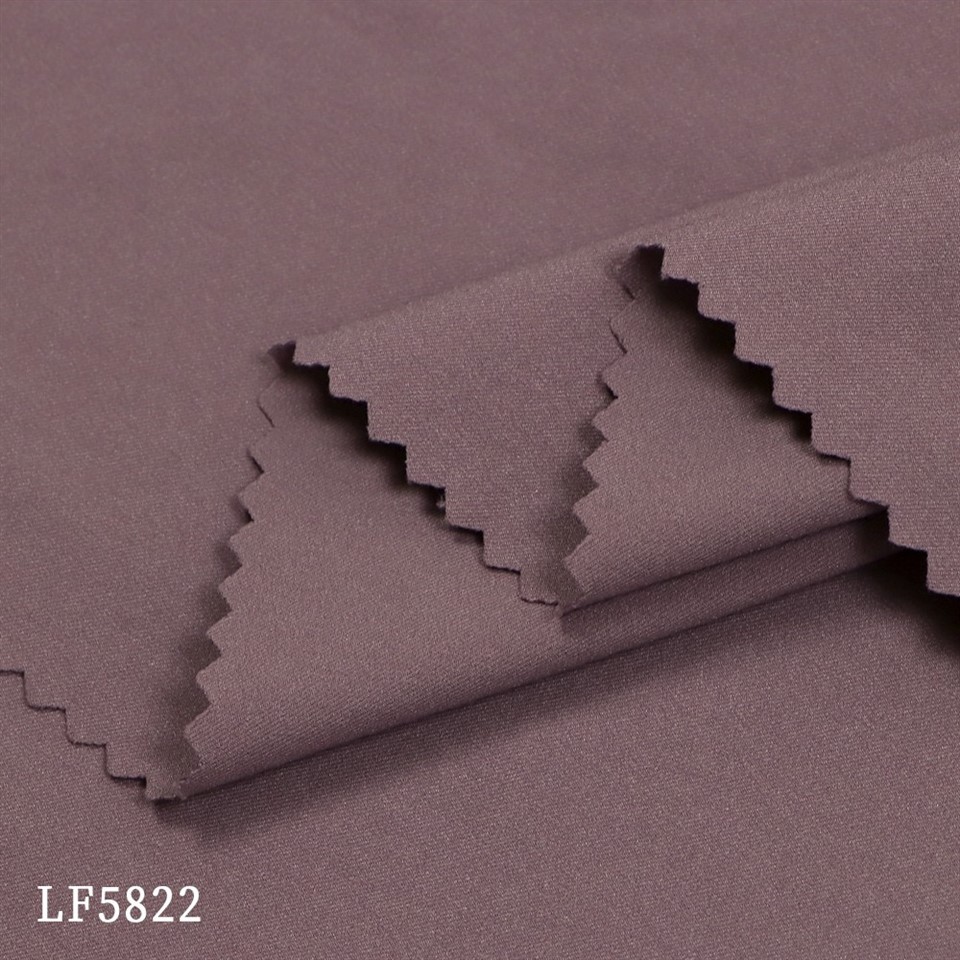
Texture and hand (that’s the industry term for how a fabric feels to the touch) are another key property of 3/3 twill. The balanced interlacing gives it a smooth, slightly matte surface, with a subtle ribbed texture that runs along the diagonal line. It’s not as rough as a heavy canvas, nor as slick as a silk satin—its hand falls somewhere between medium and medium-weight, making it incredibly versatile. For upholstery projects, clients often love that it’s soft enough to be comfortable on couch seats, but firm enough to hold its shape without sagging over time. For apparel, it’s breathable too: the gaps between interlaced threads are small but enough to allow air circulation, so it works for both cool-weather outerwear (like utility jackets) and mid-season shirts. I recently supplied a batch of 3/3 twill to a small outdoor brand making hiking pants, and their feedback was that it didn’t stick to the wearer’s skin like a heavier woven fabric, even on 80°F hiking days.
Versatility of application is the property that makes 3/3 twill one of the most flexible fabrics in our catalog. Unlike specialized weaves that only work for one use case, 3/3 twill adapts beautifully to cotton, polyester, linen, wool blends, and even recycled fibers. For example, a cotton 3/3 twill is soft enough for dress shirts, a polyester-cotton blend 3/3 twill is stain-resistant enough for restaurant uniforms, a wool 3/3 twill is warm enough for tailored coats, and a recycled polyester 3/3 twill is durable enough for outdoor gear. The pattern also works with different finishes: we can treat it with water repellent, fire retardant, or anti-static coatings without altering the diagonal line, because the weave structure remains intact through the finishing process. Last year, I worked with a hospitality company that needed custom table runners and seat covers for their hotel lobby; they chose a 3/3 twill in a neutral taupe, and when we applied a stain-resistant finish, the fabric still looked elegant, not like a technical work material.
Wait, let’s address a common misconception about 3/3 twill: it’s not just for heavy fabrics. While it’s most commonly found in mid to heavy-weight materials (8 to 12 ounces per square yard), we also make fine-weight 3/3 twills for blazer linings, dress linings, and even accessory fabrics like wallets or watch bands. The key is adjusting the thread count—finer threads (like 60s count cotton) woven to a tighter count give a lightweight 3/3 twill that’s smooth and drapey, while coarser threads give the heavier, more durable version. That flexibility in weight is part of why it’s such a staple for designers who need a consistent, reliable fabric that can scale from small accessories to large upholstery projects.
Now, let’s talk about care—something every customer asks about, because even the strongest fabric is useless if it’s hard to maintain. 3/3 twill’s tight interlacing means it resists wrinkles better than most plain weaves, so it often doesn’t need ironing after washing. When it does need care, it’s easy: most 3/3 twill fabrics are machine washable, and we recommend cold water to preserve the color and pattern, though we also supply pre-washed and pre-shrunk versions for clients who want to avoid any shrinkage after sewing. We’ve had clients tell us that their 3/3 twill work pants have lasted 5+ years with only occasional washing, compared to plain weave work pants that show wear at the seams after 1-2 years. That longevity makes it a cost-effective choice too—even if the initial price is a bit higher than a plain weave fabric, the fact that it lasts longer means better value over time.
As a supplier, I’ve also noticed that 3/3 twill has a unique aesthetic that resonates with both traditional and modern designs. The subtle diagonal is a classic look, used in workwear for decades, but it also pairs well with minimalist and contemporary designs, because its pattern isn’t overly busy. Unlike plaids or stripes, which can overwhelm a small project, the 3/3 twill’s diagonal adds a subtle visual interest without being distracting. A lot of our fashion clients use it for button-down shirts, blazers, and skirts, because it adds texture and structure to the garment without making it look loud.
I should also mention a key structural detail that affects performance: the direction of the twill. The diagonal line of a 3/3 twill can run from bottom-left to top-right (known as a “right-hand twill”) or top-left to bottom-right (“left-hand twill”), which is determined by how the warp and weft threads are interlaced. This might seem like a small difference, but it affects how the fabric stretches and drapes. Right-hand twills are more common, but some specialty applications, like tailored suits, use left-hand twills to create a subtle asymmetry that adds visual depth. As a supplier, we can custom-weave either direction, or adjust the thread count to meet a client’s specific needs—whether they need a 7-ounce twill for shirts or a 15-ounce twill for heavy-duty work gear.
Now, let’s circle back to why all these properties matter for someone sourcing a reliable fabric. When a brand or tailor chooses a 3/3 twill, they’re not just choosing a pattern—they’re choosing a fabric that balances strength, comfort, versatility, and style. It’s not the flashiest weave, but it’s one of the most consistent, and that’s why it’s remained in demand for over a century.
If you’re working on a project that needs a fabric that can hold up to use, look polished, and adapt to whatever finishes or applications you have in mind, 3/3 twill is a solid choice. We work with designers, manufacturers, and small businesses to supply bulk and custom 3/3 twill fabrics in a range of weights, fibers, and colors, and we can help you pick the right version for your specific needs. Whether you’re making workwear, upholstery, apparel, or accessories, we can provide samples, custom-dyed options, and bulk orders to fit your timeline and budget. Feel free to reach out to our team to discuss your project details—we’re here to help you find the perfect 3/3 twill for your needs.
Polyster Nylon Fabric References
- Collier, B., & Tortora, P. (2020). Understanding Textiles (7th ed.). Pearson.
- Beever, R. (2018). Weave Structure and Design: A Practical Guide. The Textile Institute.
- Hunter, L. (2021). Technical Textiles for Apparel and Home Furnishings. Woodhead Publishing.
- International Textile Manufacturers Federation. (2022). Twill Weave Performance Standards for Industrial and Apparel Fabrics. ITMF Annual Technical Report.
Shaoxing Huichao Textile Co., Ltd.
As one of the most professional 3 3 twill weave manufacturers and suppliers in China, we offer a wide range of products with superior quality. We warmly welcome you to wholesale bulk 3 3 twill weave in stock here from our factory. If you have any enquiry about cooperation, please feel free to email us.
Address: Shenyue International Build ing, Unit 1603-1605, Keqiao District, Shaoxing City, Zhejiang Province, China
E-mail: darrenzhong@huichaotextile.com
WebSite: https://www.huichaotextile.com/
