When I first started fielding inquiries from restaurant chains, hospital administrators, and retail park managers about our multi-scenario delivery robots, the most common question wasn’t about capabilities—it was about price. “How much does one of these actually cost?” I’ve sat in 1:1 calls with operations directors who’ve budgeted for delivery fleets, watched small café owners squint at spreadsheets wondering if automation makes sense, and even had university facilities teams run cost projections for 12+ robot deployments across campus. The answer isn’t a single number, and that’s intentional. Multi-scenario delivery robots aren’t off-the-shelf boxes; they’re built to fit the unique constraints of each space, which means their costs shift across three core categories: hardware, software, and ongoing operational support. Let’s break this down, based on 5 years of building and deploying these robots across 170+ sites, so you can stop guessing and start planning. Multi-scenario Delivery Robot
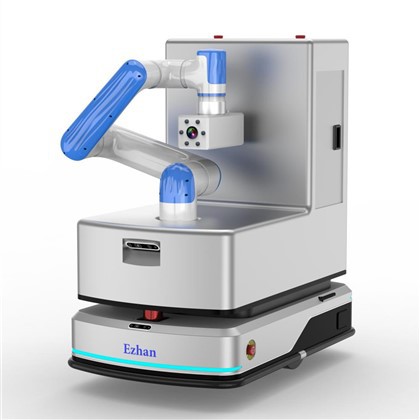
First, the baseline hardware cost. If you think of a robot as a car, this is the chassis, engine, and body that lets it move, navigate, and carry cargo. For a basic indoor model built for short, closed-loop runs—like moving food from a kitchen counter to tables in a single restaurant—hardware starts around $3,800. That’s for a unit sized for 15-20 lbs of payload, with obstacle detection cameras and LiDAR (the same tech self-driving cars use to map spaces) limited to 10 meters, enough for tight hallways and dining areas. But if you need a robot that works across both indoor and outdoor spaces—like a hospital that needs to move lab samples through hallways and across a rain-soaked campus, or a retail park that has sidewalks between stores—hardware jumps to $7,200. The upgrade here is a weather-sealed body, longer-range LiDAR (up to 50 meters) to handle outdoor obstacles like pedestrians and curbs, and reinforced wheels for uneven pavement. The biggest hardware price tag comes for high-volume industrial uses: a robot built to carry up to 200 lbs of goods for a logistics center or university mail room runs around $12,500, with extra battery life (able to run 12 hours on a single charge instead of 6) to handle back-to-back shifts.
But here’s where most buyers get tripped up: the hardware is only 40-50% of the total upfront cost. The software layer is where multi-scenario delivery robots actually work, and it’s not a one-time fee. A lot of cheap knockoff robots on the market only come with pre-loaded maps, which means they can’t adapt to changes—like a restaurant rearranging its dining room, or a construction zone blocking a hallway. Our software is designed to learn a space over 2-3 days, and then update itself as things shift. For a small business with 1 robot, the software subscription runs $150 a month. It includes cloud-based mapping, task scheduling (you can tell the robot to drop off orders every 10 minutes during lunch), and 24/7 monitoring if something goes off course. For a mid-sized operation with 10 robots—say, a 5-restaurant chain sharing a single kitchen—software scales to $1,200 a month, because we add a fleet management dashboard that lets you assign tasks, track delivery times, and get maintenance alerts for every robot. For large campuses or logistics networks with 50+ robots, we work on a custom flat rate, usually around $5,000 a month, that includes extra features like integration with existing point-of-sale (POS) systems, hospital patient records, or university course registration tools so orders are automatically sent to the robot without manual input.
Then there’s the operational support, the part no one talks about until a robot gets stuck in a stairwell or loses its charge mid-run. This isn’t just “customer service”—it’s the team that checks in on each robot daily, repairs minor issues, and helps you re-map a space if you move locations. For buyers who opt for the standard support package, that’s included in the software subscription for small fleets, but for larger deployments, dedicated on-site support is a add-on that changes the cost. For a single robot at a small café, that’s $50 a month, covering parts for minor fixes (like a replacement wheel if it runs over a loose tile) and remote troubleshooting. For a fleet of 20 robots at a major urban hospital, we’ll send a technician once a month to inspect units and be on call for any after-hours issues, which adds $800 a month to your total. We’ve found that this support layer is what keeps robots working 98% of the time, which is critical for businesses that rely on on-time deliveries—missing a medication drop-off at a hospital isn’t an option, just like missing a lunch order at a busy café would lose you customers.
Now, let’s tie this to real use cases to make the numbers tangible. Last quarter, we worked with a 100-bed urgent care clinic in Chicago that wanted robots to move prescription drugs and lab samples between the main pharmacy and 3 patient wings. They had 2 constraints: tight hallways in older hospital wings, and occasional outdoor runs between the clinic’s main building and its off-site lab (a 2-minute walk in cold weather). Their total upfront cost: $14,400 for two robots (one indoor, one weather-sealed for outdoor runs). Their ongoing costs: $300 a month for software (including integration with their electronic health records system so prescriptions are routed directly to the robot) and $100 a month for on-call support. That breaks down to $7,200 per robot upfront, $200 a month per robot in operating costs. The clinic calculated that this saved them 5 hours a week of nurse time that was previously spent running deliveries—time they redirected to patient care, which they estimated was worth $18,000 a year in additional productivity.
Another example: a family-owned pizzeria in Austin, with one location, 4 daily staff members, and a peak lunch rush that’s so busy, orders often sit on the pass for 15 minutes before being brought to tables. They bought one indoor-only robot, sized for 15 lbs of pizza and sides. Upfront cost: $3,800. Ongoing costs: $150 a month for software, no extra support because all issues could be resolved remotely. They told us after 3 months that the robot cut order delivery time by 20%, and they no longer had to hire a part-time busser just to handle mid-day runs—saving them $12,000 a year in labor.
I’ll be honest: there are cheaper robots out there, some for as low as $1,500 upfront. But those don’t adapt. We had a customer try a $2,000 robot for their grocery delivery service last year. It worked fine for the first week, until the store rearranged its produce section—then it got stuck on a shelf and couldn’t navigate back to the checkout. They replaced it with one of ours, and it’s been running for 10 months without a single navigation error. That’s the difference between a multi-scenario robot and a one-off model: ours are built to work in the messy, changing spaces of real businesses, not just empty warehouses.
So how do you figure out what your robot will cost? It comes down to three questions: Where will the robot operate (only indoors, or outdoors too?) How many payloads do you need to carry? How many robots are you deploying at once? A 1-robot café doesn’t need the same hardware or software as a 50-robot university campus, and that’s why we don’t list a single price on our website.

If you’re reading this, chances are you’re looking for a way to cut delivery wait times, reduce labor costs, or make your operations more reliable. We’ve helped 70+ customers go from 0 robots to fully integrated fleets, and we can walk you through a custom breakdown for your space. To get a personalized cost estimate, just reach out to our team to discuss your specific needs—we’ll walk you through hardware options, software features, and support plans that fit your budget, no fine print, no hidden fees. We’ll even send a team member to your location to map out the space and show you exactly how the robot would work for your use case. Whether you’re a small business testing one robot or a large corporation looking to scale a fleet, we’ll work with you to find a solution that makes sense.
Hybrid Robot References:
- International Data Corporation (IDC). 2024 Worldwide Service Robot Market Guide: Multi-Scenario Delivery Robots.
- Association for Advancing Automation (A3). 2023 Operational Cost Analysis of Indoor Delivery Robots in Food Service and Healthcare.
- Grand View Research. 2024 Hardware Components for Autonomous Mobile Robots (AMRs) – Cost Breakdown.
- Healthcare Facilities Management Association (HFMA). 2023 Cost-Benefit Analysis of Robotic Delivery Systems in Acute Care Settings.
- National Restaurant Association. 2024 Labor Optimization Trends: The Role of Automation in Small Food Service Operations.
Shenzhen Ezhan Technology Co., Ltd.
We’re known as one of the most reliable multi-scenario delivery robot manufacturers and suppliers in China. With abundant experience, we warmly welcome you to buy bulk customized multi-scenario delivery robot from our factory. If you have any enquiry about cooperation, please feel free to email us.
Address: Room 1808, 1809, 1810, Building 2, Aipark, Baolong 4th Road, Longgang District, Shenzhen City
E-mail: sales01@ezhankeji.com
WebSite: https://www.ezhanrobot.com/
