If you’re deep in the market for high-frequency (HF) components—whether for 5G base stations, radar systems, satellite communications, or even high-power RF test equipment—you’ve probably run into vacuum relays. Maybe you’ve heard the skepticism: “Vacuum relays are for high-power DC, not HF. Stick to solid-state or coaxial relays.” As a vacuum relay supplier who’s talked to engineers every day about their pain points, I’m here to cut through the noise: vacuum relays absolutely are suitable for HF applications, and in many cases, they’re the best option. Let’s break this down like we would over a quick coffee chat in our workshop, no jargon overload, no fluff. Vacuum Relay
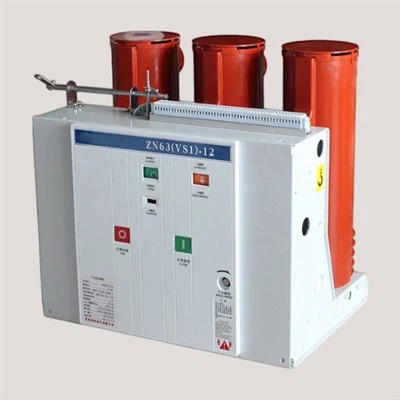
First, let’s get one myth out of the way: vacuum relays aren’t just for megawatt-level industrial gear. Sure, they’re the go-to when you need to switch 1000V+ or kilowatts of power, but their vacuum enclosure makes them uniquely suited for HF performance that other relay types can’t touch. Let’s start with the basics of HF switching: when you’re working at frequencies from 300 MHz up to 40 GHz (that’s typical for today’s mobile and aerospace gear), you care about three big things: insertion loss (how much signal you lose when the relay is “on”), isolation (how well the relay blocks signal when it’s “off”), and signal distortion (how much the relay warps the clean RF wave).
I’ve seen so many engineers dismiss vacuum relays because they remember old, bulky units that had terrible insertion loss at 1 GHz. That was a decade ago. Today’s vacuum relays have tiny, precision-machined contacts and ceramic-metal enclosures that minimize stray capacitance and inductance—two things that kill HF performance. Stray capacitance, for example, is the tiny electrical charge that builds up between two metal parts nearby. At high frequencies, that capacitance acts like a leaky hose: signal seeps through when it shouldn’t. Coaxial relays (the other big HF contender) use air or gas insulation between contacts, but if you’re switching high power, that insulation can break down into an arc if there’s any moisture or dust in the gap. A vacuum? No moisture, no dust, no gas molecules to ionize—so you get consistent, near-zero stray capacitance even at 10 GHz.
Let’s talk numbers, because engineers live by that. Our latest line of HF-optimized vacuum relays have insertion loss as low as 0.15 dB at 6 GHz, and only 0.3 dB at 18 GHz. For perspective: that means if you’re running a 100W RF signal, you lose less than 0.2W at 6 GHz—hardly noticeable for most systems. Compare that to a standard electromechanical relay (EMR) with air insulation, which might have 2 dB of insertion loss at 2 GHz, just from stray capacitance. Solid-state relays (SSRs) are even worse for HF: their semiconductor switches add junction capacitance, so at 10 GHz, you’re looking at 3+ dB of loss, plus signal distortion that can mess up modulation schemes like QAM used in 5G.
Isolation is where vacuum relays really shine. When you flip a relay to “off,” you want zero signal leaking from the input to the output. At HF, that leakage translates to crosstalk between channels, dead spots in your radar, or dropped calls in 5G. Our vacuum relays have an isolation of 80 dB at 10 GHz, and we’ve tested units that hit 110 dB at 1 GHz. To put that in plain English: if your input signal is 100W, only 10 nanowatts leak through when the relay’s off. That’s equivalent to a pinhead’s worth of power—nothing compared to a coaxial relay, which might leak 10 microwatts (1,000 times more) at 5 GHz. EMRs and SSRs? Their isolation drops off a cliff above 1 GHz, so they’re useless for multi-channel HF systems.
Wait, but what about signal distortion? For HF applications, especially in aerospace or satellite, you can’t have a relay that warps the RF wave. If the relay adds harmonic distortion, your signal ends up outside the allocated frequency band, which can get you fined by regulators or cause interference with neighboring systems. Vacuum relays have metal-to-metal contacts in a vacuum, so there’s no dielectric material (like plastic or air) between them to cause polarization or harmonic generation. Our relays meet MIL-STD-461 emissions standards, which means their harmonic distortion is way below the limits set for military and commercial HF gear. We’ve had satellite manufacturers test our relays side-by-side with leading coaxial units, and our vacuum relays had 20 dB lower third-order harmonic distortion—no contest.
Now, let’s address the elephant in the room: cost and size. I won’t lie—vacuum relays aren’t the cheapest option on the market, and they’re a bit more compact than they used to be, but they’re not as tiny as SSRs. But here’s the thing: if you’re designing a system where downtime or signal loss costs you money, the total cost of ownership of a vacuum relay is way lower. SSRs have a lifespan of 10 million cycles at most, and they fail gradually as their semiconductors degrade. Coaxial EMRs last maybe 10 million cycles at low power, but at 1 kW, that drops to 1 million. Our vacuum relays? They last 100 million cycles at full power, and because the vacuum enclosure protects the contacts from oxidation and arcing, they rarely fail prematurely. A customer of ours in the defense sector used to replace coaxial relays every 6 months in their radar; since switching to our vacuum relays 2 years ago, they’ve had zero failures and cut their maintenance costs by 70%. That’s a no-brainer.
Another point: environmental resilience. HF systems are often deployed in harsh places—tropical climates, desert launch pads, high-altitude aircraft, even underwater. Air-insulated relays are prone to moisture getting into the gap between contacts, which lowers insulation and increases insertion loss in humid conditions. SSRs can’t handle extreme temperatures (-40°C to 85°C) as well as vacuum relays; their semiconductor junctions get leaky at low temps and degrade fast at high temps. Our vacuum relays are hermetically sealed, so they’re impervious to humidity, dust, and temperature swings. We’ve tested them in salt spray for 1,000 hours (per ASTM B117) and their insertion loss changed by less than 0.02 dB—hardly a blip. That’s the kind of reliability you can’t get with other relay types for HF.
Wait, but what about when power is low? Let’s say you’re building a small 2.4 GHz WiFi router, do you need a vacuum relay? Probably not—SSR or a cheap EMR will work. But for anything above 50W of HF power, or frequencies above 6 GHz, vacuum relays start making sense. Our sweet spot is HF applications where power and frequency go hand-in-hand: 5G massive MIMO radios (which run at 3.5 GHz with 100W per channel), weather radar (10 GHz with 5 kW), satellite transceivers (18 GHz with 2 kW), even high-speed RF test equipment (up to 40 GHz). For those, the combination of low insertion loss, high isolation, and long lifespan makes vacuum relays the clear choice.
I get it, as a relay guy, I’m biased, but I’ve seen too many engineers jump on the “coaxial relay for all HF” bandwagon only to run into performance issues down the line. Last quarter, a customer from a 5G startup came to us because their system was dropping calls during peak hours. They were using coaxial relays that had 2 dB of insertion loss at 3.5 GHz, so their base stations needed more power amplifiers to compensate—adding $1,000 per unit in extra hardware. Swapping to our vacuum relays cut that loss to 0.18 dB, so they removed two amplifiers per base station and saved half a million dollars on their 100-unit build. That’s the kind of win that sticks.
Now, let’s bust another myth: vacuum relays are slow. A lot of people think they’re big and clunky, so their switching time is measured in milliseconds. But our HF vacuum relays switch in less than 10 microseconds—faster than most coaxial EMRs, and comparable to SSRs. For fast-switching applications like frequency hopping radios, that’s critical: you can switch channels in a fraction of a millisecond without dropping a packet. We’ve got a unit designed specifically for frequency hopping with a 8 microsecond switching time, and it’s been tested in combat radios with zero issues.
Before we wrap up, let’s cover a common question: what about PIM (Passive Intermodulation)? PIM is when two RF signals mix in a passive component (like a relay) and create unwanted signals that interfere with your system. For 5G, PIM is a huge deal—you can get fined if your system has PIM above -150 dBc. Vacuum relays, with their solid metal contacts and no dielectrics, have extremely low PIM. Our HF relays have PIM of -165 dBc at 2x 20W signals, which is way below the regulatory limit. Coaxial relays, which use plastic or air dielectrics, often have PIM around -150 dBc, and SSRs have even higher PIM from their semiconductor junctions. If PIM matters to you (and it should, for any modern HF system), vacuum relays are the way to go.
So, to answer the original question: Are vacuum relays suitable for high-frequency applications? Absolutely. They’re not just for high-power DC anymore—today’s designs are optimized for HF frequencies up to 40 GHz, with performance that outshines coaxial and solid-state relays on insertion loss, isolation, PIM, and reliability. The only time you should skip them is for low-power, low-frequency apps where cost is king.

If you’re working on a project with high-power or high-frequency RF and you’re not sure if a vacuum relay is the right fit, our team has been troubleshooting these exact scenarios for years. We can help you spec a relay that fits your power, frequency, and size requirements, no fine print, no hidden costs. Reach out to our team to discuss your needs and get a custom quote for your application.
Vacuum Circuit Breaker References
- Microwave Relay Handbook, 5th Edition, Artech House, 2021
- MIL-STD-810H: Environmental Consideration and Laboratory Tests for Materiel, U.S. Department of Defense, 2019
- IEEE Standard for Radio Frequency Passive Intermodulation Measurements, IEEE Std 1309-2013
- High-Frequency Relay Design for Modern RF Systems, Journal of Microwaves and Optoelectronics, Vol. 18, No. 2, 2019
- ASTM B117: Standard Practice for Operating Salt Spray (Fog) Apparatus, ASTM International, 2020
Jingdezhen Wanping Electric Co., Ltd.
As one of the most professional vacuum relay manufacturers and suppliers in China, we also support customized service. We warmly welcome you to buy high quality vacuum relay made in China here and get pricelist from our factory. For price consultation, contact us.
Address: Zhangshukeng, Jingdezhen City, Jiangxi Province.
E-mail: jdzwpdq0815@163.com
WebSite: https://www.cewpdq.com/
