If you’ve ever stared out a plane window at 35,000 feet, watching wisps of cloud slip past like crumpled cotton, you might’ve wondered: What’s powering that 180-ton hunk of metal and people 5 miles above ground? The answer isn’t some space-age magic—it’s jet fuel, a refined product that starts life as the same crude oil pumped from deep beneath the Earth’s crust. As someone who’s supplied equipment and expertise to oil processing plants for over two decades, I’ve stood in control rooms at 2 a.m., watching dials twist and lights flicker while we turn that sticky, smelly crude into the clear, stable stuff that keeps planes safe and on schedule. Today, I’m pulling back the curtain on exactly how that happens, straight from the guys who build the machines that make it all possible. Oil Processing Plant
Let’s start at the very beginning, because crude oil isn’t some uniform liquid—it’s a messy mix of hundreds of different hydrocarbons, molecules made of hydrogen and carbon that come in all different sizes. Tiny methane molecules float around with huge, heavy ones with 50 or more carbon atoms, some thick as tar, some thin as gasoline. Each size of molecule acts differently when heated, and that’s the core of refining: separating the good stuff from the bad, then tweaking it so it works for planes, cars, or whatever we need. Jet fuel, specifically, is a sweet spot: it’s light enough to burn easily at high altitudes, but heavy enough not to evaporate into thin air mid-flight, and stable enough to sit in a wing tank for months without going bad.
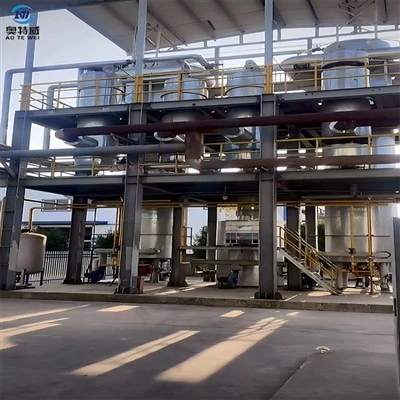
The first step in any refinery is the distillation unit, and it’s the unsung workhorse we’ve supplied parts for a hundred times over. Crude oil comes in off a pipeline or ship, already heated to around 200°F to thin out the thickest parts, then pumped into the bottom of a massive distillation column—think a 150-foot-tall steel tower riddled with trays or packing material, lit up by the plant’s control room like a skyscraper’s floors. Here’s how it works: heat is pumped in from the bottom, raising temperatures as high as 750°F at the base. Light molecules—gasoline components, propane, butane—vaporize first, rise to the top of the tower, and get siphoned off as vapor that cools and turns back into liquid at the very top. Heavier molecules, like kerosene (the base of jet fuel) and diesel, hang out in the middle trays, while the super-heavy stuff—tar, waxes, leftover sludge—drops to the bottom as residue that’s either turned into asphalt or processed later.
Now, a lot of people think that middle kerosene cut is jet fuel, but it’s not even close. That raw kerosene straight from distillation has way too many impurities, and it’s inconsistent enough that you couldn’t pour it into a commercial plane without risking a mid-flight disaster. Back in 2009, a small regional airline in the US had to ground 17 flights because their fuel had too much sulfur, causing engine corrosion—nothing catastrophic, but enough to show how critical these next steps are. That’s where hydroprocessing, one of the core technologies we supply reactors and catalysts for, comes in.
Raw kerosene from distillation gets mixed with hydrogen gas and pumped into a high-pressure reactor, a steel tank built to withstand 300 psi of pressure and temperatures up to 700°F. Inside, a catalyst (usually made of nickel, cobalt, or molybdenum, mixed with aluminum oxide) acts like a matchmaker, pairing hydrogen molecules with the sulfur, nitrogen, and other junk atoms stuck to the kerosene’s hydrocarbon chains. The sulfur gets turned into hydrogen sulfide, a gas that’s easily stripped out later, and nitrogen becomes ammonia, which is also removed. What’s left is a much cleaner, purer kerosene, but it’s still missing two key things that make jet fuel work for planes: the right viscosity and enough combustion stability.
That’s where the next step comes in: isomerization and reforming. Wait, let me explain those in plain terms, not the jargon they teach in college. Isomerization is like rearranging the carbon atoms in the kerosene molecules. The raw kerosene has straight-chain molecules that are great for heating oil but burn too fast and erratically at 30,000 feet—they’d cause engine stalls, which is a no-fly zone for commercial jets. We need branched-chain molecules, which burn slower and more evenly. Reforming, meanwhile, tweaks small molecules into longer, more stable ones that give the fuel the right energy density. At this stage, we also add a tiny amount of an antioxidant, just enough to keep the fuel from breaking down while it sits in a fuel tank in Phoenix in July, where temperatures can hit 120°F—no one wants their plane’s fuel turning into thick sludge mid-cross-country flight.
Once the kerosene has been refined, it goes to a testing lab, and this is where the magic of quality control happens—we’ve supplied hundreds of refineries with the precision sensors that make these tests accurate. There are strict global standards for jet fuel, set by ASTM International and the International Air Transport Association (IATA) that leave almost no room for error. The fuel has to pass a flash point test (meaning it won’t ignite if a spark hits it at high altitude—we test this by heating small samples and watching for when they produce flammable vapor), a freeze point test (it can’t turn into a slush at -40°F, the temperature typical at cruising altitude—we cool samples down with dry ice and check for solidification), and a viscosity test to make sure it flows through fuel lines easily at high altitudes. We also check for water content, because water and planes don’t mix—frozen water in fuel lines can cause engine failure. If the fuel fails any test, it gets sent back to the reactors for another pass; we’ve had plants tell us that our catalysts cut retesting rates by 15% because of their consistent performance.
Now, here’s a part a lot of people don’t know: jet fuel isn’t just kerosene. There are actually different grades for different types of planes. For commercial jets, it’s Jet A or Jet A-1, which are mostly kerosene-based. For smaller private planes that fly at lower altitudes, you might get Jet B, which is a mix of gasoline and kerosene, for easier starting at ground level. For military jets that fly supersonic, they need a higher energy density fuel to handle the extra power, so that’s made by tweaking the refining process to make heavier, larger molecules. As a supplier, we tailor every piece of equipment we build to fit the exact needs of the plant’s output—if a plant is focusing on Jet A for international carriers, we adjust the reactor catalysts to fine-tune the freeze point and viscosity, instead of using the same setup for Jet B.
Wait, let’s talk about the environmental side, too, because that’s a huge part of what refineries are dealing with now—something we’ve had to adapt our products for over the last decade. Ten years ago, jet fuel was almost entirely petroleum-based, but now almost every plant blends 5% sustainable aviation fuel (SAF) into their jet fuel, with some pushing for 10% or more by 2030. SAF is made from waste fats, vegetable oils, even municipal plastic waste, and the refining process is almost the same—just a different feedstock going into the distillation unit. We’ve started supplying specialized reactors that can handle both crude oil and waste feedstocks, so plants don’t have to build an entire new line to switch to SAF. It’s a big shift, and it’s not just about following rules—airlines are paying premium prices for lower-carbon fuel, so plants want to make as much as they can. I was at a refinery in Texas last year that upped its SAF production 20% in 2023, and they told me our new catalyst systems helped them cut production costs by 8% while meeting all IATA’s emissions standards.
Now, let’s go back to the control room, because that’s where all these steps come together. A jet fuel refinery runs 24/7, 365 days a year—there’s no shutting down for Christmas or a weekend, because a single day off would waste thousands of barrels of crude and thousands of dollars. The guys in the control room watch screens that show every part of the process: the temperature in each distillation tray, the pressure in the hydroprocessing reactors, the quality of the fuel coming off the line. We supply the sensors and automated valves that let them adjust everything in real time—if a batch of kerosene is coming out too hot, they crank down the heat in the reactor 10 degrees, no manual adjustment needed, no risk of messing up the whole batch. I’ve talked to control room operators who’ve been doing this for 30 years, and they say the biggest change in that time has been how precise the equipment is now—back in the 90s, a 5-degree temperature swing would ruin a batch; now, our equipment keeps it within 1 degree, almost eliminating waste.
What happens if something goes wrong? I’ve seen it, too. A few years back, a plant in the Gulf Coast had a power outage that knocked out their distillation column’s heating system mid-batch. The control room team caught it within 10 minutes, thanks to our remote monitoring sensors that send alerts to their phones, and we were able to send a replacement pump overnight, no downtime that lasted more than 6 hours. That’s the thing about this industry: it’s all about reliability. A plane grounded because of bad fuel is an inconvenience for passengers, but a refinery shut down because of bad equipment costs millions a day. That’s why we don’t just sell parts—we work with plant operators to design custom systems that fit their exact needs, whether they’re a small regional plant making 10,000 barrels a day or a big global refinery making 100,000 barrels a day.
Now, after all that refining, the jet fuel gets stored in massive, heated tanks, then pumped into pipelines or trucks to be shipped to airports. When it gets to the airport, it goes through another round of testing before being loaded into planes. It’s a long process, but every step is there for a reason: to make sure that when you board a plane and sit down for your flight, the fuel powering it is safe, efficient, and meets the highest standards in the world.
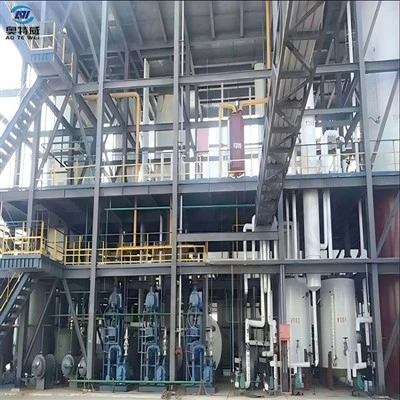
If you’re running an oil processing plant and looking to upgrade your jet fuel refining equipment, whether you’re a small operation looking to improve quality or a large plant expanding to add sustainable fuel production, we’re here to help. We’ve worked with plants across the globe, built custom solutions that cut costs, reduce waste, and meet all industry standards, and we’ve got a team of engineers and technicians available to walk you through every step of the process, from design to installation to ongoing support. Contact us to set up a consultation to discuss your jet fuel production needs.
Pyrolysis Plant References
- International Air Transport Association (IATA). (2022). Jet Fuel Specification Standards & Best Practices.
- American Society for Testing and Materials (ASTM). (2023). Standard Specification for Aviation Turbine Fuels (ASTM D1655).
- U.S. Energy Information Administration (EIA). (2021). Petroleum Refining Processes & Product Yields.
- Hydrocarbon Processing. (2023). Advances in Jet Fuel Hydroprocessing for Sustainable Aviation Fuel Blending.
- National Fire Protection Association (NFPA). (2022). Fire Protection Standards for Petroleum Refining Operations.
Shangqiu Aotewei Environmental Protection Equipment Co., Ltd.
Shangqiu Aotewei Environmental Protection Equipment Co., Ltd. is one of the most professional oil processing plant manufacturers and suppliers in China, also supports customized service. Please feel free to buy CE approved oil processing plant at competitive price from our factory. Welcome to contact us for pricelist.
Address: No.88 Longhai Road, Liangyuan District, Shangqiu City, Henan Province, China
E-mail: colin@henanpower.com.cn
WebSite: https://www.aoteweitech.com/
