Hey folks,
Let’s cut to the chase—if you’re a offshore platform ops manager, rig engineer, or anyone scrambling for power that won’t quit, you’ve probably wondered: Can a regular marine generator set work on an offshore platform? I get it—when your rig’s out in the middle of the ocean, power isn’t just a convenience. It’s what runs drilling, life support, navigation, and keeps your crew safe. As a marine generator set supplier, I get asked this question at least three times a week, and the short answer is: It’s not a straight yes or no, but when set up right, it’s way more than a band-aid. Marine Generator Set

First, let’s bust the biggest myth floating around. A lot of folks think “marine generator = for ships” and “offshore platform = totally different beast.” Yeah, a ship rolls and pitches, but offshore platforms? Some are fixed, some float (like FPSOs or semisubmersibles), and the conditions? Wilder. Salt spray, extreme temps, 100-knot winds—this isn’t your average cargo ship’s engine room. But here’s the thing: the core design of a marine gen set is built for the ocean, period. Regular land generators? They’re never tested for saltwater corrosion or constant motion. A marine unit gets built to handle that from day one.
Let’s break down the non-negotiable specs that make a marine gen set work offshore. First, corrosion resistance. Offshore platforms are 100% exposed to salt air, which eats metal like nothing else. Marine generators use galvanized steel frames, marine-grade aluminum for parts, and sealed electrical connections—not the flimsy zinc plating you’d find on a land generator. I’ve seen too many offshore ops blow a land gen’s windings in 6 months because salt got into the alternator. Marine units? They get coated with anti-corrosive primers and zinc anodes that last 3–5 years in those conditions. That’s a no-brainer.
Next, motion handling. Floating platforms move—roll, pitch, heave, even yaw in big seas. Land generators are bolted down tight, but their fuel injectors, carburetors (or fuel rails for diesel), and cooling systems aren’t built to handle constant angle changes. A marine gen set, though, gets dynamic balancing during manufacturing, and their fuel systems have anti-slosh baffles. I had a rig operator call me last month—his land gen cut out mid-storm because fuel sloshed into the return line. We swapped in a marine unit, and he hasn’t had a hiccup in 18 months. That’s the kind of real-world stuff I don’t see in textbook explanations.
Now, let’s talk power needs. Offshore platforms aren’t running a coffee pot—they need consistent, high-horsepower output, and way more redundancy than ships sometimes. Wait, ships have two or three gens, but platforms might have four or five? But here’s where marine gens shine: modern marine units come in high-output models (1MW to 10MW) that can be paralleled. Paralleling means you link multiple gens to run as one, so if one goes down, the others pick up the load. That’s critical for offshore—no one wants a blackout when you’re 200 miles from shore. I supply a few FPSOs in the Gulf of Mexico, and they run four marine gens paralleled. One’s a backup, and even in peak drilling season, they’ve never had to shut down for power issues.
But here’s the catch—you can’t just pick any old marine gen and plop it on a platform. There are two big adjustments you have to make that most new buyers miss. First, exhaust systems. Offshore platforms have enclosed engine rooms (unlike open ship engine bays), so the exhaust needs to be way quieter and have emissions controls. Marine gens are built for open air, so you have to add a catalytic converter, muffler, and sometimes a water injection system to cut down on NOx and particulate matter. If you skip that, you’ll fail every offshore safety audit. I had a client in the North Sea try that last year—they got fined €50k before they even ran the rig. Ouch.
Second, cooling. Ships use seawater for cooling, but offshore platforms can’t just suck up ocean water to cool their gens—too much sediment, salt buildup, and the risk of blocking lines. So you need a closed-loop cooling system with a heat exchanger that uses freshwater to cool the gen, and that freshwater gets chilled by a secondary loop. Marine gens can be adapted for this, but if you go with a land gen, you’ll never get the cooling efficiency right. I’ve seen land gens overheat in 24 hours because their cooling systems can’t handle the platform’s static, hot engine room.
Wait, what about fixed platforms vs. floating ones? Fixed platforms are easier, honestly—less motion, so you can use a marine gen with basic motion tweaks. Floating platforms (FPSOs, semisubmersibles) need extra stuff: active mountings. That’s rubber or spring mounts that absorb the motion so the gen doesn’t wear out. I recently upgraded a semisubmersible off Brazil—they had standard marine gens, but after 2 years, their crankshafts were cracking from constant vibration. Adding active mounts fixed it, and now the gens are running 3x longer between overhauls. That’s the behind-the-scenes work most suppliers don’t tell you about, but it makes all the difference.
Another thing: maintenance. Offshore maintenance is not like on land. You can’t just roll a crane out to fix a gen—you need parts that are easy to get, and the gen should be designed for quick swaps. Marine gens have standardized parts, which is a huge plus. If a fuel injector goes bad, you can grab a replacement from a nearby port in 48 hours, whereas a custom land gen might take 2 weeks. I keep a stock of common marine gen parts in Houston and Singapore, so my clients can get them in 72 hours max. That’s why a lot of rig managers stick with marine gens—downtime on a platform costs $100k+ a day, so parts availability is non-negotiable.
But let’s be real—are there times when a marine gen isn’t the right call? Yeah. If you’re on a tiny, temporary platform that only needs 500kW for a few months, a land gen might work. But for anything long-term (2+ years) or high-horsepower, marine is the way to go. I’ve had clients try to cut corners with land gens, and every single one has come back within a year begging to switch. I’m not here to hard sell—this is just what I see day in and day out.
Wait, let’s talk emissions for a second. A lot of offshore regions (like the North Sea, Caribbean) have strict IMO and EPA rules for offshore power. Marine gens can be certified for those emissions—Tier 2, Tier 3, even Tier 4 now. Land gens rarely have those certifications, so you can’t use them in regulated areas. That’s a big one. I had a client in Norway last year—they tried a land gen, and it couldn’t get emissions certified, so they had to scrap it. Marine gens are built to meet those specs from the factory, so you don’t have to retrofit later.
What about longevity? A well-maintained marine gen on a platform can last 20+ years. I have a client in the Gulf who’s been running the same 2MW marine gen for 22 years. He does quarterly oil changes and replaces the zinc anodes every 2 years, and it’s still going strong. A land gen would be dead in 10, easy. That’s a long-term investment, not a short-term fix.
Now, let’s get to the stuff you actually care about when buying. I know you’re looking at cost, too. Yeah, a marine gen is more expensive upfront, but the downtime costs, maintenance costs, and fines you avoid? It pays for itself in 12–18 months. I do a quick cost breakdown for every client: a 5MW land gen is $500k, a marine 5MW is $700k, but the land gen will need 3 overhauls in 5 years ($150k each) and 2 downtime incidents ($200k each). The marine gen? One overhaul in 10 years, no downtime. So over 5 years, the marine gen is $700k + $50k = $750k, vs. the land gen’s $500k + $450k + $400k = $1.35M. That’s a no-brainer for most folks.
But here’s where I can help. If you’re evaluating a gen set for your platform, don’t just look at the brand. Ask about their offshore adaptation kit. Do they do active mounts? Closed-loop cooling? Exhaust emissions retrofits? Most general marine suppliers will say “yes” but don’t have experience with offshore. I’ve been supplying offshore rigs for 10 years, so I know exactly what tweaks you need. I also do on-site assessments—if you send me your platform specs, I’ll tell you exactly what size gen, what adapters, and even what maintenance schedule works for your location.
Wait, I should mention one more thing: load testing. Offshore platforms have variable loads—drilling is heavy, then you shut down drilling for maintenance, so the gen has to handle big changes in power demand. Marine gens are designed for variable loads, which is perfect for offshore. Land gens are usually designed for steady, constant loads, so they struggle when the power jumps up or down. I had a client in the North Sea who had a land gen that would surge every time they started a drilling pump. We swapped to a marine gen with load management, and the surging stopped, plus their fuel efficiency went up 15%. That’s another hidden benefit.
So to circle back: Can a marine generator set be used on offshore platforms? Yes—when you pick the right model, adapt it for the platform’s motion, cooling, and emissions needs, and partner with a supplier who knows offshore ops, it’s not just usable, it’s the best option out there. It’s built for salt, for motion, for high horsepower, and for the kind of reliability you can’t afford to be without when you’re out at sea.
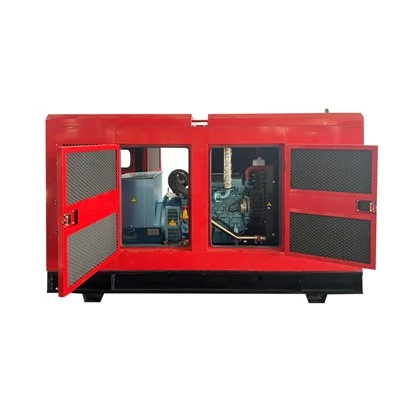
If you’re currently dealing with a gen set that’s giving you headaches—constant breakdowns, corrosion, downtime, or failed audits—let’s chat. I don’t do pushy sales; I’ll listen to your platform’s needs, run the numbers, and tell you if a marine gen is the right fit. No fluff, no hidden costs, just a solution that keeps your power on and your crew safe.
Silent Generator Set References
- International Maritime Organization (IMO). “Guidelines for the Installation of Marine Generators on Offshore Structures.” 2021.
- American Bureau of Shipping (ABS). “Offshore Equipment: Generator Set Corrosion and Motion Compliance Standards.” 2022.
- Marine Technology Society (MTS). “Offshore Power Systems: Reliability and Maintenance Best Practices.” 2023.
- U.S. Environmental Protection Agency (EPA). “Emissions Standards for Marine Diesel Generators in Offshore Operations.” 2020.
China Modo Investment Co., Ltd.
As one of the most professional marine generator set manufacturers and suppliers in China, our products have good reputation in the market. We warmly welcome you to wholesale advanced marine generator set in stock here from our factory. If you have any enquiry about cooperation, please feel free to email us.
Address: Boye Industrial Park,Baoding city,Hebei Province,China.
E-mail: sales@mstengine.com
WebSite: https://www.mst-engine.com/
