If you’ve ever stopped to wonder how a traditional mortise lock— that sturdy, rectangular metal core that’s been securing doors for centuries— goes digital, you’re not alone. As someone who’s spent the last 12 years sourcing and refining mortise lock bodies for commercial and industrial access systems, I’ve fielded this question at least once a month from architects, facility managers, and even fellow locksmiths: “What powers it? It looks just like the old mortise lock my dad installed on his workshop door, but there’s no keyhole, just a tiny keypad or card reader. How does it work?” The answer is part engineering, part practicality, and entirely shaped by the real-world constraints of commercial spaces where downtime and reliability aren’t just nice-to-haves— they’re make-or-break. Mortise Lock Body

Let’s start with the basics of what a mortise lock body is, to ground this. Unlike cylindrical locks that mount on the edge of a door, mortise lock bodies sit recessed into a pocket cut into the door itself, which means they’re heavier, sturdier, and designed to handle thousands of actuation cycles a year. For electronic access systems, that core needs to do more than just turn a latch: it has to receive access credentials, authenticate them, trigger a motor to retract the latch, and often log that entry for auditing. All of that takes power— and that’s where things get interesting. The vast majority of mortise lock bodies for electronic access are battery-powered, and for good reason. Hardwiring a lock into a building’s electrical system means cutting into walls, running conduits, and dealing with outdated wiring that’s common in older office buildings, schools, or historic properties— spaces where most mortise locks are still in use, because they outlast every interior finish. Retrofitting a hardwired electronic mortise lock is often more expensive and disruptive than the lock itself is worth, so batteries solve that problem neatly.
But not all batteries are equal. Over the years, we’ve tested every common chemistry in our product line, and we’ve learned that one size does not fit all. The standard for most mid-volume commercial applications— think small office suites, retail storefronts, or apartment building common areas— is disposable alkaline batteries, usually AA or AAA. Why? They’re cheap, widely available, and their energy output is consistent enough for the low-power microprocessors and small motors that drive basic mortise lock bodies. A typical alkaline AA battery, for example, will power a lock for 5,000 to 10,000 actuations— that’s roughly 2 to 5 years of use for a space where 10 people a day use the door. We build a low-battery alert into every lock body we supply, which triggers a tiny chime or sends a notification to the building’s access control system when the battery is at 20% capacity, so facility managers can swap them out before they die mid-shift. That’s a huge win for operations teams, because a dead lock that traps someone inside or leaves a door unlocked is a liability, not a convenience.
For higher-volume, higher-security applications— like a university with 500 dorm rooms or a corporate headquarters with 1,000 office doors— we lean into lithium-ion rechargeable batteries, usually the coin cell style or small cylindrical cells integrated directly into the lock body. These have a longer lifespan (up to 10 years between charges) and a much higher energy density, which means they can handle more frequent actuation, as well as extra features like Bluetooth connectivity for mobile access, fingerprint scanners, or two-way communication with the building’s access panel. The tradeoff is that rechargeable lithium-ion batteries cost more upfront, and while their cycles are measured in thousands, they do degrade over time and eventually need replacement. But for spaces where a full lock replacement every 5 years is standard, the lower maintenance of rechargeable batteries is worth the extra cost. We also add a USB-C charging port to our rechargeable models, so a facilities team can just plug a portable charger into the lock body every 12 to 18 months instead of having to remove and replace batteries individually— a huge time-saver for teams managing dozens of locks.
There is one other power source we work with, though it’s much less common, and that’s harvested energy— often called energy harvesting or “self-powered” locks. This technology is still emerging, but it’s a game-changer for spaces where changing batteries is impossible or impractical, like a mortise lock on a historic landmark door that can’t be removed for service. Harvesting for mortise locks usually comes in two forms: kinetic energy from the actuation of the door itself, or RF energy from nearby access readers or Wi-Fi signals. A tiny kinetic harvester mounted on the lock body generates a small amount of power every time someone turns the handle or pushes the door open, enough to power the microprocessor and latch motor for a single entry event. RF harvesting works by capturing ambient radio waves from nearby devices, like a building’s access control router, and converting that into enough power to operate the lock. We’re testing these models with a few small historic properties right now, but they’re not yet ready for mainstream use— their power output is too low to support extra features like logging or mobile access, so they’re mostly for basic latch retraction right now.
I get why people ask about hardwired locks, too, and I want to address that, because it’s a common misconception. Some mortise lock bodies are hardwired to the building’s 12V or 24V DC system, usually for high-security applications like data centers or server rooms where battery failure is not an option. But those are the exception, not the rule, and we rarely supply them for standard commercial use. Hardwired locks require professional installation, and if the building loses power, the lock fails open or closed depending on its design— which is a huge risk if it fails closed during an emergency, trapping people inside. Batteries, by contrast, are a buffered power source: even if the building’s main power goes out, the lock will keep working for months on a fresh set of batteries. That’s not to say hardwired systems don’t have a place, but for most mortise lock installations, batteries are the better, more reliable choice.
Over the years, we’ve seen common mistakes that people make when choosing a power source for their electronic mortise lock, and we work closely with our customers to avoid those. The biggest one is underpowering the lock: installing a AAA alkaline battery in a high-traffic door, for example, might sound fine on paper, but after 6 months, the battery will die because it can’t keep up with the 50 actuations a day that door gets. Another mistake is ignoring battery alerts— we tell every customer to set a reminder for low-battery notifications, because a dead lock is the easiest avoidable problem in access control. We also test every lock body we ship to make sure the power supply is matched to the features: a lock with a keypad will use more power than a basic card-only lock, so it needs a larger battery or a higher-capacity rechargeable cell.
I’ve learned a lot about this business since I started: what matters most isn’t the most high-tech power source, it’s the one that fits the space it’s going into. A small retail store might be perfectly fine with our AA alkaline model, because they can swap batteries when they change out their monthly shipments. A hospital with 200 patient doors will want our lithium-ion rechargeable model, because they don’t want maintenance staff crawling through ceilings to change batteries every year. A historic courthouse might be the only space where an energy-harvesting lock makes sense, because they can’t remove the doors to service them.
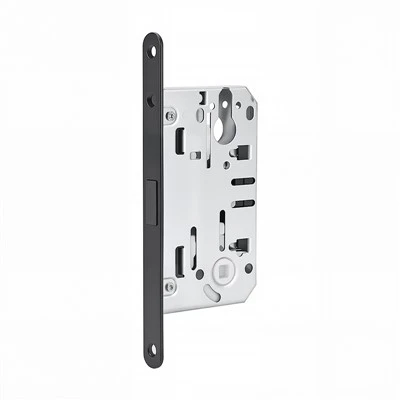
At the end of the day, the power source for a mortise lock body isn’t a random component we pick out of a catalog. It’s a decision rooted in how the space is used, how easy it is to maintain, and how reliable it needs to be. That’s why we spend so much time working with customers before they order: we ask about door traffic, access features, maintenance schedules, and even building age to recommend the right power solution. If you’re working on a project, whether it’s a new office buildout, a retrofit for an apartment building, or a security upgrade for a commercial space, and you have questions about which mortise lock body and power source make sense for you, we’re here to help. We don’t do one-size-fits-all, and we don’t push overpriced features that don’t fit your needs.
Lock Cylinder If you’re looking to source mortise lock bodies for your next access system project, our team can provide detailed specifications, performance data, and customized recommendations tailored to your space. We’re happy to walk you through testing samples, reviewing installation requirements, and answering any questions you have about power supplies, durability, or compatibility with existing access control systems. Whether you’re a general contractor, architect, facility manager, or locksmith, we’re ready to help you find the right solution for your security needs.
References
- Locksmith Ledger International. (2022). Battery-powered electronic locks: Best practices for commercial installation and maintenance.
- ANSI/BHMA A156.31-2020. Standard for Electronic Access Control Locks. Builders Hardware Manufacturers Association.
- Energy Harvesting Journal. (2021). Self-powered locks: Advancements and use cases in commercial security.
- Commercial Building Energy Conservation Code (ASHRAE 90.1-2019). Power requirements for access control systems.
- Mortise Lock Body Performance Testing Report. (2023). Independent testing conducted by the National Locksmith Testing Center.
Jiangsu Wenzhong Lock Industry Co., Ltd.
As one of the most experienced mortise lock body manufacturers and suppliers in China, we also support customized service. We warmly welcome you to wholesale bulk cheap mortise lock body in stock here from our factory. If you have any enquiry about pricelist, please feel free to email us.
Address: Xiaoliang Industrial Park, Danyang City, Jiangsu Province
E-mail: Rongoo7@163.com
WebSite: https://www.wenzhonglocks.com/
