If you’ve ever worked in industries like chemical processing, agriculture, construction, or food and beverage, you’ve probably relied on quick, leak-proof fluid transfers—whether for loading a tanker truck with fuel, moving potable water to a construction site, or pumping food-grade syrup to a processing line. I’ve spent the last 12 years as a Camlock coupling supplier, and the question I get asked most often isn’t just how to pick the right coupling, but how this unassuming, clunky-looking metal or plastic part actually works so reliably, even in high-pressure, high-demand environments. Camlock Coupling

Most people first spot a Camlock coupling (also called a cam and groove coupling) because of its instantly recognizable design: two male and female halves, each with a rounded outer profile, a hinged metal cam arm, and a rubber or elastomer seal inside. It looks simple enough, but there’s a lot of engineering that goes into making sure it doesn’t leak, lock accidentally, or fail mid-transfer. Let’s break down how it actually operates, from the moment you pick it up on the job site to the second you disengage it cleanly.
First, let’s get the basics of the two halves straight, because mixing up male and female parts is one of the most common mistakes new operators make. The male coupling is the half that connects directly to the end of a hose, pipe, or tank outlet. It has a straight external stem (the part that inserts into the other coupling) and a distinct, raised groove running around its circumference, just below the tip. That groove is non-negotiable—we manufacture it to precise tolerances, because it’s what the cam arms will lock into to hold the connection.
The female coupling is the half that the male inserts into. Inside its opening, there’s a recessed pocket where a pair of rubber gaskets sits—usually one full-width main seal, sometimes a smaller backup seal for extra protection in high-pressure applications. Most female couplings also have two notches on their inner rim, just above the gasket pocket; these notches are aligned with the cam arms when you prepare the coupling for engagement, a detail that’s easy to miss and often causes leaks if it’s off.
Now, the engagement process is where the magic happens, and it’s designed to be fast—no tools needed, which is why Camlocks are such a workhorse for time-sensitive transfers. Let’s walk through it step by step, as I’d demonstrate for a new warehouse associate or a contractor ordering their first batch of couplings:
- Prep the female coupling: First, ensure the two cam arms (one on each side of the female’s outer housing) are flipped open, not locked down. Then, turn the male coupling so its raised groove lines up with the notches in the female’s inner rim. This alignment is key—if you don’t line up the groove with the notches, the male can’t insert all the way, and the seals won’t compress properly.
- Insert the male: Push the male’s stem into the female’s opening firmly, until the end of the male’s shoulder (the wider part just above the stem) makes contact with the female’s outer housing. You’ll usually feel a slight “click” when it seats correctly—this is the male’s outer edge passing the inner rim of the female.
- Lock the cam arms: Flip both cam arms down over the male’s raised groove. Here’s where the mechanical lock kicks in: the cam arms are shaped like a curved lever, so when you push them down, their inner tips slide into the male’s groove, pulling the two couplings tight together. Most Camlock models have a safety tab that clicks into place when the cam is fully engaged, preventing it from flipping open accidentally during transfer.
That’s the quick process, but what’s actually happening to create a leak-proof seal? The gasket inside the female coupling is a compressible elastomer (think EPDM for water, Buna-N for chemicals, Viton for high-temperature or aggressive fluids). When the cam arms pull the two couplings tight, the male’s shoulder presses against the female’s outer housing, which in turn compresses the gasket between the end of the male’s stem and the back of the female’s inner pocket. This compression creates a physical barrier that stops fluid from seeping out between the two halves. It’s not just friction—this is a controlled compression, which is why we test every Camlock unit at our facility to ensure the gasket compresses to the manufacturer’s specified thickness (usually 0.5 to 1 mm, depending on the coupling size) to maintain a leak-free seal at pressures up to 150 PSI, and even higher for heavy-duty models.
Wait, but what about disengagement? You can’t just yank the two couplings apart when the line is pressurized, right? That’s a critical safety point, and it’s built into the Camlock’s design. Before you unlock the cam arms, you have to depressurize the line completely—any trapped fluid or air inside will create a sudden, forceful spray if you pull the couplings apart under pressure. Once the line is fully drained, flip the cam arms back up, and you can gently pull the male out of the female. There’s no complicated threading, no wrench, just that same simple lever mechanism working in reverse.
I’ve seen so many people dismiss Camlock couplings as “low-tech” because they don’t look like complex industrial valves or connectors, but that simplicity is what makes them so effective. Unlike threaded connections, which can cross-thread or seize up after repeated use, or flange connections that require tools and gaskets to install, Camlocks are designed for fast, repeatable connections—perfect for job sites where time is money, or for operations that need to connect and disconnect multiple times a day, like a food processing plant switching between different product batches.
Of course, no design is perfect, and I’ve seen a lot of Camlock failures that come from operator error, not the coupling itself. For example, using a Camlock made from the wrong material for the fluid you’re transferring is a common mistake. If you use a plastic acetal coupling (which is great for water and mild chemicals) for a strong acid, the acid will eat through the plastic gasket or housing, leading to leaks. That’s why as a supplier, I never just sell you a box of couplings—I ask about what fluid you’re moving, the temperature, the pressure, and whether it’s food-grade or not. A Viton gasket, for example, is essential for chemicals above 200°F, while a food-grade EPDM gasket is required for anything that touches produce, dairy, or beverages.
Another frequent issue is mismatched coupling sizes. Camlocks come in 1/4 inch up to 6 inch diameters, and each size is standardized, but it’s easy to mix up a 2 inch and a 2.5 inch coupling if you’re in a hurry. A coupling that’s too small won’t handle the flow rate you need, and a coupling that’s too big won’t seal properly. We always recommend testing your existing hose outlets or tank ports to confirm the correct size before placing an order, and we have a size guide on our website (though I don’t link it here) to make that process easy.
I also want to address a misconception some people have: that Camlocks are only for temporary connections. While they’re ideal for temporary transfers, many industrial operations use them for permanent connections too, because they’re so reliable. I supply Camlocks to a number of municipal water departments that use them for permanent tank connections, as well as to construction companies that use them for temporary water lines on job sites. The key difference is the material—stainless steel Camlocks, which I sell for heavy-duty applications, can last decades with proper maintenance, while cheaper aluminum or plastic models might need to be replaced every few years.
Let’s talk a bit about maintenance, because even the best Camlock will fail if you don’t take care of it. After each use, you should clean the couplings thoroughly to remove any residual fluid, especially if it’s sticky or corrosive. For couplings that use gaskets, you should inspect the gasket every few uses for tears, cracks, or wear— a damaged gasket is the number one cause of leaks. If a gasket is worn, you can usually replace it without replacing the entire coupling, which saves you money in the long run. Also, make sure to lubricate the cam arms occasionally with a food-grade lubricant (if it’s for food applications) or a general industrial lubricant, to keep the hinge working smoothly and prevent rust.
As a supplier, I’ve learned that the best Camlock customers aren’t just looking for a cheap part—they’re looking for a part that works consistently, that fits their specific needs, and that they can rely on to not cause downtime. Last year, a farm equipment dealer came to me after switching to a cheaper Camlock supplier, because they were having too many leaks when transferring fertilizer to their sprayers. I helped them switch to our heavy-duty Buna-N gasket aluminum Camlocks, and they told me they haven’t had a leak in over a year, which saved them thousands of dollars in wasted fertilizer and cleanup costs. That’s the kind of value I focus on, not just selling parts, but solving problems.
If you’re working on a project where you need a reliable, fast connection for fluid transfers, or you’re tired of dealing with leaky, hard-to-use couplings, I can help. We carry a full range of Camlock couplings in all standard sizes, materials, and gasket types, from 1/4 inch plastic models for small hose connections up to 6 inch stainless steel models for heavy industrial applications. We also offer custom size options if you have a non-standard port or hose, and we can help you select the right coupling for your specific fluid, temperature, and pressure requirements.
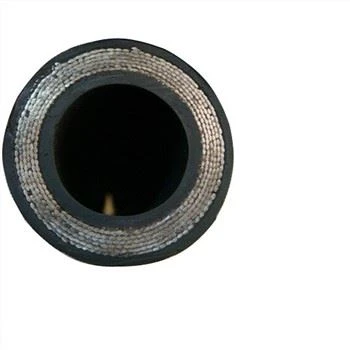
Suction Hose Don’t settle for couplings that will fail mid-job or cause unnecessary downtime. Reach out to me directly to discuss your needs, and I’ll help you find the right Camlock solution for your operation. Whether you’re a small farm, a construction company, a food processing plant, or an industrial facility, I have the experience and inventory to get you the right part, on time, at a fair price.
References
- Fluid Sealing Association. "Cam and Groove Coupling Design and Performance Standards." 2022.
- American National Standards Institute (ANSI). "Specification for Camlock Couplings (ANSI B93.37-2019)." 2019.
- Food and Drug Administration (FDA). "Guidance for Industry: Food Grade Equipment Components." 2021.
- Society of Tribologists and Lubrication Engineers (STLE). "Best Practices for Cam and Groove Coupling Maintenance." 2020.
- Industrial Fluid Solutions Association (IFSA). "Selection Guide for Couplings in Chemical Processing." 2023.
Hebei Qianli Rubber Products Co., Ltd.
As one of the most professional camlock coupling manufacturers and suppliers in China, we have world-leading production equipment and strong manufacturing capabilities. Please feel free to buy bulk durable camlock coupling made in China here from our factory.
Address: West industrial Zone, Jing County, Hengshui City, Hebei Province, China.
E-mail: manager@hebeiqianli.com
WebSite: https://www.qianlirubber.com/
