If you’re here, chances are you own a Perkins diesel engine — whether it’s powering a farm tractor, a generator on a job site, or a work truck you rely on day in and day out — and you’ve noticed a little off-kilter performance lately. Maybe it’s rough idling, a drop in fuel efficiency, or that telltale black smoke puffing out the exhaust. More often than not, the culprit’s your Perkins injector: it’s the part that squirts the exact right amount of fuel into the cylinder, at the exact right time, to make your engine run smooth. As someone who’s been supplying genuine Perkins injectors for over a decade, I can’t tell you how many times a customer’s injector pattern was off, and fixing it solved way more problems than just fuel waste. Today, I’m breaking down exactly how to check your Perkins injector’s injection pattern yourself, no fancy dealership tools needed (well, most of the time). For Perkins Diesel Injector

First, let’s get one thing straight: what even is an injection pattern, and why should you care? Think of your injector like a garden hose nozzle. If it’s working right, the fuel comes out as a fine, even spray, covering the whole combustion chamber like a mist. If the nozzle’s clogged, worn, or dirty, you might get a dribble, a stream, or just a few uneven blobs. That uneven spray means some parts of the cylinder get too much fuel, some too little, and suddenly you’re burning more fuel, losing power, and wasting money. For Perkins engines — built to last for years on tough jobs — keeping that spray pattern tight is non-negotiable.
Before you dive into checking, let’s talk safety. Diesel fuel is flammable, and when you’re working on a hot engine, things can go wrong fast. First, disconnect the battery to avoid any accidental starts. Let the engine cool for at least an hour — no one wants to get burned by a hot manifold or injector. Also, keep a fire extinguisher nearby, and never smoke around fuel. This isn’t just random safety talk; I’ve seen too many guys skip these steps and end up with a messy, dangerous situation on a job site. No task is worth risking your safety over.
Now, the first thing you can do to check the injection pattern is a quick visual test — this works when you pull the injectors out, which is something most backyard mechanics or small fleet techs can handle on their own. Let’s walk through that. First, you’ll need to remove the injector from the engine. For most Perkin models (like the 400 Series, 1100 Series, and 1300 Series, which are the most common ones we supply injectors for), this just means unscrewing the injector hold-down bolts, disconnecting the fuel line, and gently pulling the injector out with a pair of pliers (don’t yank it, you’ll damage the O-ring or injector body).
Once you have the injector out, here’s the easy test: set it in a vice (don’t tighten the vice too hard — you’ll crack the injector body) and connect a clean fuel line to the injector’s inlet. Then, hook that line up to a small test fuel supply (you can use a can of clean diesel, just make sure it’s filtered — dirty fuel is exactly what ruins injectors). Now, here’s the part that shows the pattern: you need to crank the engine over with the starter motor for just a second (make sure the battery is reconnected temporarily for this part, and keep the injector pointed away from your face and clothes). When you do that, the injector will spray fuel, and you can see exactly what pattern it’s making.
What should a good pattern look like? It’s a fine, conical spray, like a dense mist, no big streams, no dribbles, no areas where the spray is missing. A bad pattern? You’ll see a stream (like a garden hose on full blast), or a spray that’s lopsided, or no spray at all — just a little leak. If you see any of those, that injector’s bad, and you’ll need to replace it. Pro tip I learned from old school Perkins techs: if the spray makes a hissing sound and leaves a fine mist on a piece of white paper, that’s perfect. If it leaves dark, wet spots or just a single line, it’s clogged or worn out.
But what if you don’t want to pull the injectors out yet? There’s another quick test you can do right on the engine, called the “hold-up test” (or sometimes the leak-down test) that can tell you if your injector pattern’s off without removing anything. Here’s how that works. Start by running the engine for 5 minutes to get it warm — warm engines reveal leaks and off patterns easier. Then, shut it off, and disconnect the fuel return line from the injector (it’s the smaller line on top of the injector, usually). Put the end of that return line into a clean jar, then crank the engine over for 10 seconds without starting it (again, battery reconnected for this). A good injector will only leak a few drops into the jar. If you get a steady stream, that injector is leaking internally, which means it’s not spraying the right pattern. That’s a red flag for a bad injector.
Wait, another on-engine test I swear by: the power balance test. This is great if you suspect one specific injector is off, not all of them. Here’s how: start the engine and let it idle. Then, one by one, disconnect the fuel line from each injector (be careful, fuel will spray out, so keep a rag handy). When you disconnect a working injector, the engine’s idle will get way rougher — that’s because you’re cutting off fuel to that cylinder, so the engine has to work harder. If you disconnect an injector and the idle doesn’t change at all, that injector’s not working properly, which means its pattern is off. I’ve used this test on countless tractors and generators, and it almost always pinpoints the bad injector before you pull anything apart.
Now, let’s talk about common mistakes that mess up injector patterns, because fixing the pattern is half the battle, and preventing it from going bad is the other. First, dirty fuel. I see this all the time: a customer fills up at a sketchy station, or their fuel filter hasn’t been changed in 10,000 miles, and all that gunk clogs the injector nozzle. That will absolutely ruin the spray pattern. Second, worn injectors. Perkins injectors are built to last, but they don’t last forever. If you’ve logged over 20,000 hours on your engine, or you run it hard every day, the internal parts of the injector wear out, and the spray pattern starts to degrade. Third, incorrect fuel pressure. If the fuel pump isn’t pushing enough (or too much) pressure to the injectors, that will throw off the spray, too. A lot of people forget that the fuel pump is part of the injection system, so if your pressure’s off, even good injectors won’t work right.
Wait, what if you do all these tests and one injector is bad? What do you do? I always tell my customers to go for genuine Perkins injectors, not cheap knockoffs. A few years back, a farmer came to me with a knockoff injector that died after 300 hours, and it damaged his whole fuel system, costing him thousands in repairs. Genuine Perkins injectors are engineered exactly for your engine model, so the spray pattern is perfect every time, no guessing. We supply them for all the popular Perkins lines, and they come with a warranty, so you know you’re getting a part that’s going to last.
Another thing I get asked a lot: how often should I check my injector pattern? If your engine’s running fine, once a year is enough, or every time you change your fuel filter. If you’re noticing any of the signs I mentioned earlier — rough idle, bad fuel mileage, black smoke — check it right away. Don’t wait until your engine won’t start, because by then you’re looking at way more than just an injector replacement.
Let me wrap this up with a quick recap to make sure you don’t forget anything. First, safety first: disconnect the battery, let the engine cool, have a fire extinguisher. Then, if you can pull the injectors, do the visual spray test — look for a fine conical mist, no streams or dribbles. If you don’t want to pull them, do the power balance test on the engine to find the bad injector. If you find a bad injector, replace it with a genuine Perkins one, because cheap parts just don’t hold up.
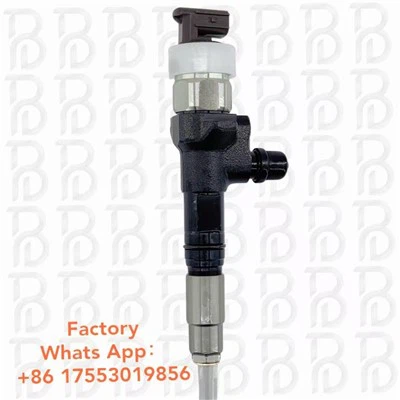
At the end of the day, your Perkins engine is a workhorse — you rely on it for income, for farming, for keeping things running. Taking 10 minutes a year to check your injector pattern can save you hours of downtime and hundreds of dollars in fuel and repairs. If you’ve got questions, or you need a genuine Perkins injector, feel free to reach out and connect to discuss your needs and get the right part for your engine. Don’t let a bad injector pattern slow you down — get it checked, get it fixed, and get back to work.
For Yanmar Diesel Nozzle References
- Perkins Engineering. Perkins Diesel Injector Operation and Maintenance Manual, 2019.
- Automotive Diesel Technology Association. Common Rail Injector Diagnostic Procedures, 2021.
- Perkins Dealer Network. Field Guide to Perkins Injector Troubleshooting, 2022.
Shandong Ruibote Power Technology Co., Ltd.
As one of the most professional perkins diesel injector manufacturers and suppliers in China, we offer a wide range of products with superior quality. Please feel free to buy advanced perkins diesel injector at competitive price from our factory. Contact us for more details.
Address: Jiacaiyuan Intersection West 550m, North Road Wudian Town, Mudan District Heze, Shandong Province, China
E-mail: injectornozzle@126.com
WebSite: https://www.nozzle-injector.com/
