Hey everyone, if you’ve been around the automotive or vinyl game for more than five minutes, you know colored paint protection film (PPF) isn’t just that boring, clear stuff you put on your truck’s hood to keep rock chips away. As someone who’s been supplying custom colored PPF for the last six years—let me tell you, I’ve fielded so many questions about how these films look in different light it’s not even funny. Folks will say, “My buddy had that blue PPF, but it looked totally purple at a gas station!” or “Will this matte white PPF stay flat when the sun hits it at 3pm?” Today, I’m breaking down exactly how colored PPF behaves in different lighting—no stuffy science jargon, just real-world stuff I see every day working with installers and car owners. Colored Paint Protection Film
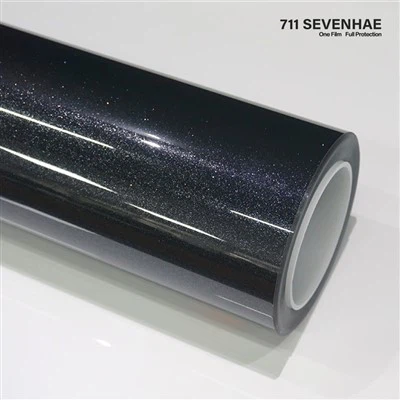
First off, let’s keep it simple: colored PPF isn’t just colored plastic with a thin clear layer slapped on. It’s a multi-layered film—usually a top coat for scratch resistance, a middle pigment layer for the actual color, a adhesive layer that bonds to your paint, and sometimes a bottom UV-protection layer to keep the color from fading. The middle pigment is where all the light magic happens, and that’s why it shifts (or doesn’t) depending on where you are. I learned this early on when I messed up a bulk order of matte terracotta PPF a few years back—we thought it would look consistent everywhere, but it looked way darker under a parking lot sodium lamp than it did in natural sunlight. Oops. That’s when I started testing every batch in different light before we ship it to our clients.
Let’s start with the big one: natural sunlight. That’s the baseline, right? Sunlight is full of every color in the spectrum—red, orange, yellow, green, blue, violet—all mixed together into what we call “white light.” When colored PPF is hit with that, it absorbs some wavelengths and reflects others. For example, our matte ocean blue PPF absorbs the red and green wavelengths, so it bounces the blue ones back to your eyes. But wait—sunlight changes throughout the day, right? At sunrise and sunset, the light is more yellow and red, because the sun is low on the horizon and has to pass through more atmosphere. So that same ocean blue PPF we talked about? At sunrise, it might look a little more muted, almost dusty blue, because the sunlight’s heavier on those red tones, and the blue reflection is a bit washed out. Midday sun, though—when the sun’s high, the light is brighter and more blue-tinted— that same film pops, looks crisp, like a Caribbean sea on a perfect beach day. I see this all the time with installers who take photos of completed jobs midday for their Instagram; the colors just look way more true than they do at 5pm.
Next up: artificial indoor lighting. This is where most people get surprised, especially if they’re picking out PPF for a car that’s going to spend a lot of time in a garage or a showroom. Not all indoor light is the same, either—there’s the yellowish stuff from incandescent bulbs, the cool blue from LED shop lights, and the neutral white from fluorescent tubes. Let’s take our matte ash gray PPF, for example. Under incandescent light (think the old-fashioned bulbs in your living room), that gray will look warm, almost taupe with a little brown tint. But under bright LED shop lights—like the ones in a garage or a parts store—it shifts to a cool, steely gray, no brown at all. I had a customer last year come to me panicking because he picked a matte charcoal gray PPF under his kitchen’s incandescent lights, but when he got it installed at his shop (which uses cool LEDs), it looked totally different. We went back and swapped it for a warmer dark charcoal that worked in both spaces—lesson learned, always tell people to check their color in the exact lighting the car will be in most.
Then there’s that weird spot lighting you get in parking lots or garages—you know, those tall poles with sodium vapor lamps that give off that orange-yellow glow. This is where I see the most color shifting, honestly. Let’s say you have our pearl candy purple PPF, which has tiny metallic or mica particles mixed into the pigment layer. Those particles reflect light at different angles, right? Under sodium light, which is heavy on red and orange wavelengths, that purple’s blue and red tones get amplified, so it looks more like a deep magenta than the candy purple it is in sunlight. I’ve had installers tell me they’ve driven cars with pearl PPF through a parking lot and had people roll down their windows asking what that wild color is—they had no clue it was purple until they saw it in daylight. Now, not all colored PPF has these shifting particles—matte and satin colored PPF usually doesn’t, because they have a flat, non-reflective top coat. Our satin forest green PPF, for example, is consistent in almost all light because it doesn’t have those tiny reflective particles; it just absorbs and reflects the same wavelengths no matter what’s hitting it, except for when there’s super intense yellow light, which makes it look a little less bright, more like deep grass green instead of emerald.
Wait, let’s talk about another common lighting scenario: shade. A lot of people don’t think about shade, but it’s huge—especially if you’re comparing a car’s PPF in full sun vs. under a tree or a building awning. Natural shade isn’t just “less light”—it’s actually blue light, because it’s filtered through the sky, not direct sunlight. So that same bright red metallic PPF we sell? In full sun, it’s a fire-engine red, but in blue-tinted shade, it looks more like a raspberry pink. I had a customer once call me upset because his new red PPF looked “pink” in his driveway, not red—turns out his driveway is under a big oak tree most of the day, so he only saw it in shade for the first week. We explained that, and he ended up loving the subtle pink look, even though he thought he picked red. That’s the thing about colored PPF—it’s not a paint job that’s “set” to one color; it’s a dynamic material that changes a little based on light, which is part of the fun.
Now, let’s get into what I think is the most important part for anyone buying colored PPF: does the light affect durability, or just appearance? A lot of people ask me that, and the answer is mostly just appearance—except for UV light, which is part of natural sunlight. That’s why all our colored PPF has a top UV layer that blocks 99% of harmful UV rays, so it doesn’t fade over time. I’ve had a job with a bright yellow PPF on a customer’s classic truck that’s been outside for three years, and it’s still the same bright yellow as the day we installed it—no fading, even in the harsh Arizona sun. The light itself (visible light) doesn’t damage the film, it just changes how it looks, which is why it’s important to test colors in the lighting you care about most before you order.
I also want to call out a common mistake I see a lot of new installers make: not matching the PPF’s base color to the car’s paint. Wait, no—wait, actually, if you’re wrapping a whole car, the PPF’s color is the paint, so that’s different, but if you’re doing a partial wrap (like hood, fenders, mirrors) to protect original paint, the color of the PPF matters way more in different light than you think. For example, if your original car paint is a cool blue, and you put a warm blue PPF on the hood, when the sun hits it at a low angle, the warm PPF will clash with the cool body paint, which is super obvious. I had an installer last month send me a photo of a job where they did a partial wrap for a customer’s white sedan, using a matte black PPF on the mirrors, but the black looked more gray in the shade, so it didn’t match the original black trim on the car. We sent them a true matte black that was consistent in all light, and they re-installed it—saved them from a bad review, which is why I always tell installers to test colored PPF on a small sample before they commit to a whole job.
Here’s a quick tip from someone who’s been in this game: if you’re trying to pick a colored PPF, order a 4×6 inch sample. Test it in your garage, in your driveway at midday, at night under your street light, and even take it to a local parking lot to see how it looks under the overhead lights. Don’t just pick a color off a website photo, because website photos are edited to look perfect, and they don’t capture how the film shifts in different light. I’ve had so many customers swear a color would be “too dark” or “too light” because they only saw it in one photo, but once they got the sample, it was exactly what they wanted.
Another thing that affects how colored PPF looks in different light: the finish. We offer three main finishes: matte, satin, and metallic. Matte is the most consistent in all light, because it has no shine, so it just absorbs light evenly—no shifting, no reflection, just the exact pigment color. Satin has a subtle sheen, so it shifts a little depending on the angle of the light, but not as much as metallic. Metallic has those little flakes, so it really pops in direct sun and shifts more in artificial light, which is why so many people love it for custom jobs. I had a customer do a full metallic teal PPF on his pickup truck, and he posts photos of it all the time—one day it looks like deep teal, another day it looks like aqua, depending on the sun, and he says that’s his favorite part. It’s not a flaw, it’s a feature.
Wait, let’s address a common complaint I hear: “my colored PPF looks different than the sample.” 9 times out of 10, that’s not the film being bad—it’s the lighting. A lot of brands use standard “studio lighting” for their samples, which is neutral, so it doesn’t show how the film shifts in real-world light. That’s why we changed how we make our samples a year ago—we shoot every sample in three different lighting: midday natural sun, indoor LED shop light, and night street light. So when you order a sample from us, you get photos of exactly how it looks in the lighting you’ll actually see it in. I still remember a customer from Chicago who ordered a matte forest green sample, and the studio photo looked like a deep dark green, but the LED sample photo showed it was more bright, grassy green—he said he never would have ordered it without that, because his garage uses LED lights.
Now, let’s talk about long-term light exposure. Does putting your car outside in the sun affect how the colored PPF looks over time? Like I said earlier, we have that UV layer, so fading is almost non-existent. But what about oxidation? No, PPF is a polymer film, so it doesn’t oxidize like paint does. I have a work truck that I’ve had for five years with our matte black PPF on the hood and fenders, and it still looks the same as the day I installed it—no chalky finish, no color shift, even after being parked outside in Texas sun all summer. The only time you’ll see a color change is if the film gets damaged, like a scratch or a tear, but that’s not light-related, that’s impact-related.
I think the biggest takeaway here is that colored PPF is way more versatile than people give it credit for. It’s not just a clear film that can be dyed—it’s a material that interacts with light in cool, interesting ways, and those shifts are part of what makes it fun. Whether you want a subtle color that looks the same everywhere or a bold metallic that changes with every light, there’s a colored PPF that fits what you want—you just have to test it in the right lighting to make sure you get it.

If you’re in the market for colored paint protection film, whether it’s for a partial wrap, full custom job, or just protecting your car’s paint with color that stands out, hit me up. We can send you samples in the exact lighting you need, answer any questions you have about how the film will look in your garage, driveway, or anywhere else, and help you pick the right finish and color for your ride. Don’t waste money on a film that looks different than you expected because you didn’t test it—we make it easy, so you can get exactly what you want.
Paint Protection Film References
- "Paint Protection Film (PPF) Technology and Performance." International Council of Automotive Automotive Refinishers, 2022.
- "Light Interaction with Pigmented and Metallic Films." Journal of Vinyl & Additive Technology, Vol. 28, No. 3, 2022, pp. 789-801.
- "UV Degradation in Polymer Films for Automotive Applications." Society of Plastics Engineers, 2021.
- "Color Shifting in Coatings and Films: A Practical Guide." Automotive Surface Finishing Magazine, Vol. 15, No. 4, 2023, pp. 22-27.
Nanjing Qiyihe Environmental Protection Technology Co., Ltd.
As one of the leading colored paint protection film manufacturers and suppliers in China, we offer a wide range of products with superior quality. We warmly welcome you to wholesale customized colored paint protection film made in China here from our factory. If you have any enquiry about free sample, please feel free to email us.
Address: No. 36 Guangyue Road, Qixia District, Nanjing City, Jiangsu Province
E-mail: 711sevenhae@gmail.com
WebSite: https://www.711sevenhae.com/
