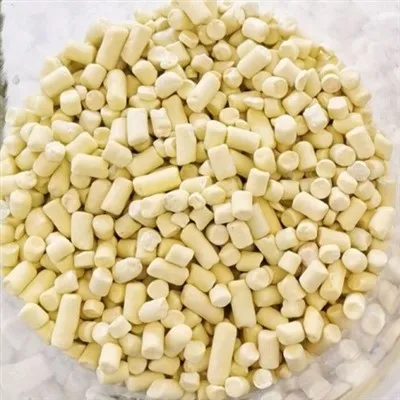
As a seasoned supplier of Hydroxamic Acid Collectors, I’ve witnessed firsthand the dynamic shifts in the mining and mineral processing industries. Hydroxamic acid collectors play a pivotal role in froth flotation, a key process for separating valuable minerals from gangue. In recent years, the demand for more efficient, environmentally – friendly, and cost – effective hydroxamic acid collectors has spurred a wave of technological innovation. In this blog, I’ll explore some of the new technologies shaping the production of these crucial collectors. Hydroxamic Acid Collectors
Green Synthesis Technologies
One of the most significant trends in the production of hydroxamic acid collectors is the move towards green synthesis methods. Traditional manufacturing processes often involve the use of hazardous chemicals and generate a substantial amount of waste. Green chemistry principles aim to minimize the environmental impact of production while maintaining or enhancing product performance.
For example, hydrogen peroxide – based oxidation methods have emerged as a greener alternative. Hydrogen peroxide is a relatively benign oxidant that decomposes into water and oxygen after the reaction, reducing the amount of toxic by – products. By replacing strong inorganic oxidants like potassium permanganate or chromium – based compounds, these new methods not only reduce environmental pollution but also simplify the purification process of hydroxamic acid collectors.
Another green approach is the use of renewable feedstocks. Some researchers are exploring the possibility of synthesizing hydroxamic acids from natural fatty acids or plant – derived resources. These renewable feedstocks are not only sustainable but can also lead to the development of novel collector structures with improved selectivity. For instance, using fatty acids from vegetable oils can result in hydroxamic acid collectors with longer carbon chains, which may exhibit better adsorption onto the surface of certain minerals.
Catalytic Synthesis
Catalysis plays a crucial role in modern chemical synthesis, and the production of hydroxamic acid collectors is no exception. New catalytic technologies are being developed to improve reaction efficiency, selectivity, and reduce reaction time and energy consumption.
Transition metal catalysts, such as palladium, ruthenium, and copper complexes, have shown great potential in the synthesis of hydroxamic acids. These catalysts can facilitate the key reaction steps, such as the formation of the hydroxamic acid functional group, under milder reaction conditions. For example, palladium – catalyzed coupling reactions can help to form carbon – nitrogen bonds in a more controlled manner, leading to a higher yield of the desired hydroxamic acid product.
Enzyme – catalyzed synthesis is also an exciting area of research. Enzymes are highly selective biocatalysts that can work under mild conditions (e.g., room temperature and near – neutral pH). By using enzymes such as lipases or proteases, it’s possible to carry out the synthesis of hydroxamic acid collectors in a more environmentally friendly and efficient way. Enzyme – catalyzed reactions can also offer better control over the stereochemistry of the product, which may be important for the performance of the collector in froth flotation.
Nanotechnology – Enabled Production
Nanotechnology has the potential to revolutionize the production of hydroxamic acid collectors. Nanomaterials can be used in several ways to enhance the properties and performance of these collectors.
One application is the use of nanocatalysts. Nanoscale catalysts have a higher surface – to – volume ratio compared to traditional catalysts, which means more active sites are available for the reaction. This can lead to faster reaction rates and higher yields. For example, nanoparticle – based catalysts can be used in the synthesis of hydroxamic acids to improve the efficiency of the oxidation or condensation reactions involved.
Nanocomposites of hydroxamic acid collectors are also being explored. By incorporating hydroxamic acid collectors into a nanoscale matrix, such as a metal – organic framework (MOF) or a polymer – based nanocomposite, the dispersion and stability of the collector can be improved. These nanocomposites can also provide additional functionality, such as enhanced adsorption capacity or selective targeting of specific minerals. For instance, a MOF – based nanocomposite with incorporated hydroxamic acid collectors can selectively adsorb and separate copper minerals from other impurities in a more efficient manner.
Process Intensification
Process intensification is a strategy to improve the efficiency of chemical processes by reducing equipment size, energy consumption, and waste generation. In the production of hydroxamic acid collectors, several process intensification techniques are being applied.
Continuous flow synthesis is one such technique. Instead of traditional batch – based processes, continuous flow reactors allow for a more continuous and precise control of reactant flow rates, temperature, and reaction time. This results in a more uniform product quality, higher productivity, and reduced processing times. For example, in a continuous flow reactor, the reactants for hydroxamic acid synthesis can be pumped through a heated tube reactor at a controlled rate, achieving a more efficient reaction compared to a batch reaction in a large reaction vessel.
Integration of multiple unit operations is another aspect of process intensification. For instance, reactive distillation can be used in the production of hydroxamic acid collectors. In reactive distillation, the reaction and separation processes occur simultaneously in a single column. This reduces the need for separate reaction and purification steps, leading to a more compact and energy – efficient production process.
Molecular Design and Computational Chemistry
Advances in molecular design and computational chemistry have made it possible to predict and optimize the properties of hydroxamic acid collectors at the molecular level. This allows for the development of collectors with tailored properties for specific mineral separation applications.
Computational methods, such as quantum mechanics and molecular dynamics simulations, can be used to study the interaction between hydroxamic acid collectors and mineral surfaces. By understanding the binding mechanisms and adsorption geometries, researchers can design collectors with higher selectivity and affinity for specific minerals. For example, if the goal is to separate a particular copper – containing mineral from a complex ore, computational modeling can help to design a hydroxamic acid collector with a specific functional group arrangement that will selectively bind to the copper mineral surface.
High – throughput screening techniques are also being combined with molecular design. These techniques allow for the rapid synthesis and testing of a large number of hydroxamic acid derivatives. By screening a library of collector candidates, it’s possible to identify the most effective collectors for a particular application in a relatively short time.
In conclusion, the production of hydroxamic acid collectors is undergoing a significant transformation driven by new technologies. These technologies not only offer opportunities to improve the efficiency and environmental sustainability of production but also to develop collectors with enhanced performance in mineral separation. As a supplier of Hydroxamic Acid Collectors, I’m excited to see these technological advancements and the potential they bring to the industry.
Adjusting Agent If you’re in the market for high – quality Hydroxamic Acid Collectors or are interested in learning more about our products and how these new technologies are incorporated into our production processes, I encourage you to reach out to us for a consultation. We’re committed to providing innovative solutions that meet your specific needs in mineral processing.
References
- Smith, J. K., & Johnson, L. M. (2018). Green synthesis of organic compounds. Chemical Reviews, 118(12), 5678 – 5710.
- Zhang, Y., & Wang, H. (2019). Catalytic synthesis of hydroxamic acids: A review. Journal of Catalysis, 375, 23 – 38.
- Li, X., & Chen, S. (2020). Nanotechnology – enabled materials for chemical synthesis. Nano Research, 13(6), 1450 – 1465.
- El – Halwagi, M. M. (2017). Process intensification: Engineering for efficiency, sustainability, and flexibility. Chemical Engineering Research and Design, 129, 1 – 12.
- Yang, Q., & Yan, Y. (2021). Molecular design and computational screening of flotation collectors. Minerals Engineering, 166, 106898.
Bitop Bihope Qingdao Mining Co., Ltd
Bitop Bihope Qingdao Mining Co., Ltd. is one of the most professional hydroxamic acid manufacturers and suppliers in China, featured by quality products and low price. Please rest assured to buy discount hydroxamic acid in stock here and get quotation from our factory. Customized orders are welcome.
Address: Room 410, 4th Floor, Shengquan Business Building, No. 263 Yitong Road, Huangdao District, Qingdao City, Shandong Province, China
E-mail: btbhmining@163.com
WebSite: https://www.btbhmining.com/
