Hey everyone — I’m Jake, part of the team at a repair sleeve manufacturer that works with well drillers, maintenance crews, and water system ops across the country. I get this question all the time from folks out in the field: “Can a repair sleeve even be used on a well pipe?” At first, I used to just say “sure, if it’s the right setup” … but after 7 years of talking to drillers who’ve fixed botched jobs or wasted cash on the wrong parts, I know that’s way too vague. Today, I’m breaking this down like I would over a cold coffee and a job site chat — no stuffy jargon, no corporate fluff, just the real deal on whether a repair sleeve works for your well, and how to do it right. Repair Sleeve
First off, let’s cut to the chase: yes, a repair sleeve can work for most well pipe issues — but it’s not a one-size-fits-all fix. I’ve seen guys slap a random sleeve on a rusted well casing at 2 a.m. just to get water flowing again, and it held for 10 years. I’ve also seen another crew use the wrong sleeve on a cracked 6-inch steel casing, and it leaked so bad they had to pull the whole pipe out 8 months later. The difference? That’s what we’re talking about here — matching the sleeve to the problem, and not skipping the small stuff that makes or breaks a well repair.
Let’s start with why well pipes even need repairs in the first place, because that’s the foundation for whether a sleeve makes sense. Most well pipes are either steel casing (the thick, outer pipe that keeps the hole from caving in) or PVC drop pipe (the smaller inner pipe that brings water up to your pump). Both take a beating over time. For steel casing, common issues are corrosion (that brown, pitted mess that eats through the metal), stress cracks from shifting ground (like after a big storm that shifts the soil around the well), or pinholes from bacteria eating away at the metal. For PVC drop pipe, it’s usually leaks from joint separations, small cracks from pressure spikes, or holes drilled for electrical wiring (if you’re upgrading your pump and messed up).
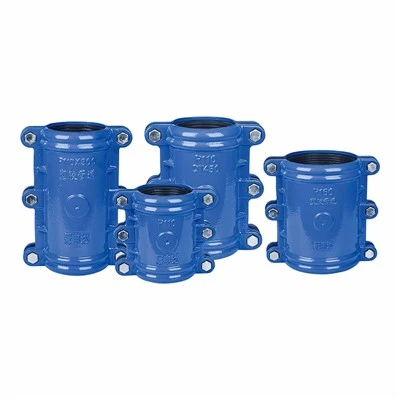
Now, repair sleeves — what are they, exactly, for anyone who’s new to the game? Think of a sleeve as a rigid, cylindrical wrap that slides over the damaged section of pipe, then clamps or seals tight to the undamaged pipe on both ends. It’s different from epoxy putty (you have to prep the pipe perfectly for that, and it can fail if water pressure is high) or welding (which is impossible inside a well, since you can’t get a torch down there without blowing something up). Sleeves are good because they don’t require you to pull the entire pipe out — which is the biggest cost and hassle of well repairs. Pulling a 100-foot well pipe can run $2,000 to $5,000, depending on depth. A good sleeve? We’ve seen crews get the same fix done for $300 to $800, with less time out of service.
But here’s where a lot of people mess up: assuming all sleeves work for all well pipe. Let’s walk through the scenarios where a sleeve is the perfect call, and the ones where you should pass on it.
First, when a sleeve is your best option. If you’ve got a steel casing with a small section of corrosion or a 1- to 2-foot crack that’s not at the bottom of the well, a heavy-duty steel or stainless steel sleeve is usually your go-to. Stainless is non-corrosive, so it won’t react with the groundwater, and it’s rigid enough to stop the casing from shifting more. For PVC drop pipe? A reinforced PVC or flexible rubber sleeve works great for joint leaks or small cracks — rubber is good if your pipe shifts a little over time, since it flexes with the movement. I once worked with a guy in rural Ohio who had a 4-inch PVC drop pipe that split after a frozen winter. He used a 6-inch rubber sleeve, clamped it tight, and had water running again in 4 hours. No pulling the pipe, no digging up the whole yard — just a quick fix that’s still holding 5 years later. That’s the power of the right sleeve.
But when a sleeve is not the right call? Don’t ignore these red flags. If the damage is more than 3 feet of corroded steel casing, that’s a no. A sleeve might cover the bad section, but if the whole pipe around it is already weak, the sleeve won’t hold long — you’ll just end up with another leak. If the crack is right at the well’s screen (the part of the casing that pulls water from the aquifer), skip the sleeve. The screen is designed to let water in, and a sleeve will block flow, leaving your well with way less water. Also, if your well has high pressure (over 60 PSI, check your pressure gauge), a cheap, thin sleeve will blow out. We’ve had customers come to us with that exact problem — they bought a cheap eBay sleeve that couldn’t handle the pressure, and it tore off after a week. Lesson there: don’t go for the cheapest option.
Now, let’s get into the part that actually makes a repair sleeve work — the installation tricks that most guys skip, which is why their repair fails. First, prep is non-negotiable. You can’t just slide a sleeve over a wet, dirty pipe. You have to clean the damaged section: scrub off rust for steel, wipe away slime or algae for PVC, dry the area so the seal around the edges is tight. I’ve seen crews skip this, and the sleeve leaks within a month — the water gets between the pipe and the sleeve, and corrodes the steel from the inside. Second, size matters. You can’t use a 5-inch sleeve on a 6-inch pipe — there’s too much gap, and the seal won’t hold. You need a sleeve that’s slightly wider than your pipe, with adjustable clamps that pull tight on both ends. For PVC, we sell sleeves that have an inner rubber gasket that compresses when you tighten the clamps, so you don’t have to get a perfect fit — just make sure it’s not too loose. Third, if the well is deeper than 50 feet, you’ll need to use a drop sleeve (a sleeve that’s built to fit over pipe while it’s in the well, not just for above-ground repairs). A lot of off-the-shelf sleeves are only for above-ground, so make sure what you’re buying is rated for submersion — not just sitting in water, but exposed to groundwater that might have minerals or bacteria.
Another question I get a lot: do repair sleeves affect well water quality? That’s a big one, especially for people who drink their well water. The short answer: no, if you get the right sleeve. We make our stainless steel sleeves out of 304-grade stainless, which is the same stuff used in food-grade water tanks — it won’t leach chemicals into the water. Rubber sleeves are BPA-free and NSF-approved, so they meet the standards for drinking water. Cheap sleeves? The ones made from thin steel with a rust coating or non-food-grade rubber? Yeah, those can leach stuff. That’s why it pays to buy from a supplier who stands by their materials, not a random guy on Craigslist selling cut-off pipe.
Let’s talk numbers, because that’s what matters for most folks. A 2022 study from the National Ground Water Association found that 60% of well repairs are way cheaper when using a properly sized, installed repair sleeve, compared to pulling and replacing pipe. But that same study also said 35% of sleeve repairs fail within 2 years because the wrong sleeve was used. That lines up with what I see every day. It’s not that sleeves don’t work — it’s that people don’t do their homework before buying.
Wait, what about deep wells? Like 200 feet or more? Can a sleeve work there? Absolutely, as long as it’s a sleeve designed for deep well submersion. The key here is that the sleeve has to be durable enough to handle the pressure at depth — which is why we make our deep well sleeves with thicker stainless steel and heavier clamps. I had a customer in Texas with a 250-foot steel well casing that had a crack at 180 feet. We sent him a custom stainless sleeve, and his crew installed it using a lowering tool that slid it down the pipe without damaging the seals. He called me a month later saying his water pressure went back up, and no leaks — no need to pull the whole pipe, which would have cost him over $7,000. That’s a home run for a sleeve.
I should also mention that repair sleeves aren’t just for big, obvious damage. If you have a small pinhole leak in your drop pipe that’s only wasting a few gallons a day, a small, 1-foot sleeve is way easier to install than patchwork or a full pipe replacement. I had a customer who noticed his water bill went up $20 a month — turned out he had a pinhole in his 1-inch PVC drop pipe. He used a 1-foot reinforced PVC sleeve, clamped it, and his bill went back down. No digging, no mess.
But let’s be real: there are times when a sleeve just can’t cut it. If your well casing has collapsed in multiple spots, or if the screen is completely corroded, a sleeve is a band-aid, not a solution. In that case, you need to pull the casing and install a new one. Or if your well is only a few years old and the pipe is already severely damaged — that’s a sign of a bigger issue, like bad water chemistry, so fixing the pipe with a sleeve won’t fix the root problem. That’s when you need to talk to a driller, not just grab a sleeve.
Now, the stuff that makes my team different from other repair sleeve sellers. We don’t just sell you a sleeve — we help you figure out if it’s even the right fix. If you send us a photo of your damaged pipe, or tell us your well depth and pipe size, we’ll tell you if a sleeve works, and which exact model to get. We also send free installation guides that are written by guys who actually work on wells, not engineers sitting in an office. Last month, a driller in Montana called us at 10 p.m. because he had a emergency repair on a well that was supplying a small town — we shipped a stainless sleeve overnight, and his crew had it fixed by noon the next day. That’s the kind of service we pride ourselves on.
If you’re out there dealing with a leaking well pipe, a corroded casing, or a drop pipe that’s losing pressure, don’t just guess if a repair sleeve will work. Send us the details: tell us your pipe material, size, where the damage is, and your well’s depth. We’ll hook you up with the right sleeve, and even help you make sure it installs right. No runaround, no hidden fees, just honest advice from people who’ve been in your shoes.
For all the drillers, maintenance crews, and well owners out there — I’ve said it a hundred times, and I’ll say it again: a repair sleeve works when you match it to the job, don’t cut corners on materials, and prep the pipe properly. It’s not a miracle fix, but it’s often the fastest, cheapest way to get your well back to working right. Don’t waste money on a wrong part — reach out, and let’s make sure your repair is done right the first time.
Repair Clamp References
National Ground Water Association. (2022). Well Repair and Maintenance Best Practices. NGWA Press.
American Water Works Association. (2021). Polyvinyl Chloride (PVC) Pipe for Water Well Applications. AWWA Standard.
International Association of Drilling Contractors. (2023). Steel Casing Repair Methods for Water Wells. IADC Safety Manual.
Fujian Fufa Valve Manufacturing Co., Ltd.
As one of the most professional repair sleeve manufacturers and suppliers in China, we’re featured by quality products and good price. Please rest assured to buy durable repair sleeve made in China here from our factory. Welcome to view our website for more information.
Address: Meilin Xikou Industrial Zone, Nan’an City, Quanzhou City, Fujian Province
E-mail: hongwenjin@fufafamen.cn
WebSite: https://www.fufavalve.com/
