If you’re in the cable or wire industry, you’ve probably heard folks chat about PE sheathing compounds and how their flexibility is make-or-break for a part’s performance. But here’s the thing I see every day as a PE sheathing compounds supplier: flexibility isn’t a one-and-done number—it shifts more than most people realize, and knowing why matters a hell of a lot for picking the right compound for your project. Let me break this down straight, no fancy lab jargon that makes your eyes cross. PE Sheathing Compounds
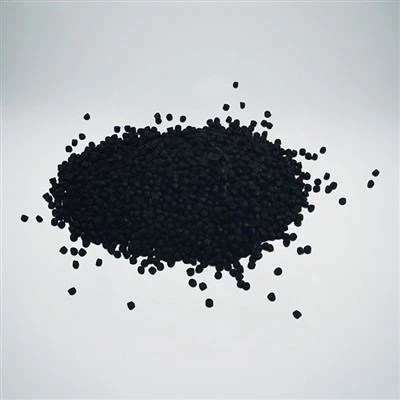
First off, let’s set the basics: PE sheathing is the outer protective layer on all kinds of cables—power lines, communication wires, even those random cables you use for backyard string lights. Flexibility here means how easy it is to bend the sheathing without cracking or breaking, right? Too stiff, and a cable installed in a tight conduit might snap; too soft, and it gets all banged up during shipping or twists too much on the job site. But why does that flexibility change from one batch of compound to the next? Let’s start with the biggest culprit: the type of PE resin we use as the base.
Not all PE is the same, and that’s where most people trip up. Low-Density Polyethylene (LDPE), Linear Low-Density Polyethylene (LLDPE), and High-Density Polyethylene (HDPE) are the big three for sheathing, and their flexibility is night and day. LDPE is super bendy—like that squishy plastic wrap you use for leftovers—because its molecular chains are all tangled and not packed tight. LLDPE is a step up: it’s a bit stiffer than LDPE but still flexible, with short side chains on the main molecules that keep it from packing too tight. HDPE, though? That’s the hard stuff, like a milk jug—its chains are straight and packed tight, so it’s way less flexible. Now, here’s where I come in as a supplier: a lot of customers come to me saying “I need flexible PE sheathing” and don’t realize they can swap the base resin to get exactly what they need. For example, if a cable’s going into a tight underground conduit that bends around pipes, we’d mix an LLDPE resin with a tiny bit of LDPE to amp up the flexibility without sacrificing the durability to resist soil punctures. If the cable’s going to be strung between two power poles and needs to stand up to high winds and ice, we might lean more into LLDPE for a middle ground—flexible enough to handle minor sway, tough enough to not crack in cold weather.
Next up: additives. This is the part where we tweak flexibility after the base resin is chosen, and it’s where we can get super targeted. Let’s talk plasticizers first—wait, no, hold on, not the kind you used to hear about in old toys (those were phthalates, which we avoid now for wire and cable, anyway). The safe, industry-standard plasticizers for PE sheathing are usually hydrocarbon-based or ester-based, and they work by slipping between the PE molecular chains, making it easier for them to move past each other. Add a 5% dose of a good plasticizer, and the sheathing bends 20% easier; add too much, though, and you run into problems. Too much plasticizer means the sheathing gets sticky in hot weather, attracts dirt, and might even swell if it gets wet. That’s why we test every batch we make—last quarter, a customer had an issue where their sheathing was getting too soft in Arizona’s summer heat, so we dialed back the plasticizer a hair and added a tiny bit of a processing aid that kept flexibility up without the stickiness.
Then there are impact modifiers, which are a bit different. These are additives that create small “cushions” in the PE matrix, so when you bend the sheathing, there’s less chance of a crack starting. For cold-weather applications—like cables going to alpine ski resorts or northern pipeline installations—impact modifiers are non-negotiable. Regular PE will get brittle at 0°F (-18°C), crack if you bend it, but add 10-15% of a metallocene impact modifier, and it stays flexible down to -40°F (-40°C). I had a customer last year who was installing cables in Minnesota in February; they’d tried a cheap compound from another supplier that cracked half the lines before they even got them buried. They switched to our modified LLDPE, and not a single line had an issue. That’s the kind of thing that makes our job worth it—we don’t just sell a product, we adjust it to their specific conditions.
Wait, also, molecular weight and melt flow rate (MFR) of the resin. Let’s keep this simple: molecular weight is how long the PE’s chains are. Longer chains mean more entanglement, so the sheathing is more flexible and tougher—think of a bowl of spaghetti vs. a bowl of short pasta. The long spaghetti chains tangle up and don’t pull apart easy, so that’s flexible. Short pasta pulls apart, so it’s stiffer. MFR is how easily the resin flows when it’s melted; lower MFR means longer chains, so more flexibility, higher MFR means shorter chains, stiffer. So if a customer needs a super flexible compound for something like a portable extension cord that gets twisted and bent all the time, we go with a low MFR LLDPE resin. If they need a stiffer sheathing for a permanent underground power cable that doesn’t move much, we use a higher MFR, shorter chain LDPE. It’s all a balancing act—flexibility vs. durability, and we get to adjust that with the resin’s specs.
Then there’s the processing step at our end, which a lot of customers don’t think about. When we make the sheathing compound, we mix the resin and additives in an extruder, right? The temperature and speed of the extruder affect how well the additives are dispersed through the PE. If we mix too hot, the plasticizer might evaporate, making the sheathing stiffer than we planned. If we mix too slow, the additives clump up, so some parts of the sheathing are too soft and some are too stiff, which is a big problem for consistency. We run in-house tests on every batch: we bend samples 180 degrees 100 times, test their tensile strength, check for brittleness in cold temperatures. Last month, a customer complained that two batches of compound had different flexibility—turns out, one batch had a slightly too low mixing temperature, so the plasticizer didn’t spread evenly. We fixed our process for that run, and now all our batches hit the exact flexibility specs we quote. That’s why transparency with our suppliers (the resin makers) and our customers is key—we don’t hide how we make the stuff, because that’s what builds trust.
Wait, let’s talk about common mistakes I see customers make. A lot of people assume “flexible” is the same across the board, but that’s not true. Flexibility for a communication cable is different from flexibility for a high-voltage power cable. Communication cables get bent thousands of times during installation and routing through walls, so they need a lot of short-term flexibility. High-voltage power cables, especially underground ones, might only be bent a few times during installation, but they need to stay flexible over 20+ years, even in changing temperatures. So a compound that’s flexible at room temperature might get brittle in a year if it’s exposed to sunlight—UV radiation breaks down PE’s molecular chains, making it stiffer. Oh, right! UV stabilizers are another additive that affects flexibility, mostly long-term. If a cable is going to be exposed to sunlight (like outdoor security camera cables), we add UV stabilizers that don’t kill flexibility, but if we skimp on them, the sheathing will get stiff and crack in 2-3 years. I had a client who installed security cables without UV stabilizers; within a year, half the sheathing cracked, exposing the wires. We re-did their lines with our UV-stabilized flexible compound, and they haven’t had a problem since. That’s the kind of thing that comes from knowing how every component affects the final product’s flexibility.
Another thing: thickness of the sheathing. Wait, is that part of the compound? No, but it’s a related factor that customers often mix up. A thicker sheathing will feel stiffer, even if the compound’s flexibility is identical. A 2mm thick flexible PE sheathing will bend way easier than a 5mm thick one, even if both are made with the same resin and additives. So when a customer says “I need a flexible compound for a 4mm thick cable,” we have to adjust our formulation a little to account for the thickness, so the final product is bendy enough without being too thin or tough. That’s the little detail that makes a good supplier vs. a great one—we don’t just send the same formula for every order, we tweak it based on how the customer will use the cable.
Now, let’s wrap this up: the flexibility of PE sheathing compounds isn’t a static number, it’s a combination of base resin type, additive selection (plasticizers, impact modifiers, UV stabilizers), resin molecular weight/MFR, our processing methods, and even the end product’s sheathing thickness. As a supplier, that’s what I bring to the table—we don’t just sell a standard compound, we work with you to adjust those variables to get exactly the flexibility you need for your specific application, whether that’s a tight conduit in a cold climate, a portable extension cord that gets twisted daily, or an outdoor cable exposed to sun for decades.
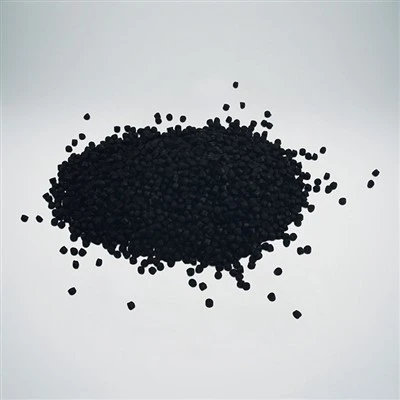
If you’ve been struggling with sheathing that’s too stiff and cracks, or too soft and gets damaged easily, hit us up. We can walk through your project specs, test a sample of our compound, and make sure you get the exact flexibility and durability you need without overpaying for features you don’t need. No confusing jargon, no hidden fees, just a product that works for your job.
Power Cable Compounds References
- Harper, C. A., & Petrie, E. M. (Eds.). (2018). Modern Plastics Handbook (5th ed.). McGraw-Hill Education.
- Whelan, A., & Cronin, J. (2020). Polyethylene Sheathing for Electrical Cables: Formulation and Performance. Journal of Applied Polymer Science, 137(24), 48721.
- Underwriters Laboratories Inc. (2021). Standard for Safety for Polyethylene Insulated and Sheathed Cables (UL 83). Underwriters Laboratories.
Opta New Materials (Jiangsu) Co., Ltd.
As one of the most professional pe sheathing compounds manufacturers and suppliers in China, we also support customized service. We warmly welcome you to buy bulk durable pe sheathing compounds from our factory. If you have any enquiry about free sample, please feel free to email us.
Address: No.80, Jingang Avenue, Zhenjiang New Area, Zhenjiang City, Jiangsu Province, China.
E-mail: le.yin@optachem.com
WebSite: https://www.optanewmaterials.com/
