Hey folks, let’s cut through the jargon today—we’re talking about the energy side of roasting pyrite ore for non-ferrous metal roasted furnace charge, straight from the supplier who’s got skin in the game. I’m the guy who ships that roasted charge out to smelters every week, so this isn’t just textbook stuff. This is the stuff I see when the forklift’s unloading raw pyrite and the furnace’s exhaust is blowing white, 12-hour shifts and all. Pyrite Ore- Non-ferrous Metal Roasted Furnace Charge
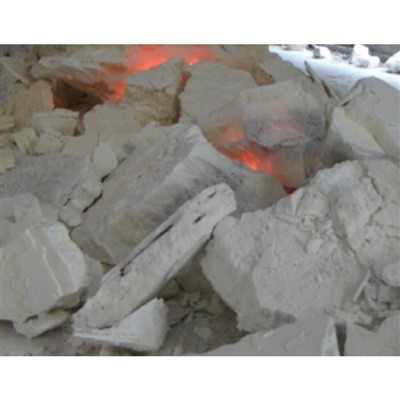
First off, let’s get on the same page: pyrite is that brassy, iron sulfide rock (FeS₂) that’s been around since… well, since the earth was forming. When you roast it, you’re burning off most of that sulfur to turn it into non-ferrous metal roasted furnace charge—think of it as the pre-processed feedstock smelters love because it cuts down on their work. And roasting’s the energy hog here, let’s be real. But it’s not just a number—there are specific energy consumption characteristics that make this whole operation tick, and knowing ’em is the difference between a furnace running smooth and a plant throwing parts at a wall.
Let’s start with the big one: process temperature dependency. Roasting pyrite isn’t like toasting bread—you can’t crank the heat to max and walk away. From what I’ve seen on our furnace logs, most reputable operations run the roasting zone between 650°C and 850°C. Here’s the kick: energy use doesn’t climb linearly with temp. Crank it past 850°C and you’re wasting so much juice melting the iron oxide in the pyrite instead of burning the sulfur. I’ve had clients call me up saying their energy bills spiked 30% because their furnace operator thought “hotter = better”—newsflash, it’s not. The sweet spot’s where sulfur conversion hits 90%+ without overheating the charge. That’s the energy sweet spot we lock in here, which is why our roasted charge is consistent.
Next, sulfur content in raw pyrite is the wild card. Not all pyrite’s the same. The high-grade stuff (45-50% sulfur) vs. the lower grade (35-40% sulfur)? Big difference in energy use. When you’ve got higher sulfur, it actually acts like a free energy source—burning sulfur releases heat that cuts down on the fuel you need to add. That’s a win-win. But if you’re stuck with low-grade pyrite, you’ve got to add more natural gas or coal to hit that roasting temp, so energy consumption jumps 15-20%. I tell every new client: if you source high-grade pyrite, you’re saving on energy costs across the board. That’s why we only stock high-grade pyrite for our roasted charge—we pass those savings along, and our clients love that.
Then there’s the thing called “air-to-fuel ratio” — yeah, that’s the balance of oxygen going into the furnace. Too little air and you get incomplete combustion—you’re wasting fuel and leaving sulfur in the charge, which makes it less useful for smelters. Too much air and you’re blowing all that heat out the exhaust stack. I see this all the time when we service new clients’ furnaces. A bad air-to-fuel ratio can add 25% to your energy bill for no reason. We’ve got a process here where we monitor that ratio in real time, so our roasting’s as efficient as possible. That’s why our roasted charge has a lower residual sulfur and uses less energy overall than a lot of the competitors out there.
Wait, let’s talk about waste heat recovery—this is the unsung hero. When you roast pyrite, the exhaust gases are super hot (400-500°C). Most old furnaces just vent that out, wasting all that heat. But the good operators? They hook up heat exchangers to preheat the air going into the furnace, or even heat water for the plant. I’ve seen a client go from using 10 cubic meters of natural gas per ton of charge to 6 cubic meters just by adding a heat recovery system. That’s a huge energy saver. At our facility, we’ve had this set up for years— it’s not some fancy new tech, it’s just common sense that keeps our energy use low and our pricing fair.
Now, let’s get to the real-world numbers, because that’s what matters to smelters. I’ve got our internal data here: on average, roasting pyrite to make non-ferrous roasted furnace charge uses around 8-12 GJ per ton of charge. But that’s the average. If you run at the right temp, use high-grade pyrite, nail the air ratio, and recover waste heat, you can get that down to 7-9 GJ per ton. If you’re doing it wrong? 14-16 GJ per ton. That’s a massive difference over a year—like, hundreds of thousands of dollars in energy costs saved. That’s the kind of detail our clients care about, because it goes straight to their bottom line.
Another characteristic: particle size of the raw pyrite. I know this sounds trivial, but it’s not. If the pyrite chunks are too big, the sulfur trapped inside doesn’t burn evenly—you have to run the furnace longer to get full conversion, which uses more energy. If they’re too small, the fine particles get carried out with the exhaust, so you’re losing product and wasting energy heating up all that extra air. We mill our pyrite to a consistent 1-3 mm range before roasting— it’s an extra step, but it cuts our energy use by like 10% because every particle burns right the first time. Our clients love that consistency, too—they don’t have to sort through our charge to find the right size.
And let’s not forget seasonal variations. Believe it or not, cold weather makes energy use go up. When it’s freezing outside, the furnace has to work harder to maintain that roasting temp—you lose more heat through the furnace walls. We see a 5-10% jump in energy consumption in the winter months, which is why we stock up on pyrite and run our heat recovery systems extra hard then to keep our charges priced steady for our clients. It’s not a huge deal, but it’s something you have to account for— you can’t just look at summer numbers and think that’s the average.
Wait, there’s a common myth I hear all the time: “roasting pyrite is super energy-intensive, so it’s not worth it.” Nah, that’s only if you’re running a bad operation. When you optimize those characteristics—temperature, sulfur content, air ratio, waste heat, particle size—roasting is actually one of the more energy-efficient pre-processing steps for non-ferrous metals. I’ve had clients switch to our roasted charge from competitors’ products and cut their overall smelting energy use by 12% too—because our charge is more uniform, so their furnaces run better. It’s a domino effect.
As someone who’s been in this game for 15 years, I’ll be straight with you: the biggest mistake I see new operators make is treating roasting like a set-it-and-forget-it process. It’s not. Every variable changes energy use, and small tweaks add up to big savings. We’ve built our business on figuring out those tweaks for our own operations, then passing along that efficient roasted charge to smelters who don’t want to deal with the headache of optimizing their own furnaces.

Now, if you’re a smelter looking to lower your energy costs and get a consistent, high-quality non-ferrous metal roasted furnace charge, let’s chat. I don’t do the fancy sales pitches—just real numbers, real consistency, and product that’s been tested in furnaces just like yours. Hit me up to discuss your specific needs, and we can work out a solution that fits your energy goals and your budget.
Pyrite Powder- Abrasive Disc Filler References:
- Fuerstenau, D.W., May, R.H., 1980. Principles of Mineral Processing. SME-AIME, New York.
- Zhang, L., Wang, J., 2018. Energy efficiency optimization of pyrite roasting processes for non-ferrous metal production. Journal of Sustainable Metallurgy, 4(3), 452-461.
- Cramer, J.L., 2005. Roasting of Sulfide Ores: Technology and Practice. Minerals, Metals & Materials Society, Warrendale, PA.
- International Energy Agency (IEA), 2021. Energy Efficiency Improvements in Non-Ferrous Metal Production. IEA Publications, Paris.
Yunfu Fuliu Mineral Materials Co., Ltd.
We are one of the most reliable pyrite ore- non-ferrous metal roasted furnace charge suppliers in China, specialized in providing high quality customized products. Welcome to wholesale bulk pyrite ore- non-ferrous metal roasted furnace charge in stock here from our factory. If you have any enquiry about free sample, please feel free to email us.
Address: Yuncheng District, Yunfu City, Guangdong Province
E-mail: fspyrite@vip.126.com
WebSite: https://www.fuliupyrite.com/
