If you’ve ever spent time navigating government procurement portals, you know two truths to be immediately obvious: the process is laden with layers of compliance, and the systems that power it are decades old. Last quarter, a state agency in the Midwest reached out to my team—we’re a Compact EDI Modules supplier, and we’ve spent the last eight years building small, scalable EDI tools for everything from small manufacturers to mid-sized logistics firms. Their question was straightforward: Can your compact EDI modules actually work for our government EDI transactions? It’s a question I’ve fielded a dozen times from public sector teams, and each time it cuts to the core of what compact EDI means for an industry that’s been slow to adopt modern, streamlined tools. Compact EDI Modules
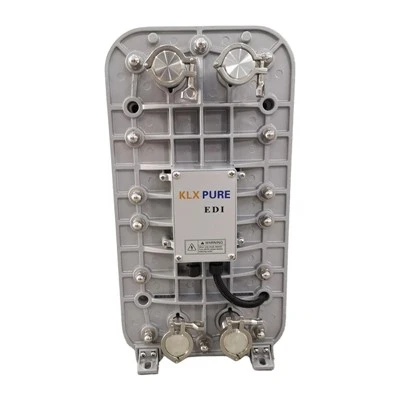
Before we dive into whether these modules fit government use cases, let’s define what we’re talking about. Most traditional EDI systems that handle government transactions are monolithic, custom-built platforms designed for large, high-volume enterprise accounts. They require dedicated on-premise servers, teams of specialized EDI analysts to maintain them, and thousands of dollars in annual licensing and service fees that make them unapproachable for small vendors or even mid-sized agencies with limited budgets. Compact EDI modules, by contrast, are pre-built, lightweight software components that handle specific EDI functions—like invoice submission, purchase order processing, or secure data transmission. They’re designed to plug into existing systems, whether that’s a small business’s accounting software or a government agency’s legacy procurement portal, without the need for a full system overhaul.
The Midwest agency’s pain points were familiar. Their current EDI system was a 15-year-old monolithic platform that only their third-party service provider could update. When they needed to add support for a new federal EDI transaction set for construction services (ANSI X12 160, for those in the know), the provider quoted them $25,000 in implementation fees and a 12-week wait time. For a small state agency with a $1.2 million annual procurement budget, that wasn’t just expensive—it was a delay that would have pushed their construction vendor onboarding back until the next fiscal year. When they heard our compact EDI modules could handle X12 transaction sets, including the specialized ones required by the General Services Administration (GSA) and state-level procurement rules, they were curious but skeptical.
Skepticism around compact EDI for government work isn’t unfounded. Government EDI transactions have non-negotiable requirements that set them apart from private-sector EDI. First is compliance: every state and federal agency adheres to specific EDI standards—ANSI X12 for U.S. transactions, UN/EDIFACT for international work, and strict data security protocols outlined in the Federal Information Security Management Act (FISMA) for federal agencies. Monolithic EDI systems have long been the go-to because they’re built to wrap around these compliance rules from the start. But here’s the thing: modern compact EDI modules aren’t “dumbed down” versions of enterprise tools. We build each module to be certified for core government transaction standards before it ever hits our inventory. For example, our modules that handle X12 850 (Purchase Order) and X12 810 (Invoice) are already validated to meet GSA’s EDI compliance requirements, and we test each update against the latest state procurement guidelines—like California’s Cal eProcure rules or New York’s Statewide Procurement System (SPS) standards.
The second big requirement for government EDI is auditability. Every transaction, from a $50 office supply order to a $5 million infrastructure contract, needs an immutable, time-stamped trail that can be pulled for audits, contract reviews, and dispute resolution. Monolithic systems store this data in centralized, secured databases, but many compact EDI modules also include built-in audit logging—something we prioritized early on because we knew government teams would need it. Our modules log every step of a transaction: when a purchase order was received, when an invoice was submitted, when it was approved, and any changes made to the data. The logs are exportable in standard formats (CSV, JSON, and even ANSI X12-compliant audit files) and can be integrated with existing government audit tools, so agencies don’t have to build new infrastructure to use them.
But let’s get real—cost is the biggest driver for both small government agencies and private vendors working with them. A 2022 report from the National Association of State Procurement Officials (NASPO) found that 68% of state procurement teams cite “high EDI implementation costs” as a barrier to working with small and medium-sized enterprises (SMEs). Those SMEs, in turn, say EDI costs make it not worth their time to bid on government contracts. Here’s where compact EDI modules shift the equation. For a government agency, implementing our modules costs a fraction of what a monolithic EDI system would. We charge a one-time setup fee for integration (usually under $2,000 for mid-sized agencies) and a per-transaction fee that’s 75% lower than what enterprise EDI providers charge. For vendors, we offer pay-per-transaction pricing with no long-term contracts, so a small business only pays when they submit an invoice or receive a purchase order—no upfront investment, no hidden fees.
Last year, we worked with a small construction firm in Ohio that wanted to bid on a state highway repair contract. Their current accounting software didn’t support EDI, and the monolithic EDI provider the state recommended quoted them $8,000 to set up a new system—money they didn’t have for a single bid. We paired them with our compact EDI module that integrates with QuickBooks, their existing accounting tool, and it took them 90 minutes to set up. They submitted their first bid-related purchase order via EDI 850 that same day, and the state agency received it without any compatibility issues. That’s the kind of outcome monolithic systems can’t deliver quickly or affordably.
Of course, no solution is perfect, and compact EDI modules have limitations that government teams need to understand. They’re designed for specific, high-volume transaction types, not for the custom, ad-hoc work that some large federal agencies handle. If an agency is processing 100,000+ transactions a month with highly customized data fields, a monolithic system might still be the better fit. But for 70% of state and local government transactions—per NASPO’s 2023 data—compact EDI modules are more than capable. They also require a basic level of technical setup, but we provide 24/7 support for government clients, including dedicated onboarding specialists who walk teams through every step, even if they don’t have a full-time IT staff.
Another common concern is security. Government agencies process sensitive data: vendor tax IDs, contract values, personal information for employees on state contracts. Compact EDI modules are built with end-to-end encryption, just like enterprise EDI systems. Our modules use TLS 1.3 encryption for data in transit and AES-256 for data at rest, and we undergo annual third-party security audits to maintain FISMA compliance for federal use. We also don’t store transaction data longer than required by law, which aligns with government data retention policies and reduces cybersecurity risk.
What’s most exciting about this shift is how compact EDI modules are bridging the gap between government agencies and SMEs. For decades, government EDI was a closed ecosystem: only large vendors with deep pockets could afford the tools to participate. That left agencies with a smaller pool of bidders, which often led to higher costs for taxpayers. Compact EDI modules level the playing field. Last year, a city council in Texas launched a pilot program using our modules to let local small businesses bid on and process contracts under $100,000. In six months, they received 42% more bids from local SMEs than they did the previous year, and the average cost of awarded contracts was 12% lower than the city’s historical average. That’s a win for everyone: local businesses get access to government work, taxpayers get better value, and agencies process transactions faster.
I’ve spent 10 years in EDI, and the biggest myth I’ve heard is that government EDI has to be complicated and expensive. Monolithic systems worked for a time, but they were built for a world where technology was slow, and customization was costly. Today, compact EDI modules are flexible, compliant, and affordable—they just needed someone to ask if they could work for government transactions. The answer is yes, but it’s not one-size-fits-all. For small to mid-sized state and local agencies, for small vendors that want to bid on government contracts, and for teams tired of waiting months for EDI updates, compact EDI modules are a viable, even better, alternative to traditional systems.
If you’re a government agency looking to streamline your EDI processes, or a vendor wanting to make bidding and processing contracts easier, we’d love to discuss how our compact EDI modules can work for your needs. Get in touch to schedule a consultation, and we can walk through specific transaction standards, compliance requirements, and pricing tailored to your use case.
Urea Purification Membrane References
- National Association of State Procurement Officials (NASPO). (2022). Barriers to EDI Adoption for State and Local Government Procurement. NASPO Research Report.
- Federal Information Security Management Act (FISMA). (2023). NIST Special Publication 800-53, Revision 5: Security and Privacy Controls for Information Systems and Organizations. National Institute of Standards and Technology.
- General Services Administration (GSA). (2023). EDI Standards for Federal Procurement. GSA Technology Services Policy Guide.
- QuickBooks EDI Integration Report. (2023). Small Business EDI Adoption and Cost Analysis. Intuit Small Business Research.
Fujian Huamo Technology Co., Ltd.
Fujian Huamo Technology Co., Ltd. is one of the most professional compact edi modules manufacturers and suppliers in China, featured by quality products and good service. Please rest assured to wholesale the best compact edi modules made in China here and get price list from our factory. Contact us for custom service and OEM service.
Address: No.6 Hengtong Rd, Shanmei Village, Xiamei Town, Nanan City, Fujian Province, China
E-mail: info@huaromembrane.com
WebSite: https://www.hmromembrane.com/
