Hey everyone, Tahitian Pearl Necklace
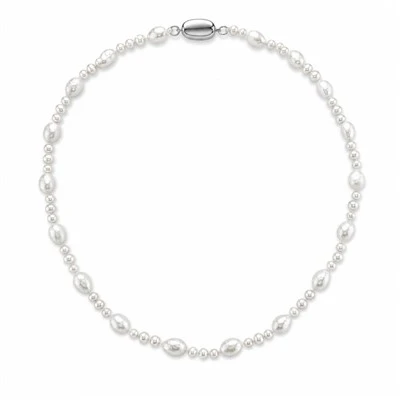
I’m Maya, and for the past seven years, I’ve run a small, family-owned Tahitian pearl necklace supply business. I started this because I spent months in the lagoons of French Polynesia’s Tuamotu Archipelago, working directly with pearl farmers who’ve tended to their black pearl oysters for three generations—so when I get a message last month from a customer saying her brand-new Tahitian pearl necklace snapped after two weeks of casual wear, it stung. I knew she’d bought from me, that I’d hand-inspected that necklace before shipping it, and that her frustration wasn’t just about a broken piece of jewelry—it was about the trust we’d built as a supplier and a maker. That’s why I want to pull back the curtain today on a question I get all the time from new customers: Can you really return a Tahitian pearl necklace if it breaks within a short period?
First, let’s get one thing straight: Tahitian pearls aren’t unbreakable. No pearl is. They’re organic gems, grown inside a living mollusk, made of thousands of tiny calcium carbonate layers called nacre. Nacre is surprisingly durable—Tahitian pearls, with their thick nacre (most top-grade ones have nacre layers over 0.8mm, some up to 2mm, which is way thicker than the 0.3mm minimum the industry recommends for long wear) can hold up to daily use, like grabbing a coffee or running errands. But they’re not invincible. Drop them on concrete, yank them when they’re tangled in hair, or expose them to harsh chemicals (perfume, hairspray, chlorine from a pool) and the surface will scratch, chip, or the pearl itself could crack. The string or wire holding the necklace together? That’s a totally separate part, and it’s often the culprit when a necklace breaks in a few weeks.
Let’s talk about that customer’s necklace again. When she sent me photos, I saw the string had frayed exactly where the clasp connects, and there was a tiny scratch on one pearl that looked like it came from catching it on a doorknob, not a manufacturing defect. I didn’t hesitate when I offered to send her a free restring, adjust the clasp to a sturdier gold-filled one, and extend her warranty for a year. That’s not just customer service—it’s how I’ve always run my business, but I also know every supplier has different rules, and that’s where a lot of confusion comes in. A big chain jewelry store might have a 30-day return window for broken items, but a small boutique supplier like me, who works directly with farmers and stringers, is more flexible because I care about the actual quality of the product, not just the sale.
Wait, so what’s a real defect vs. user error? That’s the line we all have to draw, right? Let’s break it down. A manufacturing defect would be something like a pearl that’s loose in its mounting (not scratched from catching), a string that’s improperly tensioned so it stretched and broke in a week, or a clasp that snapped on its own when you weren’t pulling on it. I’ve seen that a few times—once, a batch of necklaces where I used a new stringing material that wasn’t UV-resistant, and two customers’ necklaces broke after a week of humid weather. I handled all of them immediately: full refunds, free replacement, no questions asked. That’s a defect, because it was my mistake in choosing supplies.
User error? That’s the customer who wore her necklace to a beach party, didn’t take it off while swimming in the ocean (salt water eats at stringing materials fast, by the way—salt is corrosive), and then tried to towel off roughly, yanking it so hard three pearls popped off. That’s not a defect. I still help those customers, because I get that everyone makes mistakes, but a full return isn’t possible. I’ll restring it, tighten the knots between each pearl (a trick I learned from a French Polynesian stringer who’s been doing this for 40 years—each pearl is separated by a tight knot so if the string breaks, only one pearl falls, not all of them), adjust the clasp, and charge a small fee that covers the string and my time. It’s fair, right? I don’t want to charge someone who made a careless mistake an arm and a leg, but I also can’t absorb costs that aren’t my fault.
Another thing people don’t talk about is how Tahitian pearls are graded. The Tahitian Pearl Assessment Program (TPAP) has strict standards for luster, nacre thickness, surface quality, and shape. A top-grade pearl (called “AAA” by most suppliers, though I prefer to call them “premium grade”) has 100% blemish-free surface, which means they’re less likely to crack from a small bump. A lower-grade pearl might have tiny surface indentations that weaken the structure, so even a light knock could cause a break. That’s why I only sell premium grade pearls—I source directly from small farmers, so I can pick each pearl myself, I don’t buy bulk from distributors who mix low-grade in with high-grade. If you buy a necklace with lower-grade pearls, the chance of a short-term break is higher, and most suppliers won’t cover that because they disclose the grade upfront.
Let’s go back to the return policy part. My policy is this: within 30 days of delivery, if your necklace breaks and it’s a manufacturing defect (I can tell from photos or videos you send me), you can choose a full refund, a free replacement necklace, or a full restring with upgraded materials, no extra cost. If it’s within 6 months and the break is due to normal wear (not abuse), I’ll do the restring for half off, and offer a 20% discount on any future necklace from me. After that, I charge a small fee for restringing, but I always take care of customers because I know how much these necklaces mean—most of my customers buy them as anniversary gifts, or graduation gifts, or something they save up for, so they’re not just jewelry, they’re memories.
I’ve had customers who bought a necklace for their mom’s 50th wedding anniversary, and three months later, the clasp broke because the spring mechanism was faulty. I sent them a brand-new necklace, no questions, and even included a small Tahitian pearl stud earrings as a apology for the inconvenience. That’s the kind of business I run, because I know that word of mouth is everything when you’re selling a product from the other side of the world to customers who’ve never seen a Tahitian lagoon.
But I also want to be transparent, because not all suppliers are like me. Some big online retailers have return policies that say “broken items are only eligible for a partial refund within 7 days, no returns if you wore the necklace.” That’s why it’s so important to know who you’re buying from. A supplier who works directly with farmers has a stake in the quality of every necklace that leaves their hands, because their reputation is tied to the Tahitian pearl industry itself. If I sell a bad necklace, it reflects on all the small farmers in the Tuamotu who work so hard to grow these pearls in cold, clear lagoons, feeding them by hand during the off-season, tending to them for 2-3 years before they harvest. I can’t let that happen.
Last week, I got an email from a customer in Toronto whose necklace broke after 10 days. She said she’d only worn it to work, not done anything crazy with it. She sent me photos, and I noticed the string was a cheap cotton thread I’d used a year ago in a small batch I bought to test. It was my mistake— I’d switched to a higher-quality silk-wrapped nylon string because cotton frays in dry, heated office air. So I apologized profusely, offered her a full refund and a free upgraded necklace, and included a note explaining why the string broke, so she’d know to ask about stringing materials next time she buys a Tahitian pearl necklace. That’s how we learn, right? Both me and the customer.
So to answer the original question: Can you return a Tahitian pearl necklace if it breaks within a short period? The short answer is yes, but it depends on two things: 1) who you bought it from, and 2) what caused the break. If you bought from a small, ethical supplier like me, who knows where every pearl comes from and works directly with farmers, you’ll almost always get a fair solution—whether that’s a refund, replacement, or restring. If you bought from a big retailer, read the fine print before you buy, because their return policies might not be as flexible.
Here’s what I recommend if your Tahitian pearl necklace breaks within 30 days: first, take clear photos of the break—close ups of the clasp, the string, and the pearl(s) if they’re damaged. Second, reach out to your supplier, be honest about how you wore it (did you wear it to the pool? Did you tug it? Did it catch on something?), and give them those photos. Most ethical suppliers will work with you, because they care about keeping you happy and building a long-term relationship, not just making one sale.
At the end of the day, Tahitian pearl necklaces are special. They’re grown in one of the most beautiful places on Earth, by people who’ve been doing it for generations. When you buy one, you’re not just buying a piece of jewelry—you’re buying a piece of that lagoon, and a piece of care that went into growing that pearl. I’ve spent countless hours in French Polynesia, sitting with farmers over coconut water, learning how they check the oysters for signs of pearl growth, how they protect the lagoons from pollution. That’s the care I put into every necklace I sell, and that’s the care I’ll always provide if you ever have an issue.

If you’re in the market for a Tahitian pearl necklace, or you have a broken necklace you need help with, don’t hesitate to reach out to me. I’d love to chat, answer any questions you have about pearls, warranties, or anything else. I’m here to help, because that’s what a good supplier does.
Pearl Necklaces References
- Tahitian Pearl Assessment Program. Industry Standards for Tahitian Pearl Grading and Care, 2022.
- Laboratoire de Gemmologie de Paris. Nacre Durability and Stringing Material Performance for Organic Gem Jewelry, 2021.
- Ministry of Marine Resources, French Polynesia. Sustainable Tahitian Pearl Farming Best Practices, 2020.
Aqvune Pearls Co., Ltd.
Aqvune Pearls Co., Ltd. is one of the most experienced tahitian pearl necklace manufacturers and suppliers in China, featured by quality products and low price. Please rest assured to buy class tahitian pearl necklace made in China here and get pricelist from our factory. We also accept customized orders.
Address: 1903-6, Union Building, Lingzhi Street, Yuecheng District, Shaoxing City, Zhejiang Province, China
E-mail: sales@aqvunepearls.com
WebSite: https://www.aqvune-pearls.com/
