Hey there! I’m a supplier of sintered fibre felt material and filters. You might be wondering, "What the heck is the density of sintered fibre felt material?" Well, stick around, and I’ll break it down for you in a way that’s easy to understand. Sintered Fibre Felt Material and Filter
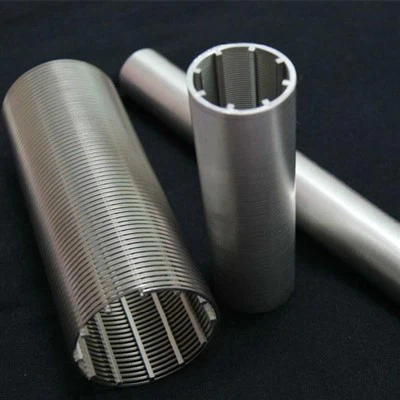
First off, let’s get a basic idea of what sintered fibre felt is. It’s a super – useful material made by sintering (that’s a process of heating without melting) metal or ceramic fibres together. This creates a porous, three – dimensional structure that’s great for all sorts of applications, like filtration in industries such as automotive, aerospace, and chemical processing.
Now, onto density. Density is basically how much stuff is packed into a certain volume. In the case of sintered fibre felt, it’s the mass of the felt per unit volume. You’ll usually see it measured in grams per cubic centimeter (g/cm³) or kilograms per cubic meter (kg/m³).
The density of sintered fibre felt can vary quite a bit, and that’s because there are several factors that influence it. One of the main things is the type of fibre used. For example, if you’re using stainless – steel fibres, the density will be different from when you’re using ceramic fibres. Stainless – steel has a relatively high density compared to some ceramic materials.
The diameter of the fibres also plays a big role. Thicker fibres generally mean a higher density because there’s more material in a given volume. If you have a felt made with really thin fibres, it’ll be less dense because there’s less mass in the same amount of space.
Another factor is the porosity of the felt. Porosity is the amount of empty space or pores in the material. A felt with high porosity will have a lower density because there’s more air or empty space in it. On the other hand, a felt with low porosity will be denser as there’s more solid material.
Let me give you some real – world examples. In the automotive industry, we often supply sintered fibre felt filters for engine oil filtration. These filters usually have a medium density. A density that’s not too high so that the oil can flow through easily but not too low that it can’t effectively trap contaminants. If the density is too high, the oil might not be able to pass through at the right rate, and that can cause problems with the engine’s lubrication system.
In the aerospace industry, the requirements are often more strict. For fuel filtration, we might supply a sintered fibre felt with a higher density. This is because aerospace applications demand very high – efficiency filtration to ensure the safety and proper functioning of the aircraft engines. A higher – density felt can trap even the tiniest particles in the fuel, preventing them from causing damage to the engine components.
When we’re manufacturing sintered fibre felt, we have a certain degree of control over the density. We can adjust the manufacturing process to get the density that our customers need. For example, we can change the pressure during the sintering process. Higher pressure can compress the fibres more, resulting in a higher – density felt. We can also control the amount of fibres we use in a given area. More fibres will lead to a higher density.
Now, you might be thinking, "Why does the density matter so much?" Well, it has a huge impact on the performance of the sintered fibre felt. As I mentioned earlier, it affects the flow rate of fluids through the felt. If you’re using it for filtration, a proper density ensures that the fluid can pass through while still capturing the unwanted particles.
It also affects the mechanical strength of the felt. A higher – density felt is generally stronger and more durable. This is important in applications where the felt is going to be subjected to high pressures or mechanical stress. For example, in a hydraulic system, the sintered fibre felt filter needs to be able to withstand the high – pressure flow of hydraulic fluid without getting damaged.
The density can also influence the chemical resistance of the felt. Different densities can affect how the felt interacts with different chemicals. In a chemical processing plant, where the felt might come into contact with corrosive substances, choosing the right density can ensure that the felt lasts longer and maintains its filtration performance.
As a supplier, we work closely with our customers to understand their specific needs. We ask them about the application, the type of fluid or gas they’re filtering, the operating conditions, and so on. Based on this information, we can recommend the right density of sintered fibre felt for their project.

If you’re in the market for sintered fibre felt material and filters, don’t hesitate to reach out. We’ve got a wide range of products with different densities to meet your requirements. Whether you’re in a small – scale operation or a large industrial plant, we can help you find the perfect solution. So, if you want to discuss your procurement needs, just drop us a line, and we’ll be happy to have a chat and see how we can work together to get you the best sintered fibre felt for your application.
Wedge Wire Filter Screen References:
- Textbooks on materials science and engineering
- Industry reports on filtration technologies
- Internal research and development data from our manufacturing processes
Henan Easy Filter Equipment Co., Ltd.
As one of the leading sintered fibre felt material and filter manufacturers and suppliers in China, we offer a wide range of products with superior quality. Please rest assured to buy advanced sintered fibre felt material and filter from our factory. We also accept customized orders.
Address: Apartment No.1, Building No.2, Zhengshang Jinyushijia, Xinzhong Street, Xinxiang, Henan, China.
E-mail: vivian@easyfiltertech.com
WebSite: https://www.easyfilter-china.com/
