Hey there! As a machinery parts supplier, I often get asked about the different surface finishes available for machinery parts. It’s a crucial topic because the right surface finish can significantly impact a part’s performance, durability, and appearance. So, I thought I’d share some insights on the various options out there. Machinery Parts

1. Machined Finish
Let’s start with the most basic one – the machined finish. When we create a machinery part, it usually goes through a machining process like turning, milling, or drilling. The surface finish you end up with after machining kind of depends on the tools we use and the machining parameters.
A rough machined finish is quick and cheap to produce. We use it when the appearance of the part doesn’t really matter that much and high precision isn’t a must. It’s got visible tool marks and a bit of an uneven texture. On the other hand, a fine machined finish is smoother. We achieve it by using smaller cutting depths, slower feed rates, and sharper tools. This finish is good for parts where you need a certain level of precision, like in some engine components.
2. Grinding
Grinding is another way to get a great surface finish. It’s like a super – precise machining operation. We use a grinding wheel to remove very small amounts of material from the part’s surface.
The advantage of grinding is that it can produce an extremely smooth finish with very tight tolerances. It’s perfect for parts that need to fit together precisely, like bearings or pistons. If you’re familiar with how a bearing works, you know that a smooth surface reduces friction and wear. Grinding can also be used to correct any small errors in the part’s shape that might have occurred during previous machining processes.
3. Polishing
Polishing is all about making a part look good and feel smooth. We use abrasive materials to remove the top layer of the part’s surface, creating a shiny, mirror – like finish.
There are different levels of polishing. A basic polish can remove minor scratches and give the part a nice sheen. A high – end polish, though, can make the surface almost perfectly smooth and reflective. This finish is not just for looks; it can also improve corrosion resistance. For example, in the food and beverage industry, polished parts are preferred because they’re easier to clean and less likely to harbor bacteria.
4. Anodizing
Anodizing is a process that’s mainly used on aluminum parts. We create an oxide layer on the surface of the aluminum through an electrochemical process.
This oxide layer has several benefits. First of all, it makes the part more resistant to corrosion. Aluminum naturally forms a thin oxide layer on its own, but anodizing thickens this layer, providing better protection. Secondly, anodizing can improve the part’s wear resistance. It also allows for coloring the part. We can add dyes to the anodizing process, giving the part various colors. This is great for parts where appearance matters, like in the consumer electronics industry.
5. Galvanizing
Galvanizing is a popular choice for protecting iron and steel parts from corrosion. We coat the part with a layer of zinc.
There are two main methods of galvanizing: hot – dipped galvanizing and electro – galvanizing. In hot – dipped galvanizing, we dip the part into a bath of molten zinc. This creates a thick, durable zinc coating. Electro – galvanizing, on the other hand, uses an electrical current to deposit a thinner layer of zinc on the part’s surface. Galvanized parts are used in a wide range of applications, from construction to automotive, because they can withstand harsh environmental conditions.
6. Powder Coating
Powder coating is a dry finishing process. We apply a fine powder to the part’s surface and then heat it. The powder melts and fuses to form a durable coating.
One of the great things about powder coating is the wide range of colors and finishes available. You can get a matte, gloss, or textured finish, depending on your needs. It’s also very environmentally friendly compared to traditional liquid coatings because it doesn’t contain solvents. Powder – coated parts are resistant to chipping, scratching, and fading, making them a great choice for outdoor machinery parts or parts that will be exposed to a lot of wear and tear.
7. Nitriding
Nitriding is a heat – treating process where we introduce nitrogen into the surface of a steel part. This forms a hard, wear – resistant nitride layer.
The benefit of nitriding is that it doesn’t distort the part’s shape as much as some other heat – treating processes. It can also improve the part’s fatigue resistance and corrosion resistance. Nitrided parts are commonly used in the automotive and aerospace industries, where high performance and reliability are crucial.
8. Chrome Plating
Chrome plating involves depositing a thin layer of chromium onto the surface of a part. It can be used for both decorative and functional purposes.
Decorative chrome plating gives the part a shiny, attractive finish. It’s often used in the automotive industry to make parts like bumpers and trim look cool. Functional chrome plating, on the other hand, is used to improve the part’s wear resistance, corrosion resistance, and hardness. For example, in hydraulic cylinders, chrome – plated rods can withstand the high pressures and friction.
How to Choose the Right Surface Finish
So, how do you decide which surface finish is right for your machinery part? Well, it depends on a few factors. First, think about the part’s function. If it’s a part that needs to be very precise and have low friction, like a bearing, a grinding or polished finish might be best. If corrosion is a concern, anodizing, galvanizing, or powder coating could be good options.
Appearance also matters. If the part is going to be visible to the end – user, like in a consumer product, you might want to go for a decorative finish like chrome plating or an aesthetically pleasing powder – coated finish.
Cost is another important factor. Some finishes, like high – end polishing or certain types of plating, can be more expensive. You need to balance the performance and appearance requirements with your budget.
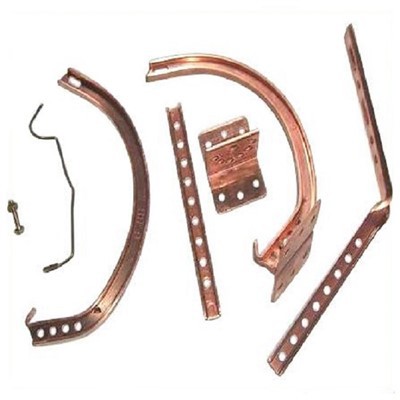
At the end of the day, as a machinery parts supplier, we’re here to help you make the right choice. We’ve got the expertise and experience to guide you through the process and recommend the best surface finish for your specific needs.
Turned Parts If you’re in the market for machinery parts and want to discuss the surface finish options further, don’t be shy! Reach out and let’s have a chat about how we can work together to get the perfect parts for your project.
References
- ASM Handbook Volume 5: Surface Engineering.
- “Fundamentals of Machining and Machine Tools” by M. P. Groover.
- “Industrial Surface Engineering: Principles and Practice” by A. Matthews and H. B. Hopkinson.
Hangzhou Zhalihui Import And Export Co., Ltd.
We are one of the most experienced machinery parts manufacturers and suppliers in China, specialized in providing high quality customized products. Please feel free to buy discount machinery parts in stock here from our factory. Contact us for quotation.
Address: Room 2801, Building 2, Taifu Plaza, No.17, Tonghui Middle Road, Chengxiang Street, Xiaoshan, Hangzhou, Zhejiang
E-mail: Chars_1979@hotmail.com
WebSite: https://www.zhalihui.com/
