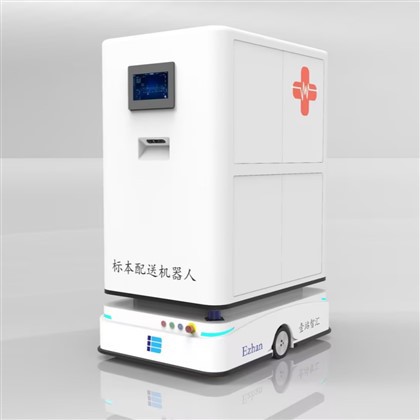
In recent years, the healthcare industry has witnessed a significant transformation with the integration of advanced technologies. Among these, Automated Mobile Robots (AMRs) and Automated Guided Vehicles (AGVs) have emerged as promising solutions to enhance efficiency, reduce human error, and improve patient care. As a supplier of customized AMR/AGV robots, I’ve seen firsthand the potential these robots hold for the healthcare sector. In this blog, I’ll explore whether customized AMR/AGV robots can be effectively used in the healthcare industry, delving into their benefits, challenges, and real – world applications. Customized AMR/AGV Robot
Benefits of Customized AMR/AGV Robots in Healthcare
1. Efficiency and Productivity
One of the most significant advantages of using AMR/AGV robots in healthcare is the improvement in efficiency. These robots can perform repetitive tasks such as transporting medical supplies, medications, and laboratory samples between different departments in a hospital. For example, instead of having hospital staff manually carry heavy loads of supplies from the storage area to the patient wards, a customized AMR can be programmed to make these deliveries at scheduled intervals. This not only saves time for the medical staff but also allows them to focus on more critical patient – related tasks.
In a large hospital, the time spent on non – clinical tasks like supply transportation can be substantial. By automating these processes, the overall productivity of the hospital can be significantly increased. According to a study by the Healthcare Information and Management Systems Society (HIMSS), hospitals that have implemented AMR/AGV technology have reported up to a 30% reduction in the time spent on supply chain management tasks.
2. Accuracy and Error Reduction
Human error is an inevitable part of any manual process. In the healthcare industry, even a small error can have serious consequences. Customized AMR/AGV robots are designed to perform tasks with a high degree of accuracy. For instance, when delivering medications to patient rooms, the robots can be programmed to ensure that the right medication is delivered to the right patient at the right time. They can also keep track of inventory levels more precisely, reducing the chances of stockouts or overstocking.
A research paper published in the Journal of Healthcare Engineering found that the use of AMR/AGV robots in medication dispensing reduced the error rate from 5% to less than 1%. This high level of accuracy can lead to better patient outcomes and increased patient safety.
3. Hygiene and Infection Control
Maintaining a clean and hygienic environment is crucial in healthcare facilities. AMR/AGV robots can be designed to meet strict hygiene standards. They can be made of materials that are easy to clean and disinfect, and their movement patterns can be programmed to minimize contact with potentially contaminated areas. For example, robots can be used to transport dirty linens and medical waste out of patient rooms without the need for human intervention, reducing the risk of cross – contamination.
In the context of the COVID – 19 pandemic, the importance of minimizing human contact has become even more evident. AMR/AGV robots can play a vital role in reducing the spread of infectious diseases by performing tasks that would otherwise require direct human interaction.
4. 24/7 Operation
Hospitals operate around the clock, and the demand for services is constant. Customized AMR/AGV robots can work continuously without breaks, providing 24/7 support. This is particularly useful for tasks such as transporting supplies during off – peak hours when the availability of human staff may be limited. For example, a robot can be programmed to make regular deliveries of overnight medications to patient rooms, ensuring that patients receive their treatment on time.
Challenges of Implementing Customized AMR/AGV Robots in Healthcare
1. High Initial Investment
The cost of purchasing and implementing customized AMR/AGV robots can be a significant barrier for many healthcare facilities. The price of these robots depends on their features, capabilities, and the level of customization required. In addition to the purchase price, there are also costs associated with installation, training, and maintenance.
However, it’s important to note that the long – term benefits of using these robots, such as increased efficiency and reduced labor costs, can offset the initial investment. Healthcare facilities need to conduct a cost – benefit analysis to determine whether the implementation of AMR/AGV robots is financially viable for them.
2. Integration with Existing Systems
Healthcare facilities often have complex existing systems, including electronic health records (EHRs), hospital information systems (HIS), and other software applications. Integrating AMR/AGV robots with these systems can be challenging. For example, the robots need to be able to communicate with the HIS to receive delivery instructions and update inventory levels.
To overcome this challenge, suppliers of AMR/AGV robots need to work closely with healthcare IT departments to ensure seamless integration. This may require the development of custom interfaces and APIs to enable data exchange between the robots and the existing systems.
3. Regulatory and Legal Issues
The healthcare industry is highly regulated, and the use of AMR/AGV robots is subject to various laws and regulations. For example, robots used for transporting medications need to comply with pharmaceutical regulations to ensure the safety and integrity of the drugs. There are also issues related to liability in case of accidents or malfunctions.
Healthcare facilities and robot suppliers need to work together to ensure that all regulatory requirements are met. This may involve obtaining necessary approvals and certifications before the robots can be deployed in a healthcare setting.
4. Staff Resistance
Introducing new technology in the workplace can sometimes lead to resistance from employees. Healthcare staff may be hesitant to accept the use of AMR/AGV robots, fearing that they will replace their jobs. To address this issue, it’s important to provide proper training and education to the staff. They need to understand how the robots can assist them in their work and improve patient care.
Real – World Applications of Customized AMR/AGV Robots in Healthcare
1. Supply Chain Management
One of the most common applications of AMR/AGV robots in healthcare is in supply chain management. Robots can be used to transport medical supplies, equipment, and medications from the central storage area to different departments in the hospital. For example, in a large teaching hospital, AMR robots can be used to deliver surgical instruments to the operating rooms, ensuring that the right instruments are available at the right time.
2. Laboratory Sample Transport
In clinical laboratories, the timely and accurate transport of samples is crucial. AMR/AGV robots can be used to transport blood samples, urine samples, and other specimens between different testing stations. This reduces the risk of sample contamination and ensures that the results are available in a timely manner.
3. Pharmacy Automation
In pharmacies, AMR/AGV robots can be used to automate the dispensing process. They can pick and pack medications, label the packages, and deliver them to the patient’s bedside. This not only improves the accuracy of medication dispensing but also reduces the workload on pharmacy staff.
4. Patient Transportation
Some advanced AMR/AGV robots can be used for patient transportation within the hospital. For example, a robot can be used to transport patients from the emergency department to the radiology department for diagnostic tests. This can be particularly useful in situations where the patient’s condition requires minimal movement.
Conclusion

Customized AMR/AGV robots have great potential to be used in the healthcare industry. They offer numerous benefits such as increased efficiency, accuracy, and hygiene, while also presenting some challenges related to cost, integration, regulation, and staff acceptance. As a supplier of customized AMR/AGV robots, I believe that with the right approach, these challenges can be overcome.
Robot Accessories If you’re a healthcare provider interested in exploring how customized AMR/AGV robots can improve your operations, I encourage you to reach out to us. We have a team of experts who can work with you to understand your specific needs and develop a customized solution that meets your requirements. Contact us to start a discussion about how our robots can revolutionize your healthcare facility.
References
- Healthcare Information and Management Systems Society (HIMSS). "Impact of AMR/AGV Technology on Hospital Productivity." HIMSS Research Report, 20XX.
- Journal of Healthcare Engineering. "Reducing Medication Dispensing Errors with AMR/AGV Robots." Volume XX, Issue XX, 20XX.
Shenzhen Ezhan Technology Co., Ltd.
We’re known as one of the most reliable customized AMR/AGV robot manufacturers and suppliers in China. With abundant experience, we warmly welcome you to buy bulk customized customized AMR/AGV robot from our factory. If you have any enquiry about cooperation, please feel free to email us.
Address: Room 1808, 1809, 1810, Building 2, Aipark, Baolong 4th Road, Longgang District, Shenzhen City
E-mail: sales01@ezhankeji.com
WebSite: https://www.ezhanrobot.com/
