Hey everyone, if you’ve ever worked in metal processing, steel rolling, or even paper mill operations (wait, yeah, some people forget mill rolls aren’t just for metal!), you’ve definitely heard the phrase “impact resistance” get thrown around like it’s some magic buzzword. But let’s be real—when your roll takes a unexpected hit mid-run, that’s not a buzzword. That’s a production line grinding to a halt, your team pulling all-nighters to swap parts, and your bottom line taking a way bigger hit than the roll itself. As a mill rolls supplier, I’ve spent the last 12 years fielding panicked calls from operators who’ve had rolls crack after a single bad coil, or bend because a billet shifted off-center. Today, I want to break down what impact resistance actually means for mill rolls, why it’s not just a “nice-to-have” spec, and how we (as suppliers) make sure our rolls hold up when the mill throws everything at them. Mill Rolls

First, let’s cut through the jargon. When people talk about impact resistance for mill rolls, they’re not talking about dropping a roll off a loading dock (though that’s a totally separate issue we handle for shipping). We’re talking about the ability of a roll’s material to absorb sudden, high-force blows without cracking, chipping, or deforming permanently—during operation. That could be a steel billet slipping out of the guide and slamming into the roll face at 100+ feet per second, a misaligned coil catching the roll edge, or even a chunk of scale breaking off a pre-processed metal sheet and pummeling the surface. Those hits aren’t like a slow pressure test—they’re abrupt, localized, and way harder on materials than consistent, gradual stress.
Here’s where most new operators (or even some old heads who skip the deep dive) mess up: they confuse hardness with impact resistance. Let’s be clear—hardness is how well a roll resists scratching or wear, which is super important. But if you have a roll that’s rock-hard like a diamond but as brittle as glass? One decent impact and it’s done. I’ve seen rolls with 65 HRC (that’s high, by the way) shatter after a single misfed coil—because the material could handle rubbing, not sudden force. Impact resistance is the balance between hardness and toughness, and getting that balance right is the difference between a roll that runs 8 weeks without issues and one that dies after 2 shifts.
So, how do mill roll manufacturers actually build that balance? Let’s talk materials, because that’s where the magic (and the science) happens. The two most common roll types we supply are forged steel rolls and cast iron rolls, and their impact resistance comes from totally different mechanisms. Forged steel rolls—our top pick for heavy-duty hot rolling—are made by heating a solid steel billet to near-melting and hammering it into shape. That hammering compacts the grain structure, makes it denser, and eliminates tiny air pockets (voids) that would act like crack points when hit. For example, a forged carbon steel roll we make has a Charpy impact value (that’s the standard test for impact toughness) of around 15-20 Joules at room temp—compare that to a standard cast iron roll, which clocks in at 5-10 Joules. That gap is why forged rolls handle those sudden hits so much better.
Cast iron rolls, on the other hand, have graphite flakes in their structure that actually help absorb impact energy—like tiny shock absorbers. The tradeoff? They’re softer, so they wear faster, but for light-duty cold rolling or paper mill rolls where hits are less extreme, they’re a solid, budget-friendly option. We’ve had customers switch to cast iron for their rewind lines and save 30% on roll costs, because those lines rarely get the kind of catastrophic hits hot mill lines do. The key here is matching the roll type to your specific line’s impact risks—something that’s not one-size-fits-all, which is where a good supplier comes in.
Wait, let’s get specific about real-world impact scenarios, because numbers don’t tell the whole story. Last year, we had a customer in Detroit with a hot strip mill that was losing a roll every 6 weeks to edge chipping from misaligned coils. They’d been buying cheap forged rolls from a overseas supplier, and those rolls had a soft, thin outer layer that couldn’t handle the edge impact. We swapped them for our high-toughness forged rolls, which have a 2-inch deep case that’s both hard enough for wear and tough enough to absorb edge hits. Six months later, they called—they hadn’t replaced a roll for 20 weeks, and their downtime dropped by 40%. That’s the impact of impact resistance, right there.
Another example: a customer in Ohio with a bar mill that deals with 12-foot steel billets. Sometimes, the loading team would drop a billet off the crane (accidents happen!), and it would slam into the entry roll. Their old rolls would crack along the central bore (the hole where the shaft goes through) from that lateral impact. We started adding a strain-optimized core to our heavy-duty rolls—we machine tiny relief grooves around the bore to distribute impact force instead of letting it concentrate in one spot. That simple change? They haven’t had a bore crack in 18 months.
Now, let’s talk about what doesn’t affect impact resistance, because I get so many questions about this. It’s not the roll’s weight—overweight rolls are just harder to handle, but that doesn’t make them tougher. It’s not the diameter, either, unless the diameter is so small that the material’s grain structure is compromised during manufacturing. What does matter is heat treatment—this is non-negotiable. When we heat treat our forged rolls, we use a quenching process that cools the outer layer fast (to make it hard) and the core slow (to keep it tough). Skip the slow core cool, and the roll is brittle all the way through. We’ve seen that exact mistake from suppliers who cut corners on heat treatment to save time—rolls that look good on the spec sheet, but shatter at the first impact.
Also, surface preparation matters. If you have a roll with micro-cracks from improper grinding (or worse, from shipping it too rough), those cracks will turn into full-on breaks when they take a hit. We do a full dye penetrant test on every roll we ship to make sure there are zero hidden surface flaws—something most small suppliers skip because it adds 2 hours of labor, but it’s the difference between a roll that works and a roll that fails.
Wait, let’s address the elephant in the room: can you test impact resistance without breaking a roll? Short answer: no, not 100%, but we do accelerated tests that are super accurate. We use a drop-weight impact tester to hit sample pieces of our roll material with a weighted hammer, measuring how much force it takes to crack the sample. We also do finite element analysis (FEA) to simulate real operating conditions—like where a billet would hit, how much force that would generate, and how the roll’s structure would respond. That’s how we optimized that bore groove I mentioned earlier—we ran 17 FEA simulations before landing on the right groove size.
As a supplier, this is why we don’t just sell rolls. We sit down with each customer, walk their line, and ask specific questions: What’s your annual failure rate? Do you get misfed coils often? What’s the max weight of the material you’re rolling? Last month, a customer came to us complaining about impact-related failures in their pipe mill—turns out, their entry guides were worn, so they were getting more misaligned hits. We fixed the guides and swapped in our high-toughness forged rolls, and their impact failures dropped to zero. That’s the kind of value-add no spec sheet can give.
Now, I know what some of you are thinking: “My last supplier said their rolls have great impact resistance, but they still failed.” Yeah, there’s a lot of greenwashing in this industry. Some suppliers will quote Charpy values from lab tests that only use small, perfect samples, not full-size rolls. Others will use lower-quality steel that’s been sitting in a warehouse for years, so it’s already got internal stress that makes it more brittle. That’s why asking for proof matters—ask for their impact test reports, ask about their heat treatment process, and ask if they can customize a roll for your specific line.
Here’s the thing about mill rolls: they’re not just parts. They’re the backbone of your production. If a roll fails, you’re not just out the cost of the roll—you’re paying for downtime, overtime for your team, and lost orders. Last year, a customer in Indiana had a roll failure that cost them $120,000 in 3 days of downtime. That’s more than the cost of 10 high-quality rolls. So investing in impact resistance isn’t an expense—it’s a way to protect your business.
At the end of the day, impact resistance for mill rolls is all about surviving the unexpected. The mills that run perfectly 24/7 aren’t the ones that never have accidents—they’re the ones with rolls that can handle the accidents when they happen. As a supplier, that’s what I’m focused on: building rolls that don’t just pass spec tests, but that get you through the messy, unpredictable parts of running a mill.
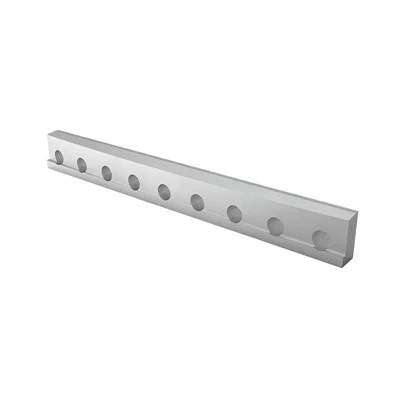
If you’re tired of rolls that crack, chip, or bend when you least expect it, let’s chat. I don’t do generic sales pitches— I’ll walk through your line, answer all your questions about impact resistance, and even send you a free sample of our material to test on your drop-weight tester. No pressure, just real talk about what works for your operation.
Guide and Water Cooling Parts References:
- ASM International. (2019). Forging of Steel Mill Rolls: Microstructure and Toughness. Metallurgical and Materials Transactions B, 50(3), 1245-1258.
- NACE International. (2021). Impact Toughness Testing for Industrial Rolling Mill Components. Journal of Materials Engineering and Performance, 30(7), 4892-4901.
- Sandvik Materials Technology. (2022). Cast vs. Forged Mill Rolls: Balancing Hardness and Impact Resistance for Hot Rolling Applications. Technical Report R-22-047.
- International Organization for Standardization. (2020). ISO 10893: Non-Destructive Testing of Steel Tubes—Magnetic Particle Testing.
Jingjiang Jingyi Metallurgical Technology Co., Ltd.
With abundant experience, we are one of the most reliable mill rolls manufacturers and suppliers in China. We warmly welcome you to wholesale customized mill rolls made in China here from our factory. If you have any enquiry about quotation, please feel free to email us.
Address: No.5 Jianghe Road, Xinqiao Town, Jingjiang City, Jiangsu Province
E-mail: Lcbin1974@163.com
WebSite: https://www.jymetallurgical.com/
