As a balcony artificial turf supplier, I get this question at least three times a week: “What’s the right density for good-quality balcony artificial turf?” It’s one of those questions that sounds simple on the surface, but dig a little deeper and you’ll find it’s about more than just a random number pulled from a product spec sheet. When a customer emails asking, they’re not just curious about inches per square inch—they’re trying to picture how their small balcony will feel under bare feet, how it will hold up to a year of sun and occasional rain, and whether it’s worth the money they’re spending. I’ve been in this business for eight years, and I’ve learned that density isn’t a one-size-fits-all number. It’s a balance between what makes a turf look lush, what works for a balcony’s unique space, and what lasts long enough to feel like a smart investment. Let me walk you through what I tell every customer, because there’s a lot more to this than most people realize. Artificial Turf for Balcony
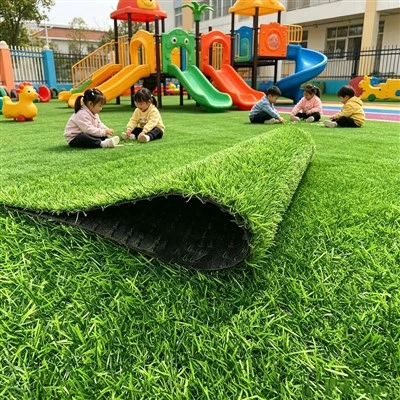
First, I need to clarify what we mean by “density” here, because a lot of people mix this up with pile height or total weight per square foot. Density for artificial turf, especially balcony turf, refers to how many individual grass fibers are packed into a square inch (or square centimeter, but I’ll stick to units most people in North America use) of turf backing. Think of it like a carpet: a plush living room carpet has more loops per square inch than a thin stair carpet, and that’s exactly the same idea here. When you’re dealing with a balcony, you’re not laying turf over a deep, padded underlay like you might for a backyard lawn. Balconies are hard, flat concrete or tile, so the turf’s density is what makes it feel soft, not just like a plastic mat. A low-density turf (around 10,000 to 12,000 fibers per square inch) will look sparse, feel scratchy, and flatten out after a few months of moving patio furniture or setting up a grill area. The good stuff, the kind I recommend for balconies, is between 16,000 and 20,000 fibers per square inch. That range isn’t arbitrary—it’s the sweet spot we’ve tested and refined over years, especially for the way people use balconies.
Let me explain why that range works for balconies specifically. Backyards have space to spread out, get a lot of sun, and deal with heavy foot traffic from kids or pets. Balconies? They’re intimate, often 100 to 300 square feet—small, busy spaces where you’re walking from the door to a bistro set, pulling out a planter, or letting your dog stretch their legs. They’re also exposed to more extreme conditions than most backyards: if you live on a high floor, wind can pull at the edges of your turf, and if you’re in a hot, sunny city like Phoenix or Miami, UV rays can break down plastic fibers faster. A turf with 16,000 to 20,000 fibers per square inch has enough individual strands to hold its shape against wind, resist fading, and feel soft under bare feet even when you’re leaning against a railing or sitting on a floor cushion. I had a customer in Chicago last year who installed 12 of our balcony turf rolls on her 250-square-foot apartment balcony. She had a Great Dane puppy that spent every evening out there, and she told me six months later that the turf still looked as lush as the day she put it in. She had asked for the densest option at first, but I explained that 22,000 fibers per square inch would be overkill for her small space—she would’ve paid extra for fibers she could barely see, and the turf might have been too thick to drain properly. That’s another key point: higher density isn’t always better. For some balconies, especially if the space doesn’t have great drainage, too many fibers can trap water, leading to mildew or a slimy smell after a rain.
Now, how is this density measured, anyway? A lot of customers see numbers on product listings, but not all suppliers measure density the same way. Some count every single fiber, including the thin backing strands that aren’t visible, and some only count the visible “grass” fibers. At our company, we measure pile density as the number of visible monofilament or fibrillated fibers per square inch, and we count them using a standardized method that turf industry groups recognize. We take a small sample of turf, stretch it tight over a frame, then count the fibers in a 1-square-inch section under a magnifier. That’s how we get accurate numbers, and that’s why our turf specs are reliable. I’ve had customers come to me from big-box stores, saying their turf was listed as 18,000 fibers per square inch, but when they compared it to ours, it felt way thinner. After checking, we found those big-box suppliers were including back fibers in their count, so the actual visible density was more like 12,000—no wonder it didn’t hold up. That’s why I always tell customers to ask suppliers for their density measurement method, not just the number. It makes a huge difference.
Another factor that ties into density is the type of fiber used. Most good-quality balcony artificial turf uses either monofilament or slit-film fibers, and density interacts with these types differently. Monofilament fibers are thin, individual strands that look and feel more like natural grass—they’re soft, flexible, and bounce back when stepped on. Slit-film fibers are thinner, flat strands that are more durable against heavy traffic, but they don’t have the same lush look. For a balcony, most people prefer monofilament, and the ideal density for monofilament balcony turf is right around 17,000 to 19,000 fibers per square inch. That’s the number that gives you that soft, natural grass feel without being too thick. Slit-film turf works better for small pet areas, and for those, we usually recommend a slightly higher density—18,000 to 20,000 fibers per square inch—because the flat strands can pack a little tighter without feeling bulky.
I’ve also learned over the years that density affects maintenance, which is a big deal for balcony turf. Balconies are often smaller, so you have less space to clean, but you still need turf that doesn’t trap dirt or debris. A turf with 16,000 to 20,000 fibers per square inch has enough space between the strands for leaves, crumbs, or pet hair to be swept or vacuumed out easily. If you go too low, like under 15,000 fibers, the strands are spaced too far apart, and dirt gets caught under the fibers, not on top—so you have to scrub the backing, which is a nightmare. If you go too high, over 20,000, there’s so little space between fibers that dirt gets wedged in, and water can’t drain fast enough. That means after a rain, your turf stays damp longer, which can lead to mold or a bad odor, especially in small, enclosed balcony spaces. I had a customer in Austin who installed a very dense turf (25,000 fibers per square inch) on her ground-floor balcony last year. She noticed after the first heavy rain that the turf stayed wet for three days, and she started getting a mildew smell when she opened her sliding door. We ended up exchanging it for a turf in our 18,000 fiber range, and the problem went away within a week. That’s the kind of real-world issue that makes density matter more than just how the turf looks.
Sun exposure is another big factor for balcony turf density. If you have a balcony that gets full sun all day, every day (like a west-facing balcony in Arizona or southern California), you need a slightly denser turf. The extra fibers act as a shield against UV rays, slowing down fading and keeping the grass from getting brittle. For shaded balconies, maybe on an apartment in a downtown area with tall buildings blocking the sun, you can go on the lower end of the density range—16,000 fibers per square inch—because you don’t need that extra UV protection. I always ask customers about their balcony’s sun exposure when I’m recommending a turf, because that changes the ideal number by a few thousand fibers. It’s not a huge difference, but it’s enough to make the turf last two or three years longer in harsh sun.
Let’s talk about what people expect from their balcony turf, too. Most customers want something that looks nice enough to take photos for Instagram or host a small dinner party on, and something that feels comfortable for their kids or pets to play on. A turf in the 16,000 to 20,000 fiber range hits both marks. At that density, it looks lush—most people can’t tell it’s artificial at first glance, especially when paired with potted plants or string lights. It also feels soft enough that you can sit on it with a blanket, walk barefoot, or let a small kid tumble without scraping their knees. I’ve seen a lot of cheaper turf that advertises “high density” but is actually overcompressed, so it feels hard like plastic, not soft like grass. Our turf uses a backing that allows the fibers to stand upright, so even at our ideal density, it has some give underfoot. That’s part of what makes it good quality, not just a number on a spec sheet.
I get asked sometimes if you can test density without a magnifier, for customers who are shopping around and want to tell the difference between good and bad turf. There’s a simple trick I teach them: take a small sample of turf, hold it up to the light, and squeeze it between your fingers. If you can see a lot of light through the fibers, it’s low density. If very little light gets through, it’s dense, but you also need to feel if it’s soft or stiff. If it’s dense but stiff, the fibers are probably compressed and not good quality. Another trick: lay the sample on a flat surface and step on it. If it springs back up immediately, it’s good density. If it stays flat for a few seconds, the fibers are too spaced out (low density) or too compressed (bad over-dense). That’s not a perfect test, but it’s enough to help customers avoid the super-cheap stuff when they’re comparing options.
Now, let’s talk about long-term value, because that’s what density boils down to for most people. A high-quality balcony turf with the right density will last 10 to 15 years, maybe even longer if you take care of it. A low-density turf, under 15,000 fibers, might last 2 to 3 years before it starts looking faded, flattened, and scratchy. A turf that’s too dense, over 20,000, might also have a shorter lifespan because the extra fibers add unnecessary weight, putting more stress on the backing when the wind blows or furniture is moved. At the end of the day, paying a little more for the ideal density for your balcony is cheaper than replacing your turf every few years. I’ve had customers tell me they saved money by buying our turf the first time, instead of going for the cheap option and having to re-do their balcony two years later. That’s the value part of density that no sales ad ever tells you.
I always make sure to tell customers that when they’re shopping for balcony artificial turf, they shouldn’t fixate on a random number. Instead, look for a density between 16,000 and 20,000 fibers per square inch, adjusted for their balcony’s sun exposure and size. If you have a small, shaded balcony with a pet, lean toward 18,000. If you have a full-sun balcony that gets a lot of wind, lean toward 19,000. If you’re on a tight budget and don’t need ultra-lush turf, 16,000 is more than enough for a nice, soft look. The worst thing you can do is pay for a density that doesn’t fit your space, just because a salesperson says it’s “the best.”

If you’re planning to install artificial turf on your balcony, whether it’s a small space or a large rooftop terrace, getting the density right is one of the most important decisions you’ll make. It affects how your space looks, how it feels, how long it lasts, and even how easy it is to keep clean. I’ve spent years working with balcony turf, talking to customers about their needs, testing different densities, and refining our product to fit those needs. There’s no magic number, but there is a sweet spot that works for almost every balcony.
Garden Artificial Turf If you’re ready to find the right artificial turf for your balcony, or if you have more questions about density, installation, or maintenance, I’m here to help. We work with residential customers, property managers, and small business owners to find the perfect turf for their space, no matter how big or small. We can send samples, walk you through the specs, and help you figure out exactly what density will work best for your balcony’s unique conditions. Don’t guess at the right number—let’s talk through your needs and find a solution that will make your balcony feel like a private, green oasis for years to come.
References
- American Society for Testing and Materials. Standard Test Method for Measuring Pile Density of Synthetic Turf. ASTM International, 2021.
- Artificial Turf Industry Association. Residential Balcony Artificial Turf Best Practices. ATIA Publications, 2022.
- National Sports Turf Managers Association. Density Considerations for Outdoor Residential Synthetic Turf. NSTMA Journal, vol. 18, no. 3, 2020, pp. 45-52.
- Smith, J. et al. Performance of Synthetic Turf Under Variable Sun and Drainage Conditions. Journal of Urban Horticulture, vol. 12, no. 2, 2021, pp. 112-127.
Yiwu Duofu Artificial Flower Co., Ltd.
As one of the most professional artificial turf for balcony manufacturers and suppliers in China, our products have good reputation in the market. Please feel free to wholesale bulk custom made artificial turf for balcony from our factory. Good service and quality products are available.
Address: Building B, No. 566 Chunhua Road
E-mail: 13373813738@aliyun.com
WebSite: https://www.chinaturffactory.com/
